Elon Musk Says Most Powerful Starship Yet Could Fly in Early April
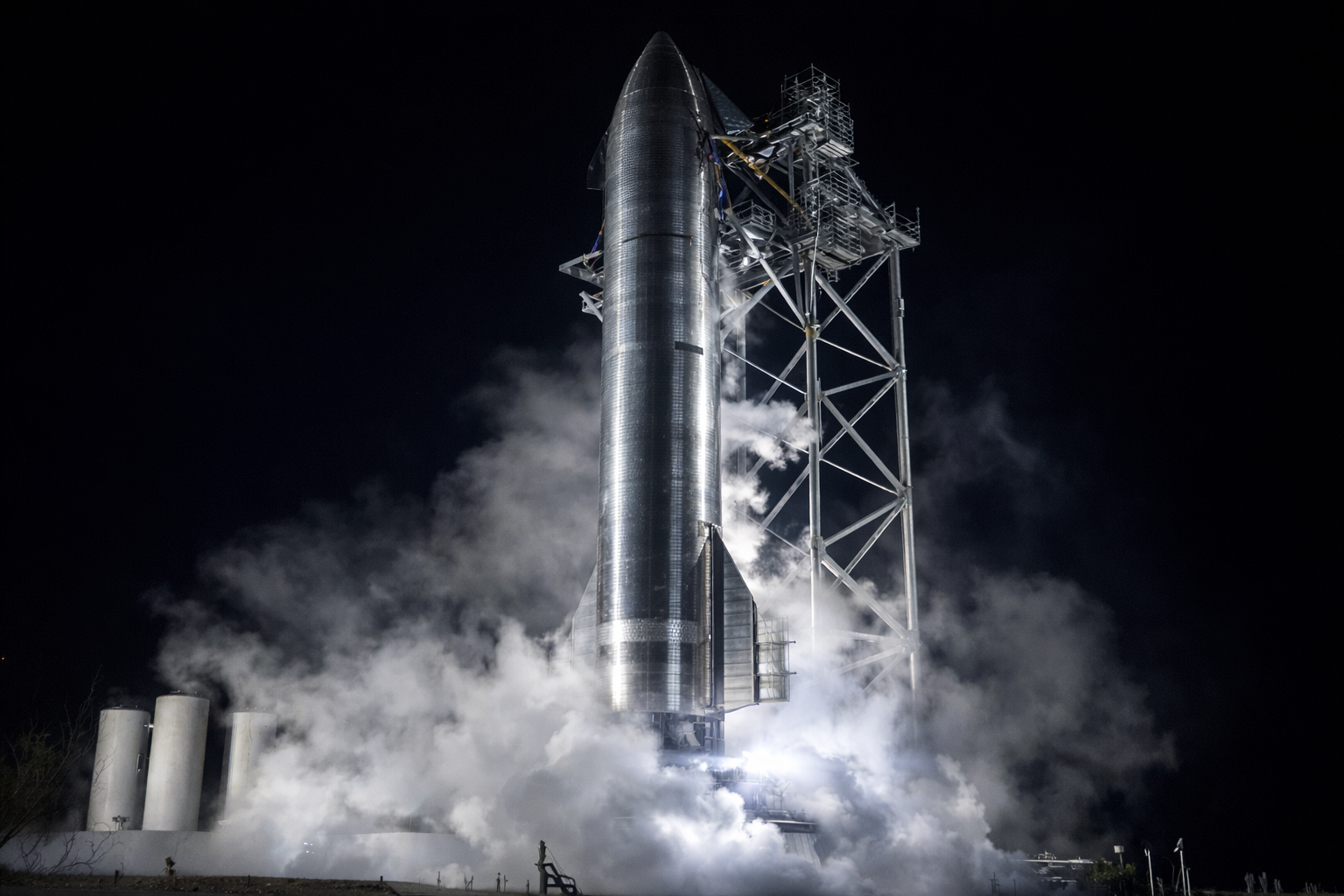
The next major milestone in the global space race may arrive very soon. According to Elon Musk, the upgraded Version 3 of the Starship rocket developed by SpaceX could launch within about four weeks, marking the twelfth test flight in the ambitious Starship program.
For the most potent rocket system in the world, this impending launch is a major advancement. Starship V3 intends to push the boundaries of reusable rocket technology and move humanity closer to trips to the Moon and Mars with significant improvements to both its booster and upper stage.
What Is SpaceX’s Starship Rocket?
Starship is the largest and most powerful rocket ever built. It is designed to be fully reusable, meaning both its booster and spacecraft can return to Earth, land safely, and fly again.
The launch system has two major components:
- Super Heavy Booster – The massive first stage that lifts the rocket off the ground
- Starship Upper Stage (Ship) – The spacecraft that carries cargo, satellites, or astronauts into orbit and beyond
This fully reusable design could dramatically reduce the cost of space travel.
Starship Version 3: What’s New?
The upcoming Starship V3 represents a major upgrade over earlier versions of the rocket.
Key improvements include:
1. Taller Rocket Design
Both the Super Heavy booster and the Ship upper stage are slightly taller than previous versions.
2. Upgraded Engines
The rocket uses improved Raptor 3 engines, which provide stronger and more efficient thrust.
3. Improved Performance
These upgrades are expected to increase payload capacity and improve reliability for future missions.
Even earlier versions of Starship already held the record as the most powerful rockets ever launched, and V3 aims to raise that bar even further.
From Starship V2 to the Next Generation
The previous generation, Starship V2, concluded its operations during the Flight 11 test mission in October last year.
While that mission marked a successful end to the V2 series, the program faced some setbacks earlier in the year when the Ship upper stage exploded during three early 2025 test flights.
Despite those challenges, SpaceX managed to achieve two successful launches later in the year, restoring confidence in the program and paving the way for the upgraded V3 system.
Testing and Preparation at Starbase
The upcoming launch will take place at SpaceX’s Starship development facility in South Texas known as Starbase.
SpaceX engineers have been conducting extensive tests to prepare for the next launch.
Recent test milestones
- The V3 upper stage (Ship 39) completed propellant system testing.
- Structural “squeeze tests” were conducted to simulate the intense forces experienced during landing and recovery.
- The company has nearly finished construction of a second launch pad and tower at Starbase.
This second launch complex will allow SpaceX to increase the frequency of Starship launches.
The Mechazilla Catch System
One of the most unique aspects of Starship’s design is its recovery system.
The Super Heavy booster is designed to return to the launch site and be caught by giant mechanical arms on the launch tower.
These arms, nicknamed “Mechazilla,” grab the booster out of the air as it descends.
So far, three Super Heavy boosters have successfully returned to the launch tower, demonstrating the feasibility of this innovative system.
In the future, SpaceX hopes to perform a similar mid-air catch of the Starship upper stage, which would make the entire rocket system reusable.
Why Starship Is Critical for NASA’s Artemis Program
Starship is not only important for SpaceX’s plans to reach Mars. It also plays a crucial role in NASA’s Moon exploration program.
NASA has contracted SpaceX to develop a lunar lander version of Starship for the Artemis program.
Originally, the lander was scheduled to support astronauts on the Artemis 3 mission in 2028.
However, NASA recently revised its timeline and now aims to launch Artemis 3 in 2027.
During the mission:
- The Orion spacecraft will carry astronauts into lunar orbit.
- Orion will dock with a lunar lander.
- The lander will then transport astronauts to the Moon’s surface.
Competition in the Lunar Lander Race
SpaceX is not the only company building a lunar lander for NASA.
Blue Origin, founded by Jeff Bezos, is developing its own lunar lander called Blue Moon.
NASA may use whichever lander is ready first for the Artemis missions.
If only one system is available by launch time, the other could miss the opportunity to participate in the first crewed Moon landing of the Artemis era.
Challenges Facing Starship Development
Despite its enormous potential, the Starship program still faces technical challenges.
Key hurdles include
- Perfecting full rocket reusability
- Increasing reliability of the Ship upper stage
- Scaling up launch infrastructure
- Meeting NASA’s tight Artemis schedule
Earlier accidents and delays show that developing the world’s largest reusable rocket is an extremely complex engineering challenge.
Why the Starship Program Matters for the Future of Space Exploration
If SpaceX succeeds, Starship could dramatically change the economics of spaceflight.
Potential applications include:
- Human missions to Mars
- Building Moon bases
- Launching massive satellite constellations
- Large-scale space tourism
- Deep space exploration missions
Because Starship is designed for rapid reuse, it could reduce launch costs dramatically compared with traditional rockets.
Looking Ahead: The Countdown to Starship V3
With testing progressing and infrastructure nearly complete, SpaceX appears close to launching the next generation of its revolutionary rocket.
If Starship V3 successfully launches in early April, it will mark another major milestone in humanity’s push toward a future where space travel becomes routine and affordable.
For now, the world waits to see whether SpaceX can once again redefine what’s possible in spaceflight.