AI Robot That Uses 3D Maps and Internet Knowledge to Find Lost Items
The fields of robotics and artificial intelligence are still developing quickly, bringing with them breakthroughs that have the potential to completely change daily life. Using a combination of computer vision, internet-based knowledge, and 3D mapping technologies, researchers at the Technical University of Munich have created a revolutionary robot that can find misplaced objects.
This new AI-powered robot is a significant step toward the development of intelligent machines that can comprehend their environment and help people with everyday activities like locating misplaced items at home or at work.
A Smart Robot Designed to Locate Lost Objects
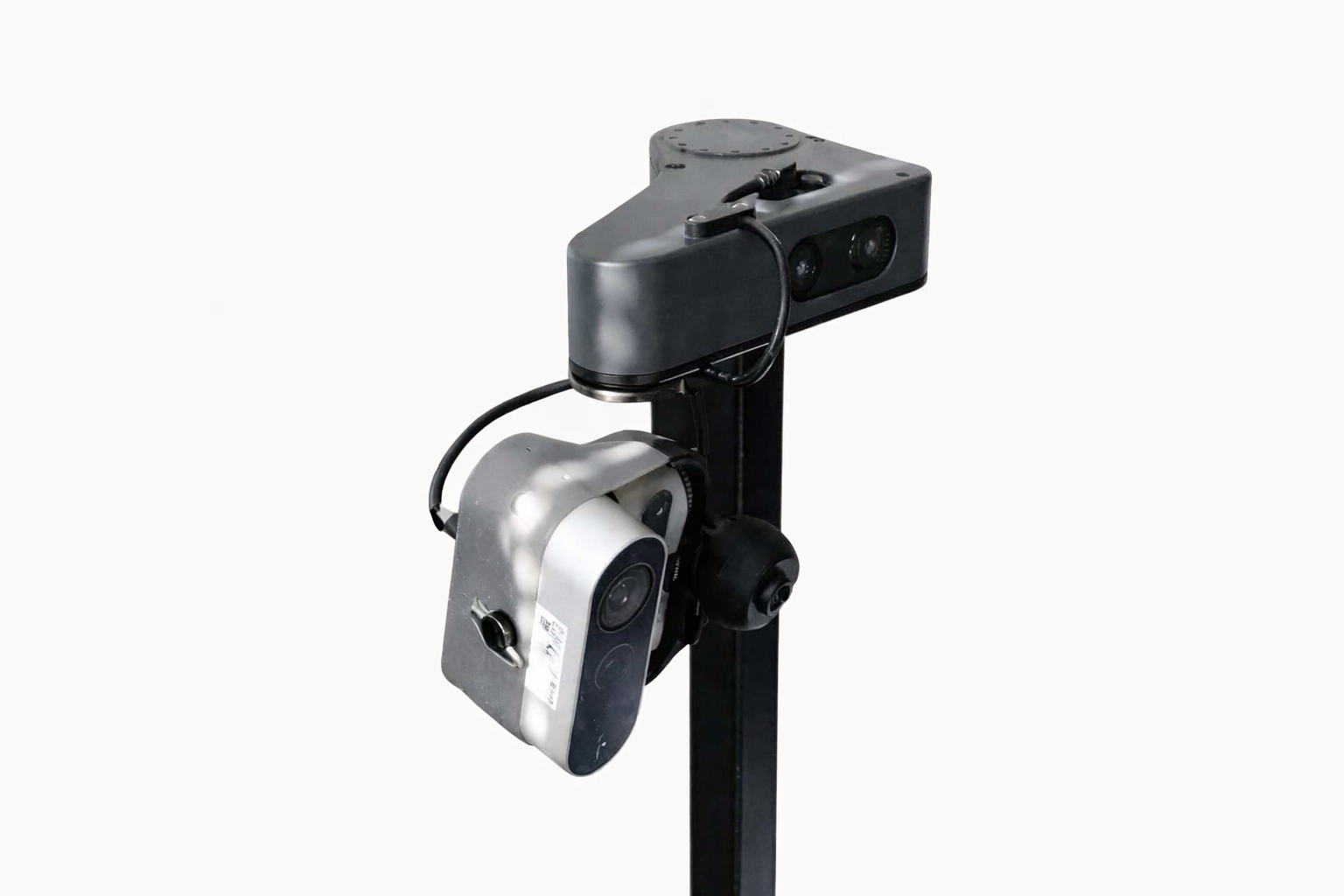
The newly developed robot, created by the TUM Learning Systems and Robotics Lab led by Angela Schoellig, has a simple but functional design. It resembles a broomstick mounted on wheels, with a camera positioned at the top that helps it scan its environment.
Despite its simple appearance, the robot uses sophisticated artificial intelligence systems to perform complex tasks. Unlike many robots that simply recognize images, this robot can interpret visual information and apply it to a specific mission—finding lost objects.
For example, if someone misplaces a pair of glasses in the kitchen, the robot can be instructed to search for them. It will then scan the area, analyze the environment, and determine the most likely locations where the glasses might be.
Building a Precise 3D Map of the Environment
One of the robot’s key capabilities is its ability to create an accurate three-dimensional map of its surroundings.
The robot’s camera initially captures two-dimensional images, but these images also contain depth information. Using this data, the system builds a 3D representation of the room, accurate down to the centimeter.
This map is constantly updated as the robot moves through the space. By maintaining a dynamic map, the robot can track objects, detect changes, and navigate efficiently.
The robot also receives additional information from a connected computer, which helps identify objects in the environment and understand their importance for humans.
Using Internet Knowledge to Guide the Search
Another remarkable feature of the robot is its ability to apply knowledge gathered from the internet to improve its search strategy.
Through the use of a large language model (LLM), the system understands how objects relate to each other in everyday situations. For example, the robot knows that people often place glasses on a table or windowsill, but rarely leave them on a stovetop or inside a sink.
This contextual understanding allows the robot to prioritize likely search locations. On its digital map, different areas are marked with probability scores, indicating where the lost object is most likely to be found.
Research results show that this intelligent search strategy makes the robot nearly 30% more efficient compared to randomly scanning the entire room.
Detecting Changes in Real Time
The robot also has an impressive ability to detect changes in its environment.
It stores previous images of a room and compares them with newly captured images during each search. If something new appears in the environment—such as an object that wasn’t there before—the robot can recognize this change with up to 95% accuracy.
When a new item is detected, the system marks that location as a high-probability search area. This capability significantly improves the robot’s efficiency when locating misplaced objects.
The technology behind this system was introduced in a research paper published in the scientific journal IEEE Robotics and Automation Letters.
Future Developments: Searching Inside Cupboards and Drawers
While the current robot can search open spaces effectively, researchers are already working on expanding its capabilities.
The next development stage involves enabling the robot to search inside closed spaces, such as cupboards or drawers. To achieve this, the robot will need additional hardware such as robotic arms and hands.
These tools would allow the robot to:
- Open cabinet doors
- Pull out drawers
- Identify different types of handles
- Determine how objects should be grasped
By interacting directly with its surroundings, the robot could search for items even in hidden or enclosed locations.
The Future of AI-Powered Household Robots
This innovation highlights the growing role of AI-powered robots in everyday life. Machines that understand their environment, interpret human needs, and perform helpful tasks could soon become common in homes, hospitals, and workplaces.
Researchers believe this foundational technology will play a key role in developing autonomous service robots, including humanoid robots used in factories and caregiving environments.
As artificial intelligence continues to advance, robots like this one from the Technical University of Munich may soon become trusted assistants—helping people save time, reduce frustration, and even locate those everyday items that always seem to disappear.