Date, Path, and How to Watch
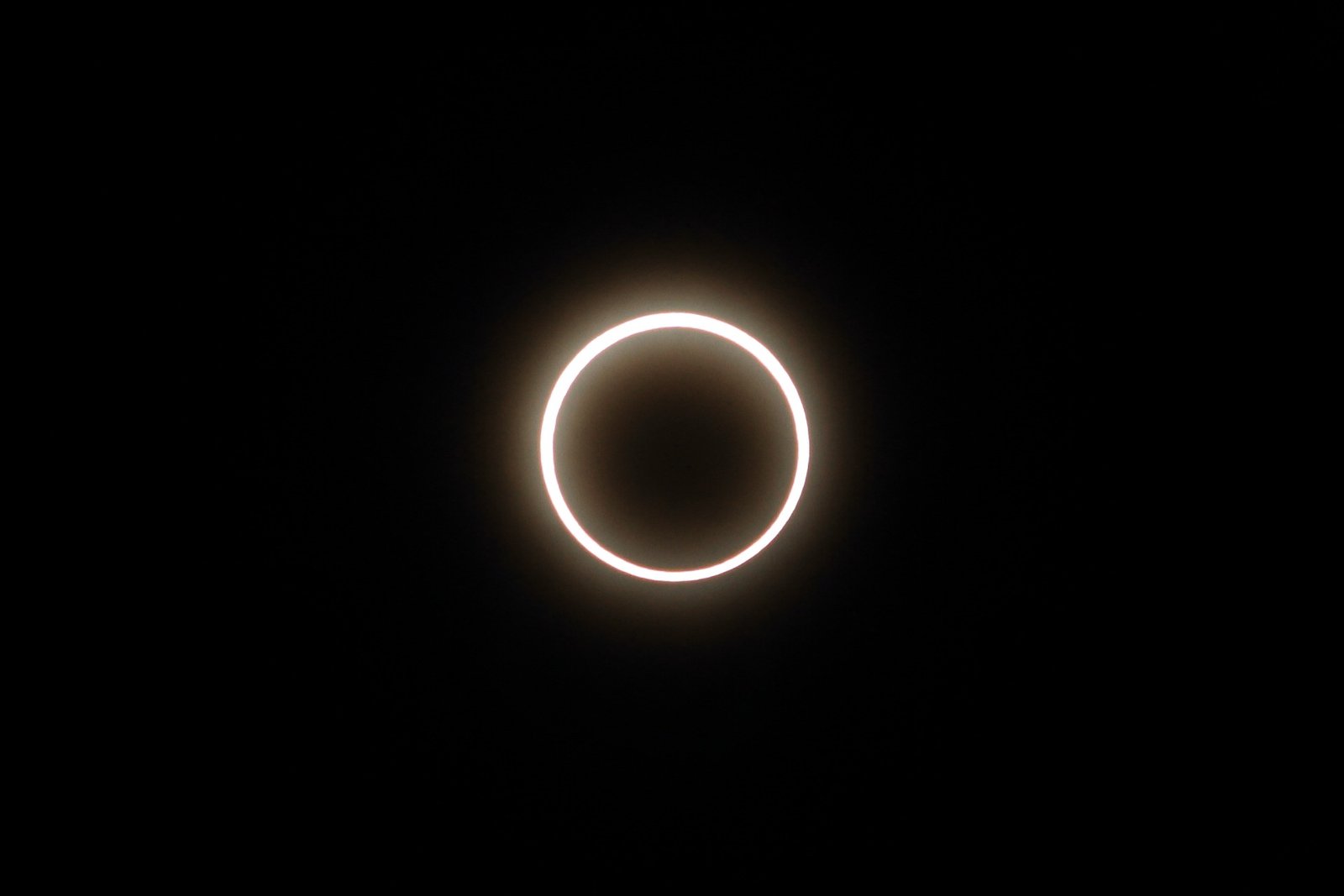
The first solar eclipse of 2026 is almost here, and it’s going to be a big spectacle in the sky in one of the most isolated areas on Earth. On February 17, 2026, sky watchers will encounter an annular solar eclipse, often termed a “ring of fire” eclipse because of the blazing circle of sunlight that stays visible around the moon.
While this uncommon cosmic event offers stunning sights, most of the Earth won’t enjoy a front-row seat. In fact, more penguins than people are likely to watch the complete display!
Let’s break down everything you need to know about the February 2026 annular solar eclipse, including where it will be visible and why it happens.
What Is an Annular Solar Eclipse?
An annular solar eclipse occurs when the moon passes directly in front of the sun during the new moon phase, but appears slightly smaller in the sky than the sun.
This happens because the moon follows an elliptical orbit around Earth. When it is at a more distant point in its orbit, it doesn’t completely block the sun’s disk.
Instead of total darkness — as seen in a total solar eclipse — observers see a brilliant ring of sunlight surrounding the moon. This glowing halo is what gives the event its famous nickname: the “ring of fire” solar eclipse.
During annularity (the peak phase of the eclipse), a thin sliver of sunlight remains visible all the way around the moon’s silhouette.
When Is the Next Solar Eclipse in 2026?
The next solar eclipse will take place on February 17, 2026
This will be the first solar eclipse of 2026, and it promises to be one of the most unusual due to its remote viewing location.
Where Will the February 2026 Eclipse Be Visible?
The dramatic path of annularity stretches approximately:
- 2,661 miles (4,282 kilometers) long
- 383 miles (616 kilometers) wide
This narrow band — where the full “ring of fire” will be visible — cuts across:
- Western Antarctica
- The Davis Sea coast
- Parts of the Southern Ocean
Because of this remote path, very few people will witness the full annular phase in person.
Partial Eclipse Visibility
While annularity is limited to Antarctica, a partial solar eclipse will be visible in:
- Other parts of Antarctica
- Portions of southern Africa
- The southern tip of South America
In some regions near the central path, up to 96% of the sun will be covered for just over two minutes.
Why Will So Few People See It?
Unlike major eclipses that pass over populated continents, this event is largely confined to remote polar regions.
Antarctica has:
- Extremely limited human presence
- Harsh weather conditions
- Minimal infrastructure for tourism
As a result, the February 2026 annular eclipse will likely be witnessed by scientists and researchers — and millions of penguins — rather than large crowds of eclipse chasers.
How Is It Different From a Total Solar Eclipse?
Understanding the difference between an annular eclipse and a total eclipse is key:
| Annular Solar Eclipse | Total Solar Eclipse |
| Moon appears smaller than the sun | Moon fully covers the sun |
| Leaves a visible ring of sunlight | Sun completely blocked |
| Sky darkens but not fully night-like | Sky becomes dramatically dark |
In an annular eclipse, because some sunlight remains visible, proper solar viewing glasses are required at all times. It is never safe to look directly at the sun without certified protection.
How Long Will the “Ring of Fire” Last?
For those within the narrow path of annularity, the peak phase will last a little over two minutes.
While that may seem short, eclipse moments often feel timeless. The gradual dimming of daylight, unusual shadows, and sudden temperature shifts create an unforgettable atmosphere — even if experienced in Antarctica’s icy wilderness.
Why the February 2026 Eclipse Matters
Even though it won’t cross major cities, this event is important for several reasons:
- It highlights the fascinating geometry of the Earth-Moon-Sun system
- It offers scientific observation opportunities in polar regions
- It builds excitement for future eclipses in more accessible locations
Every solar eclipse reminds us of the precise cosmic choreography that governs our solar system.
Final Thoughts: A Rare Polar Sky Show
The February 17, 2026 annular solar eclipse may not attract massive public gatherings, but it remains a spectacular astronomical event. With its glowing “ring of fire” shining over Antarctica, it will be a powerful reminder of nature’s precision and beauty.
For most of us, the experience will come through livestreams and space agency updates rather than firsthand observation. Still, knowing that such a dramatic event is unfolding at the edge of the world makes it no less extraordinary.
If you’re passionate about astronomy, solar eclipses, or space events in 2026, mark your calendar — because even when few humans can see it, the cosmos never fails to put on a show. 🌞