How to reduce your wearable battery anxiety
Although Apple produces some of the greatest smartwatches for 2026, their battery life isn’t particularly noteworthy. The Series 11 lasts only one day, the less expensive SE 3 lasts only eighteen hours, and the Apple Watch Ultra 3 can last almost two days between charges. The older Apple Watch Series 9 and Series 10 are no different.
I’m here to help if the battery life—or lack thereof—of your Apple Watch is making you feel depressed. Making the most of my wrist time between charges is a major obsession of mine as one of the key smartwatch reviewers at Tom’s Guide.
Here are my five tried-and-true tips for reducing power usage and extending the battery life of your Apple Watch.
1. Turn off the display that is always on.
The always-on display feature, which shows a dimmed version of your screen with basic information like the time and weather when the watch is asleep, is one of the biggest overall drains on your watch’s battery performance, even though it doesn’t apply to some older models of the Apple Watch, such as the first two SE models and the Series 5 (and older).
Although I really enjoy this function, it makes the Apple Watch feel more like a traditional wristwatch. It uses a lot of battery power, and turning it off would significantly increase battery life.
Notably, you can still unlock the device and see the home screen by using Apple’s Raise to Wake gesture even when the always-on display is off, or whenever you want.
2. Steer clear of extremely intricate watch faces.
Regarding the always-on display, you may still reduce its power usage by selecting a straightforward watch face with few features if you decide to keep it turned on. Even better, stay away from any that have animations or that refresh a lot (like Weather or Stocks). The largest power hogs are these.
3. When not in use, turn off cellular data.
Another major battery drain is cellular data, but you can reduce power usage by turning it off when you’re at home or anyplace with a strong WiFi signal. If you have the most recent software installed on your Apple Watch, it should accomplish this for you automatically.
When you know you won’t need your phone for a long time, it’s not a bad idea to manually turn it off. In the end, using WiFi rather than a cellular connection is significantly kinder to your Apple Watch’s battery life.
4. Disable background app refresh for apps that aren’t utilized frequently.
Keeping all of your favorite apps up to date is easy with Apple’s Background App Refresh feature. Regretfully, it may also negatively impact the battery life of your Apple Watch.
5. Select the low-power setting.
Keeping all of your favorite apps up to date is easy with Apple’s Background App Refresh feature. Regretfully, it may also negatively impact the battery life of your Apple Watch.
Thankfully, you have the option to explicitly select which apps you wish to have updated automatically in the background and which you do not. I suggest only turning on Background App Refresh for the apps you use the most.
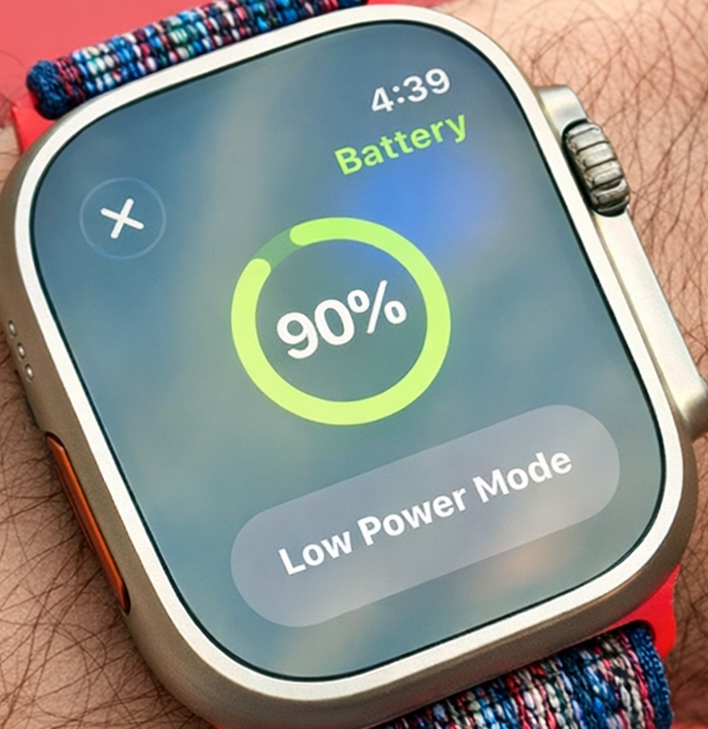
Turning on low-power mode is the quickest, simplest, and most efficient way to extend the battery life of your Apple Watch when all else has failed.
This raises the Apple Watch Series 11’s rating from 24 to 38 hours on a single charge. The Ultra 3’s low-power mode extends its lifespan from 42 to 72 hours. Additionally, the SE 3’s low-power mode provides 32 hours of charge time instead of 18 hours.
Naturally, low-power mode has certain drawbacks. It turns off background heart rate monitoring, low-power mode,
The most notable ones are gesture controls and blood oxygen saturation monitoring (for watches that have the feature).