A Breakthrough That Could Reveal the Secrets of the Universe
Black holes have captivated both scientists and the general public for many years. It was originally thought that direct observation of these enigmatic cosmic objects was impossible. But a new age in contemporary astronomy is about to begin. Scientists are making an incredible effort to get the first-ever film of a black hole in motion.
This innovative endeavor has the potential to revolutionize our comprehension of the behavior of black holes, the evolution of galaxies, and potentially the formation of the cosmos.
The Historic First Image of a Black Hole
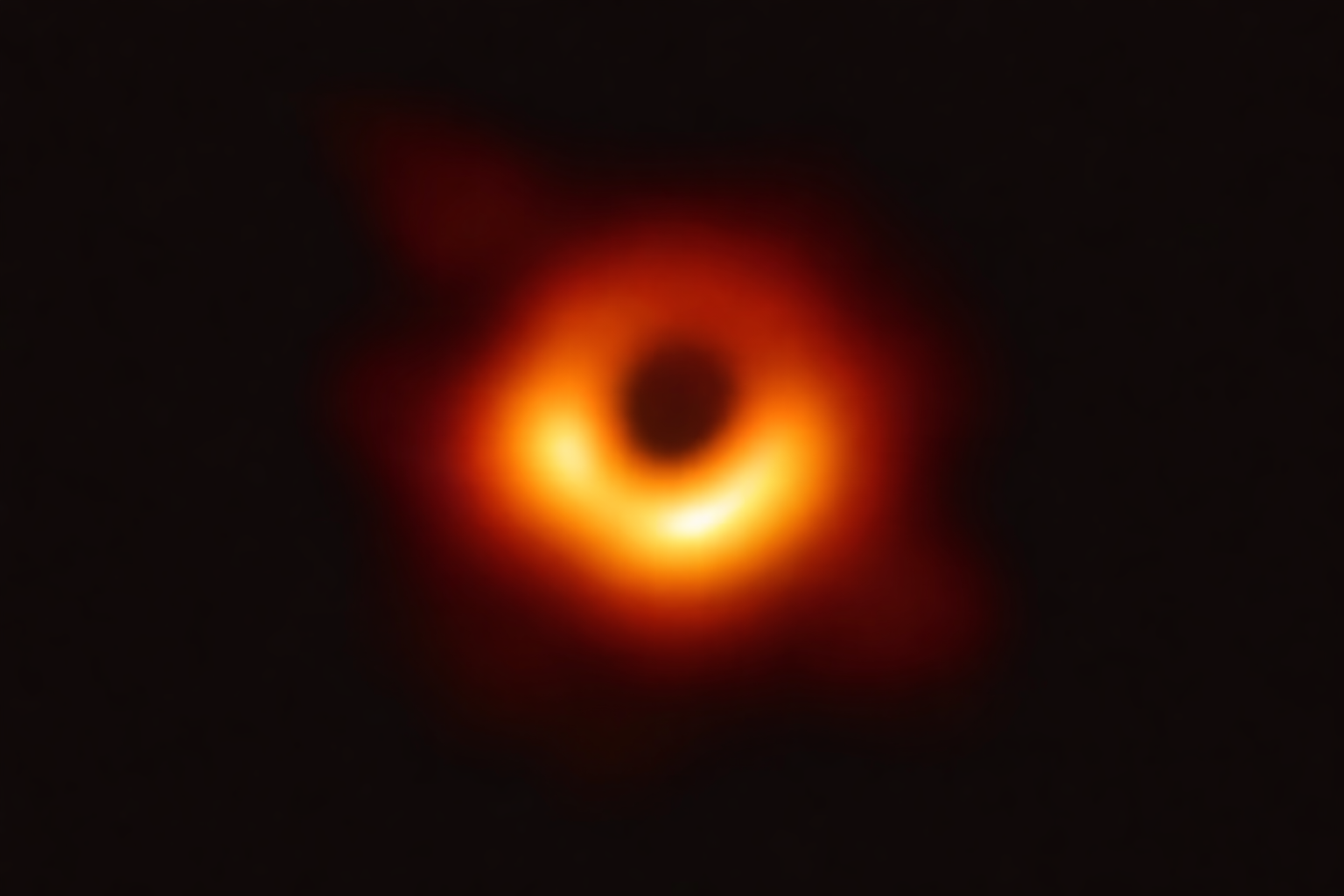
The journey toward filming a black hole began in 2019 when astronomers released the first image of a black hole. The image showed the supermassive black hole at the center of the galaxy Messier 87, often called M87.
The achievement was made possible by the powerful global telescope network known as the Event Horizon Telescope. This network connects radio telescopes located around the world, effectively creating a planet-sized telescope capable of observing extremely distant cosmic objects.
The black hole in M87 lies about 50 million light-years from Earth, yet scientists were able to capture its glowing ring of hot gas surrounding the event horizon — the point beyond which nothing can escape.
That historic image proved that black holes can be observed, not just theorized.
Now, astronomers want to go one step further: turning those images into a movie.
Why Scientists Want to Film a Black Hole
Black holes are very challenging to investigate because they do not emit light. But the stuff and heated gas whirling around them glows brightly.
This substance creates what astronomers refer to as an accretion disk, which is a fast-rotating ring of superheated gas traveling at nearly the speed of light.
Astrophysicist Sera Markoff of the University of Cambridge believes that tracking this gas’s velocity could assist solve a number of long-standing puzzles.
Scientists anticipate that the video will show:
- How black holes spin
- How they consume matter
- Why some material falls inward while other material is ejected as powerful jets
- How black holes influence galaxy formation
Understanding these processes is critical because black holes play a major role in shaping galaxies.
How the Event Horizon Telescope Works
The Event Horizon Telescope is not a single telescope. Instead, it is a global network of radio observatories working together.
These telescopes are located in places such as:
- Antarctica
- Spain
- Chile
- The United States
- Other international observatories
By synchronizing observations across multiple locations, scientists create a virtual Earth-sized telescope.
Originally, the network included eight telescopes, but the system has now expanded to twelve facilities. However, not all of them can observe every target.
For example, the South Pole telescope cannot see the black hole in M87, so it will not participate in this specific observation campaign.
Turning Images into a Time-Lapse Movie
To create a video, astronomers will collect many images over time.
During the observation campaign, the telescopes will capture new data every three to four days between March and April.
Each observation gathers enormous amounts of information — often petabytes of data.
Scientists then combine an entire night’s observations into a single image. When these images are placed together sequentially, they form a time-lapse movie showing how the black hole environment evolves.
According to Vincent Fish of the MIT Haystack Observatory, the black hole in M87 is perfect for this project because its changes occur relatively slowly, over several days to a week.
This slower activity makes it possible to track its movement clearly over time.
Why Sagittarius A Is Harder to Film*
Another famous black hole scientists have studied is Sagittarius A*, located at the center of the Milky Way galaxy.
However, Sagittarius A* is far more unpredictable.
The gas around it changes so quickly that images taken just an hour apart can look completely different. This makes it extremely difficult to combine observations into a smooth video sequence.
Because of this rapid variability, researchers believe M87 remains the best candidate for the first black hole video.
Studying Extreme Physics
The environment near a black hole is one of the most extreme places in the universe.
Matter swirling around the black hole can reach:
- Temperatures of millions of degrees
- Speeds approaching the speed of light
- Powerful magnetic fields
These conditions cannot be recreated in laboratories on Earth.
By studying the motion of gas and plasma near the event horizon, astronomers can test competing theories about how gravity and physics behave in extreme environments.
Understanding Galactic “Feedback”
Black holes do more than consume matter. They can also shape entire galaxies.
For example, the black hole in Messier 87 launches enormous jets of energy and plasma that extend far beyond the galaxy itself.
These jets heat surrounding gas and can prevent it from cooling enough to form new stars. This process is known as galactic feedback.
In some cases, black holes may:
- Trigger star formation
- Slow galaxy growth
- Completely stop new stars from forming
Understanding this influence is crucial to understanding how galaxies evolve across billions of years.
Why This Research Matters for the Universe
Studying black holes isn’t just about exotic cosmic objects. It helps scientists answer some of the biggest questions in astronomy.
Researchers want to know:
- How galaxies formed
- Why galaxies stop producing stars
- How cosmic structures evolved
- What role black holes played in shaping the universe
As Markoff explains, understanding black holes may help explain why the universe looks the way it does today.
The Future of Black Hole Research
Creating the first video of a black hole will not happen overnight. Scientists must process massive amounts of data collected by telescopes worldwide.
This data must be carefully synchronized, analyzed, and converted into images before it can be assembled into a time-lapse sequence.
The process could take months or even years.
However, once completed, the result could become one of the most important astronomical discoveries of the decade.
Conclusion
Black holes were once considered completely invisible objects in space. Today, thanks to advanced technology like the Event Horizon Telescope, astronomers are not only imaging them — they are now attempting to capture them in motion.
If successful, the first video of a black hole could unlock major discoveries about:
- Gravity
- Cosmic evolution
- Galaxy formation
- The origins of the universe
This ambitious project represents another giant leap in humanity’s effort to understand our place in the cosmos.”