Blood Moon Rises Over Vancouver Island During Spectacular Total Lunar Eclipse
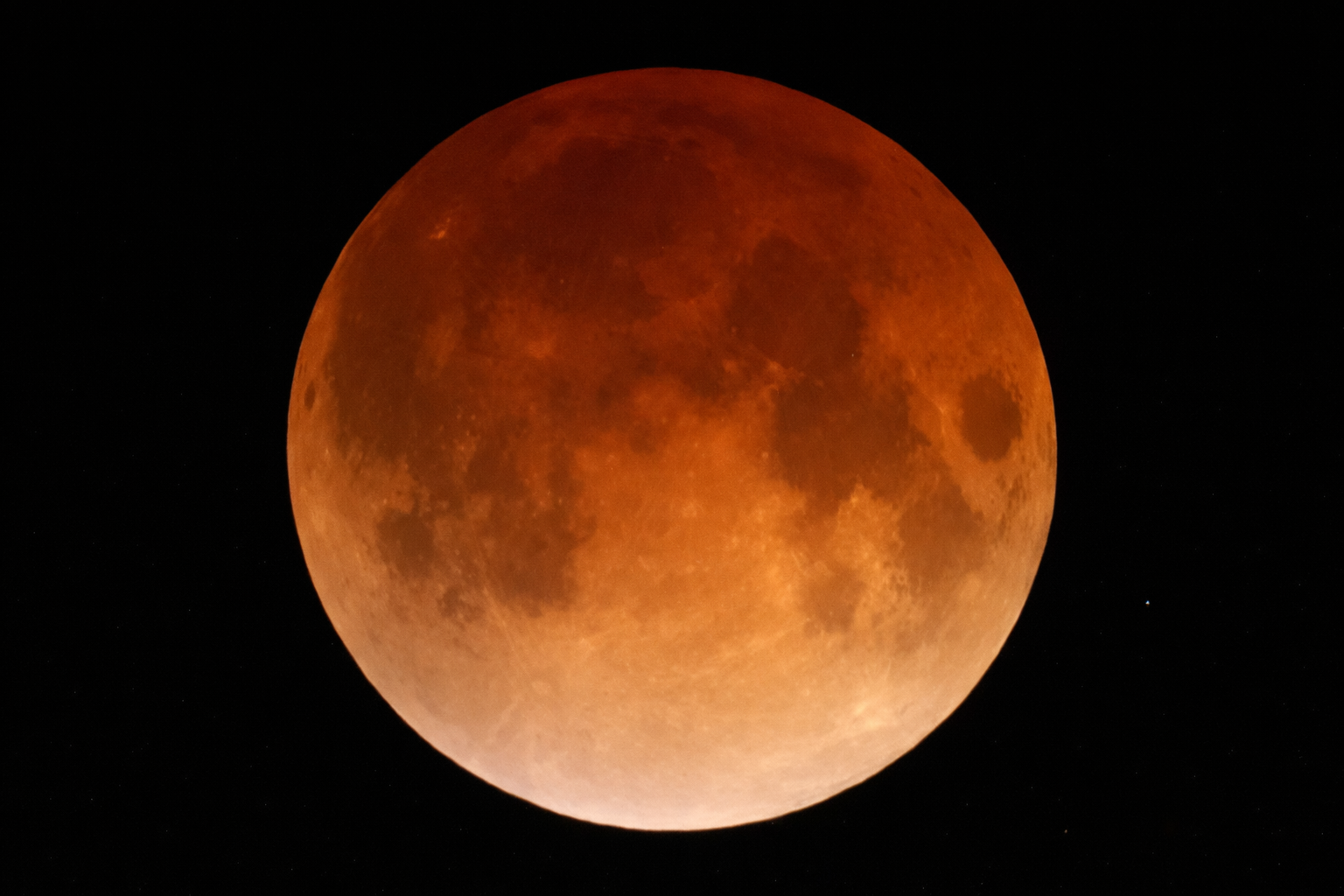
A rare blood moon brightened the night sky early on Tuesday morning, providing skywatchers on Vancouver Island with an amazing celestial display. The full moon was changed into a brilliant crimson orb that could be seen over most of the world during the breathtaking event, which is formally known as a total lunar eclipse.
What Is a Blood Moon?
When the Earth passes directly between the sun and the moon during a full moon phase, it is called a blood moon. The moon’s surface is entirely covered by Earth’s shadow as a result of this alignment. But the moon becomes a vivid orange-red instead of becoming dark.
During a total lunar eclipse, sunlight is bent and scattered by Earth’s atmosphere, according to NASA. Longer red wavelengths pass through and light up the moon, while shorter blue wavelengths are shut away. The phrase “blood moon” refers to the moon’s striking reddish hue caused by this scattering phenomenon.
Early Morning Spectacle Over Vancouver Island
The total lunar eclipse reached its peak between 3 a.m. and 4 a.m., with the full blood moon visible around 3 a.m. Tuesday. Prior to that, viewers captured images of the moon on Monday evening as faint red hues began to emerge.
Unfortunately, cloud cover made viewing conditions challenging in some areas, including Victoria, where many residents were unable to witness the eclipse at its peak. Still, clear skies in other parts of the island provided unforgettable views of the glowing lunar spectacle.
Global Visibility of the Lunar Eclipse
Canada was not the only country to witness this total lunar eclipse. Early in the morning, the red moon was visible throughout North America, Central America, and portions of South America. Later that evening local time, skywatchers in Australia and eastern Asia witnessed the eclipse.
A total lunar eclipse creates the recognizable red tint that captivates both astronomers and casual spectators, in contrast to a partial lunar eclipse, in which only a segment of the moon enters Earth’s shadow.
When Is the Next Blood Moon?
For those who missed this rare event, patience will be required. According to astronomy experts, the next total lunar eclipse won’t occur until the end of 2028. Events like these are reminders of the predictable yet awe-inspiring movements of our solar system.
As the blood moon faded and daylight returned over Vancouver Island, many were left reflecting on the quiet beauty of one of nature’s most remarkable astronomical phenomena.