NASA’s Curiosity Rover Finds “Perfect Parking Spot” on Mars and Makes a Groundbreaking Discovery
Arriving at what scientists call a “perfect parking spot” for scientific research, the Curiosity rover has accomplished a new milestone on Mars. Researchers have a unique chance to study the ancient geology of the Red Planet in previously unheard-of detail because to this stable position.
The rover, which is run by NASA, has set up shop in “Laguna del Bayo.” Curiosity can securely deploy its equipment and measure Martian rocks from this safe location, possibly revealing information about the planet’s prehistoric environment and whether microbial life once existed there.
A Strategic Location for Scientific Discovery
Curiosity’s journey to this location was not accidental. After navigating rugged and unpredictable terrain, the rover successfully reached a stable surface where the risk of slipping or shifting is extremely low.
This “perfect parking spot” allows the rover to maintain optimal contact with the Martian surface while using its sophisticated scientific instruments. Stability is essential for delicate operations such as chemical analysis of rocks, which requires precise placement of sensors.
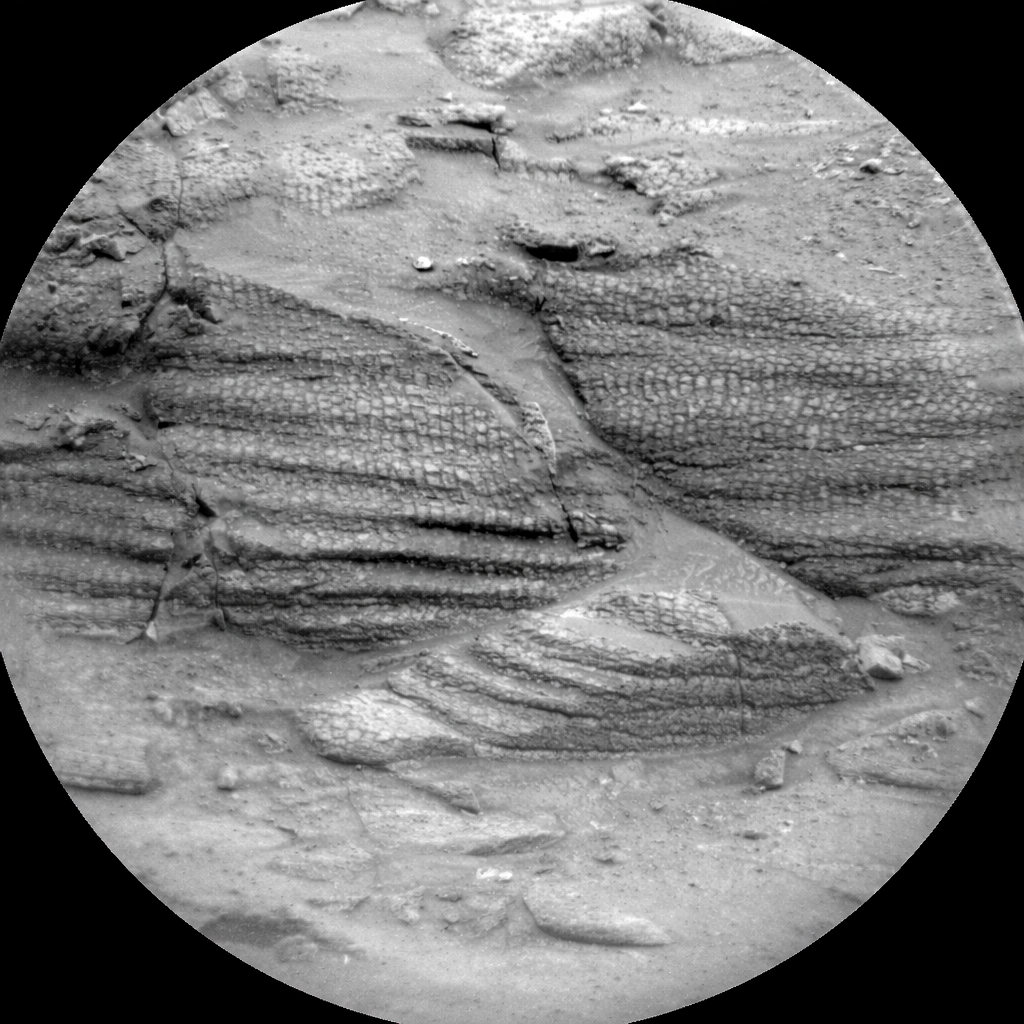
The site’s underlying bedrock geology is particularly exciting to scientists. Researchers believe the area may contain unique geological structures called “boxwork” formations—patterns created when minerals fill fractures in rock and later remain after surrounding materials erode.
If confirmed, these structures could provide valuable insights into Mars’ geological history and past environmental conditions.
Curiosity’s Scientific Instruments at Work
At the new location, Curiosity has begun a series of carefully planned scientific experiments. One of the rover’s main tasks involves analyzing a rock target named “Tarija.”
Using the APXS (Alpha Particle X-Ray Spectrometer) instrument, the rover is studying the chemical composition of the rock. This analysis helps scientists determine which elements are present and how they may have formed.
Another key tool, ChemCam, uses a powerful laser to vaporize tiny amounts of rock material. The resulting light signature reveals detailed information about the minerals within the rock.
Meanwhile, Curiosity’s Mastcam imaging system is capturing high-resolution photographs of the surrounding terrain. These images allow scientists to study nearby ridges, fractures, and rock formations to better understand the region’s geological history.
Investigating the Martian Atmosphere
Beyond studying rocks, Curiosity is also gathering valuable data about Mars’ atmosphere.
One of the rover’s ongoing tasks involves measuring atmospheric dust levels using Mastcam tau observations. Dust plays a major role in the Martian climate, influencing temperature, visibility, and solar power availability for spacecraft.
The rover will also conduct surveys of dust devils, swirling columns of wind-driven dust that are common on Mars. These observations help scientists understand how the planet’s atmosphere behaves and how weather patterns evolve over time.
Such knowledge is crucial for planning future missions to the Red Planet.
A 54-Meter Drive Toward the Next Target
Curiosity’s exploration is far from over. The rover team has planned a 54-meter (177-foot) drive toward another promising scientific target.
After reaching the next location, the rover will perform additional studies, including imaging the ground beneath its wheels and identifying new rock samples for further analysis. Some of these observations will be conducted autonomously using onboard systems that allow the rover to select interesting targets on its own.
This ability significantly increases the efficiency of scientific exploration on Mars.
What This Discovery Means for Future Mars Exploration
Curiosity’s latest achievement represents another important step in humanity’s effort to understand Mars.
By analyzing ancient rocks and atmospheric conditions, the rover continues to provide evidence about how the planet evolved over billions of years. These findings could help scientists determine whether Mars once had conditions suitable for microbial life.
The data collected at Laguna del Bayo will also support the planning of future missions, including robotic explorers and potential human missions to Mars.
After more than a decade on the Martian surface, Curiosity continues to demonstrate that the Red Planet still holds many secrets waiting to be discovered.