Terraforming Mars: Why New Research Says Making the Red Planet Habitable Is Far More Difficult Than We Thought
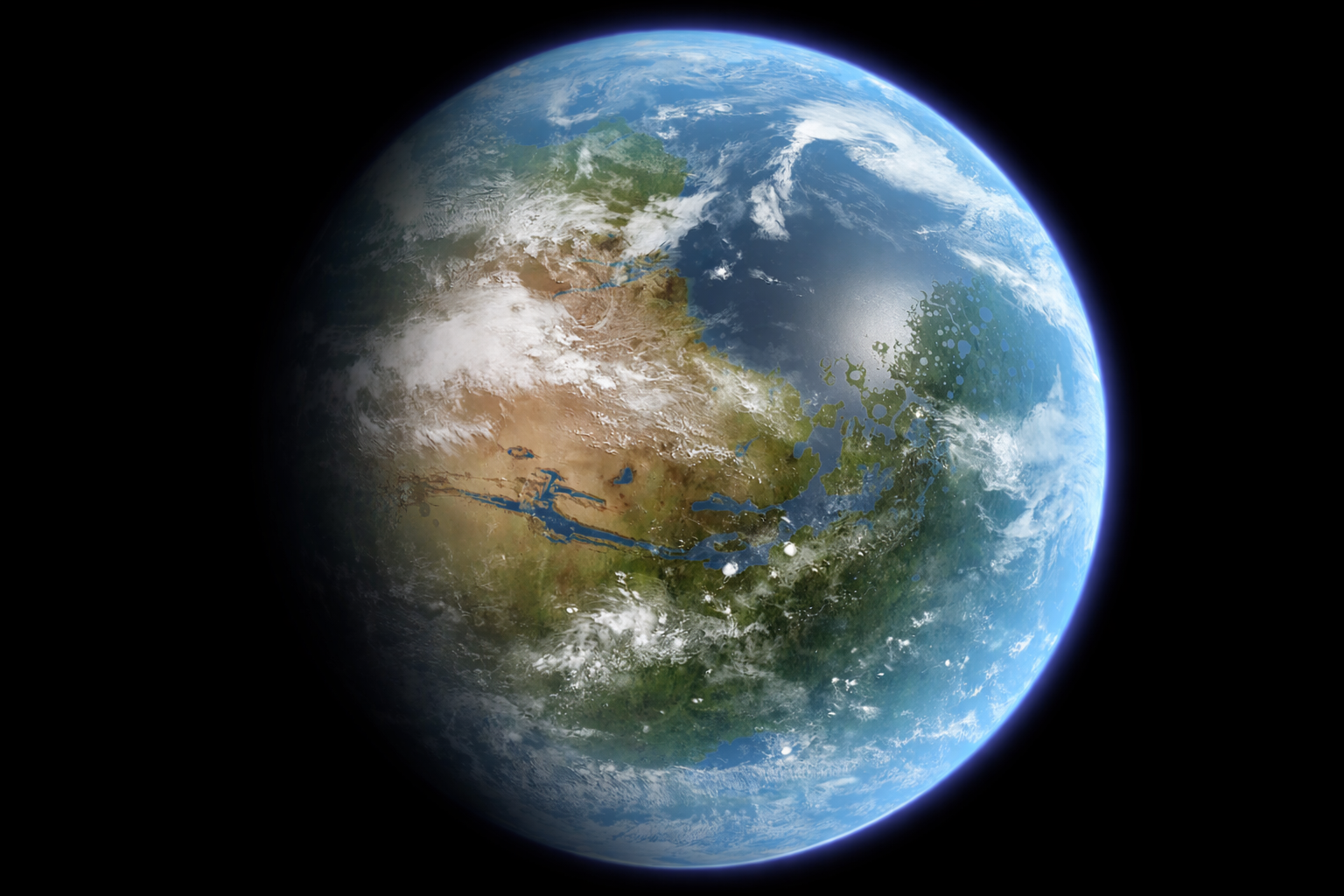
For many years, scientists and space enthusiasts have been captivated by the idea of making Mars a second home for humanity. In popular conversations about terraforming Mars, people frequently envision a time when they can freely roam the Red Planet without spacesuits, breathing clean air beneath a blue sky. New study, however, indicates that realizing this ideal would be significantly more challenging than previously thought.
According to a recent research by Slava Turyshev of NASA Jet Propulsion Laboratory, it would take a great deal more energy, resources, and technology than what humans presently have to make Mars habitable.
The Longstanding Dream of Terraforming Mars
The process of changing a planet’s ecology to make it habitable for humans is known as “terraforming.” When scientists started investigating whether the harsh circumstances on Mars could be altered decades ago, the concept gained traction.
Carl Sagan was among the first intellectuals to address planetary climate change in the 1940s. Since then, scientists have put out a number of plans to manufacture oxygen, thicken the planet’s atmosphere, and warm it.
The ultimate objective of terraforming Mars would be to establish an environment similar to Earth in which people could survive without the need for complex life support systems. Higher atmospheric pressure, warmer temperatures, and breathing air would be necessary for such a metamorphosis.
However, Turyshev’s research indicates that complete terraforming is still unattainable for the foreseeable future due to the enormous scope of these duties.
Five Key Milestones for Terraforming Mars
In his research, Turyshev outlines five potential stages that would gradually move Mars from its current hostile state toward habitability.
1. The Current Martian Environment
Today, Mars is extremely cold and has very low atmospheric pressure. Humans could only survive using sealed habitats and full life-support systems.
2. Reaching the Triple Point of Water
The first major milestone would be increasing atmospheric pressure to about 6.1 millibars, known as the triple point of water. At this level, water could exist as liquid, solid, and vapor.
3. Greenhouse Agriculture
The next stage involves creating protected “shirtsleeve greenhouses,” allowing crops to grow inside controlled environments while Mars remains hostile outside.
4. Safe Pressure for Human Survival
The atmosphere would then need to reach 62.7 millibars, a pressure where human blood would not boil at normal body temperature.
5. A Breathable Atmosphere
The final stage would require an atmosphere made mostly of nitrogen and oxygen with a pressure around 500 millibars, allowing humans to live on Mars without spacesuits.
Each step requires massive technological and industrial effort.
The Massive Resource Challenge
One of the biggest obstacles is the amount of gas needed to thicken the Martian atmosphere. To increase pressure by just one millibar, scientists would need about 3.89×10¹⁵ kilograms of gas.
To create a breathable atmosphere, the required gas would reach 10¹⁸ kilograms, comparable to the mass of a small moon. Although such materials may exist elsewhere in the solar system, transporting them to Mars would require technology far beyond today’s capabilities.
Warming the Planet
Mars is also extremely cold, meaning temperatures must increase by roughly 60°C to support stable liquid water.
Some scientists have suggested releasing greenhouse gases or using reflective mirrors in space to concentrate sunlight on the planet. However, Turyshev estimates that achieving this would require 70 million square kilometers of mirrors—an engineering project far beyond anything humanity has attempted.
Oxygen Production and Water Supply
Creating breathable air would require approximately 8.2×10¹⁷ kilograms of oxygen. One possible method is extracting oxygen from water using electrolysis.
Fortunately, Mars contains significant amounts of ice. Scientists estimate that about 20% of known surface ice could supply the water needed to generate enough oxygen. Yet extracting and processing this water at such a massive scale remains a major technological challenge.
The Biggest Barrier: Energy
Perhaps the most difficult obstacle is energy. Producing enough oxygen through electrolysis would require approximately 1.2×10²⁵ joules of energy.
Even if this process occurred over 1,000 years, it would demand a continuous power output of 380 terawatts—almost 20 times the current global annual energy consumption on Earth.
With today’s energy technology, such power levels are simply unattainable.
A More Realistic Alternative: Paraterraforming
Instead of attempting to transform the entire planet, Turyshev suggests focusing on paraterraforming. This concept involves building large enclosed habitats or greenhouses that create controlled environments for humans to live and grow food.
This approach would allow settlements on Mars without drastically altering the entire planet. Interestingly, the idea has also appeared in science fiction, including the famous **Mars Trilogy.
The Future of Human Life on Mars
While full terraforming of Mars remains an inspiring vision, the new research highlights just how complex and resource-intensive the task would be. With current technology, the transformation of the Red Planet into an Earth-like world may remain centuries—or even millennia—away.
For now, scientists believe the more realistic path toward human presence on Mars lies in advanced habitats, sustainable energy systems, and gradual technological breakthroughs that could one day make the dream of a living planet possible.