A 2026 AI-Powered Health Wearable Set to Challenge Apple Watch
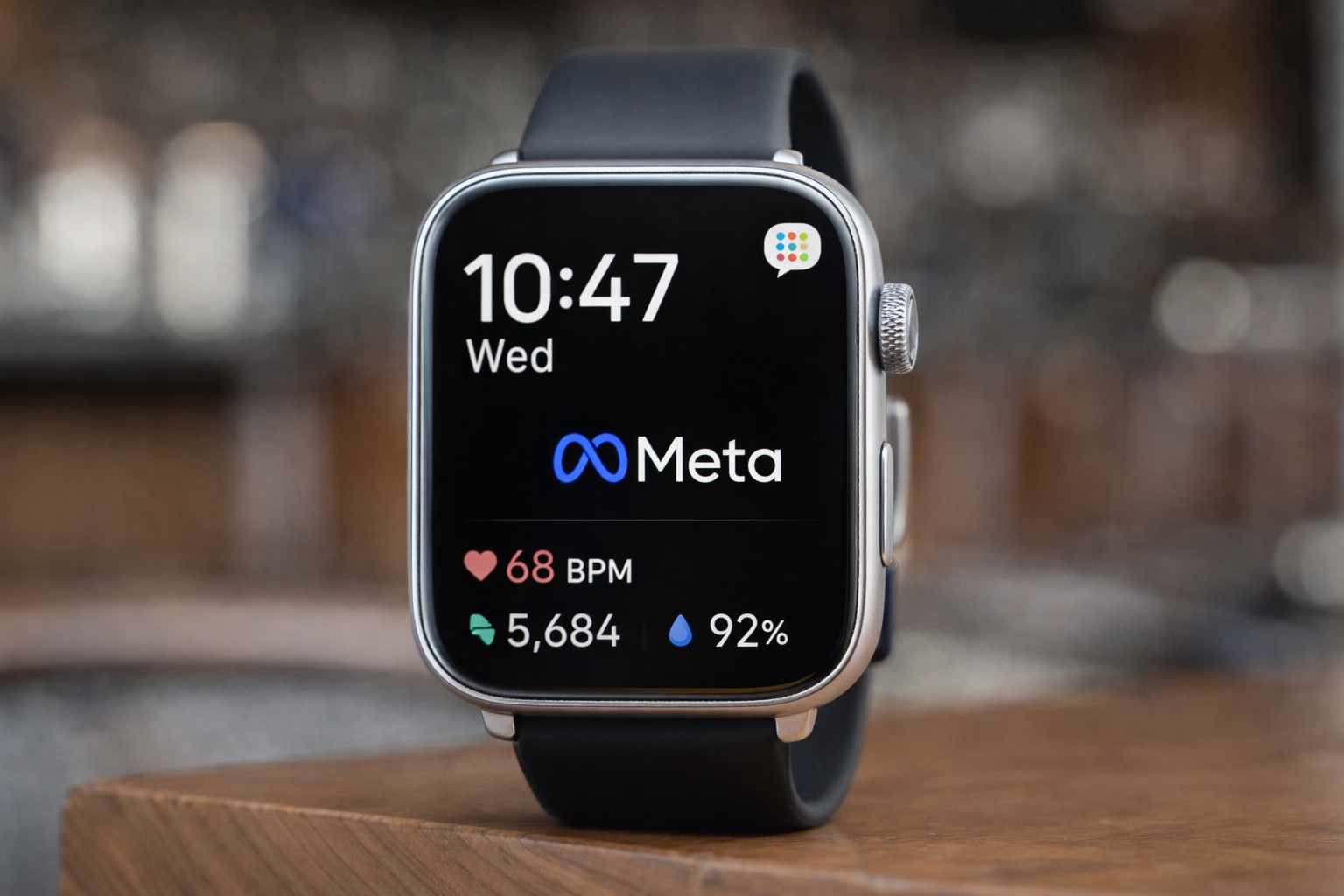
Meta is stepping back into the wearable arena with a renewed vision. After shelving earlier smartwatch concepts, the company is reportedly preparing to launch its first wrist device in 2026. Internally known as “Malibu 2,” the smartwatch is expected to focus heavily on health tracking and artificial intelligence integration.
This move signals more than just a new product launch — it reflects Meta’s broader ambition to build an interconnected AI ecosystem that spans smart glasses, augmented reality devices, and now, potentially, your wrist.
Meta’s Return to the Smartwatch Market
Meta’s smartwatch ambitions aren’t new. Around five years ago, the company explored multiple wearable concepts, including designs featuring dual cameras. However, in 2022, those plans were paused amid cost-cutting measures within its Reality Labs division.
Now, the strategy appears refined and more focused.
Rather than experimenting with flashy hardware features, the Malibu 2 smartwatch is expected to center on two powerful trends dominating the wearable tech market:
- Advanced health and fitness tracking
- Deep AI integration
This streamlined approach suggests Meta has learned from its earlier attempt and is aiming for a more practical, ecosystem-driven product.
Health Tracking at the Core
Health monitoring remains one of the strongest drivers of smartwatch adoption worldwide. Consumers increasingly rely on wearables for:
- Heart rate monitoring
- Sleep tracking
- Activity and workout analysis
- Stress and wellness insights
Meta’s Malibu 2 is expected to compete directly in this space, positioning itself as a serious health-focused wearable.
The wearable tech market has been shaped significantly by the success of the Apple Watch, which set the benchmark for biometric tracking and seamless ecosystem integration. Any new entrant must offer meaningful innovation to stand out.
Meta’s advantage may lie in pairing health data with AI-driven personalization.
Built-In Meta AI: The Key Differentiator
One of the most intriguing aspects of Malibu 2 is its reported integration of Meta’s AI assistant directly into the smartwatch experience.
Rather than functioning solely as a notification hub or fitness tracker, the device could act as an intelligent companion that:
- Interprets biometric data in real time
- Offers contextual health recommendations
- Integrates seamlessly with other Meta devices
- Responds through voice-driven AI interactions
As the wearable tech market evolves, the future appears less about raw hardware specs and more about intelligent software ecosystems.
Meta’s AI ambitions already extend beyond watches. The company has seen strong demand for its AI-powered smart glasses, signaling growing consumer interest in ambient computing — technology that blends quietly into daily life.
Smart Glasses and Ecosystem Strategy
Meta’s smartwatch will not operate in isolation.
The company’s AI-driven smart glasses, developed in partnership with Ray-Ban, have gained notable traction. Shipments reportedly reached nearly 6 million units last year, reflecting significant consumer interest.
Due to strong U.S. demand and limited supply, Meta recently paused international expansion of its smart glasses lineup to focus on fulfilling domestic orders. That decision underscores the growing appetite for wearable AI devices.
Reports also suggest that Meta is currently developing multiple augmented and mixed-reality glasses projects. However, the company is reassessing timelines to avoid overwhelming the market with too many new devices at once.
In this context, Malibu 2 appears to be part of a larger wearable ecosystem strategy — one that connects glasses, AI assistants, and health tracking into a unified experience.
The Competitive Smartwatch Landscape in 2026
Meta’s smartwatch won’t enter an empty market.
North America’s smartwatch sector has long been dominated by Apple, while major Android players like Samsung and Google maintain strong positions. The battle for wearable dominance is intensifying as companies expand beyond smartphones into full ambient ecosystems.
While Apple focuses on expanding its ecosystem through wearables and potentially new smart glasses, Google has confirmed its 2026 smart glasses will integrate with Android watches. The competition is no longer just about wrist devices — it’s about who controls your digital environment across devices.
Meta’s strategy differs slightly.
Instead of competing solely on hardware specifications like battery life or display brightness, Meta appears to be aiming at a larger vision:
Owning the AI-powered lifestyle layer that connects your wrist, eyes, and voice interactions.
Why Malibu 2 Could Reshape the AI Wearable Market
The wearable tech industry is moving toward a new phase where AI and biometric data merge to create personalized, predictive experiences.
Malibu 2’s success will depend on three critical factors:
1. AI Accuracy and Usefulness
Consumers will expect meaningful insights, not gimmicks. If Meta’s AI can genuinely enhance health tracking and daily productivity, the device could gain traction.
2. Ecosystem Integration
A seamless link between smartwatch, smart glasses, and Meta’s broader AI services will be essential.
3. Market Timing
With increasing interest in AI wearables and health-focused technology, 2026 may be the right moment for Meta to re-enter the smartwatch space.
The Bigger Picture: The Race for Ambient AI
The smartwatch battle is evolving into something bigger. Tech giants are racing to dominate:
- Your wrist (smartwatches)
- Your ears (AI audio devices)
- Your eyes (smart glasses)
Meta’s Malibu 2 smartwatch represents more than a wearable — it’s part of a broader ambition to become a leader in ambient AI computing.
If Meta executes its vision effectively, Malibu 2 could mark a turning point for the company’s hardware strategy and reshape the AI wearable ecosystem.
As 2026 approaches, one thing is clear: the competition to control the future of wearable AI is just getting started.