Fuel Leak Fixes, Countdown Test, and March Liftoff Target
For the first time in more than 50 years, NASA is preparing to send astronauts back toward the Moon. But before that historic journey begins, engineers are making sure every system works perfectly — especially after recent fuel leaks delayed the mission.
Another significant step in America’s return to deep space exploration has been taken with the official restart of a critical practice countdown for Artemis II by the space agency.
NASA Conducts Critical Fueling Test for Artemis II
At the heart of this mission is the powerful NASA Artemis program, designed to return humans to the Moon and prepare for future missions to Mars.
Earlier this month, a fueling test was halted due to liquid hydrogen leaks, the same type of issue that disrupted the first uncrewed Artemis flight three years ago. Liquid hydrogen is an extremely cold and volatile fuel, making even small leaks a serious safety concern.
To resolve the issue, launch teams:
- Replaced two faulty seals
- Cleared a clogged filter
- Conducted system inspections at the launch pad
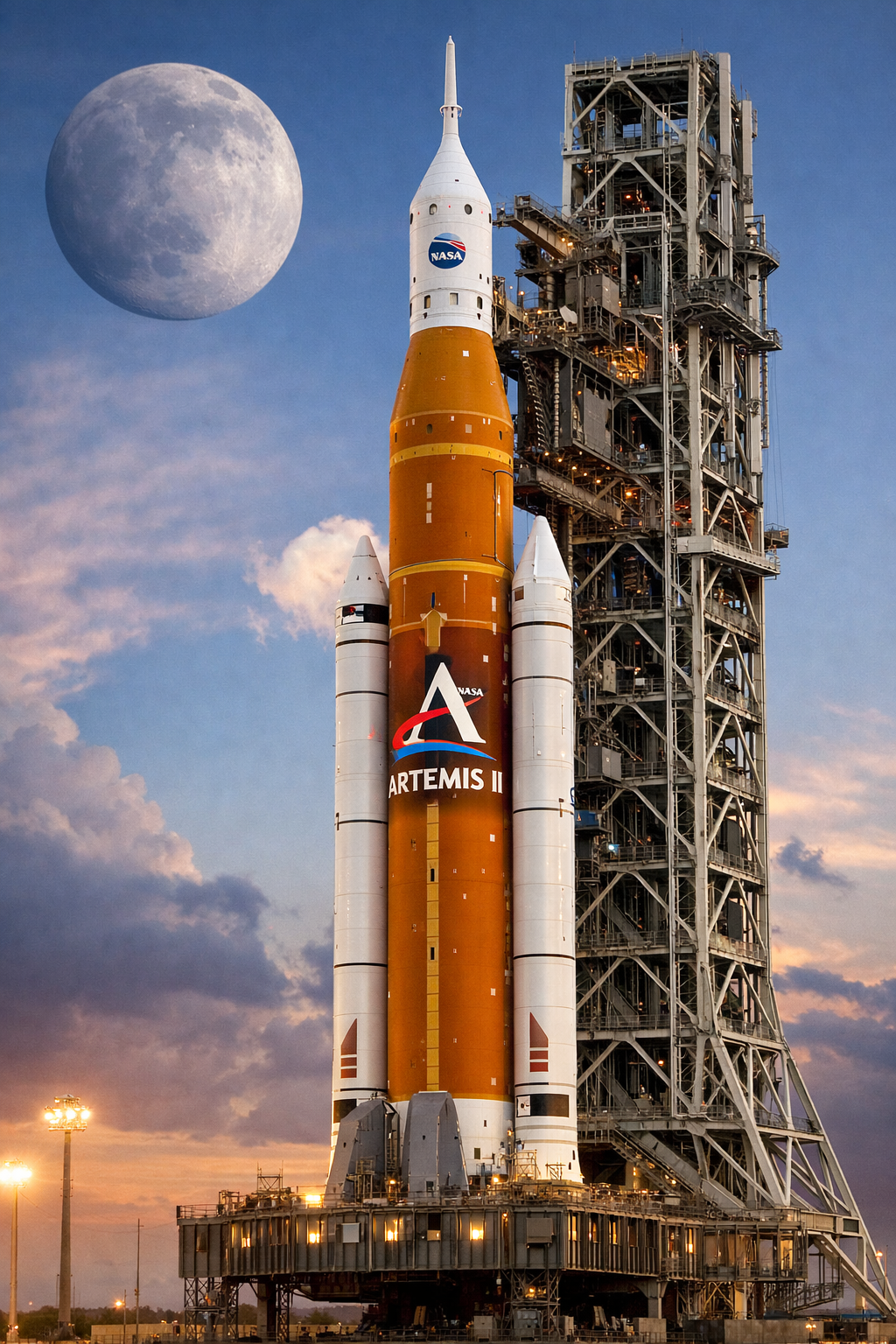
The repairs were completed at Kennedy Space Center, where the massive rocket now stands ready for another attempt.
Space Launch System (SLS): The Rocket Powering the Mission
The towering rocket designated to carry astronauts around the Moon is the Space Launch System (SLS). It is the most powerful rocket NASA has ever built.
The SLS will:
- Launch four astronauts aboard the Orion spacecraft
- Perform a lunar flyby mission
- Test deep-space systems before a future Moon landing
The current two-day practice countdown will culminate in an attempted fuel tank fill-up. If successful and leak-free, NASA can officially set a launch date.
The earliest possible liftoff window is March 6, though officials chose not to move the date earlier to allow more time for analyzing fueling data.
Artemis II Astronauts Monitor from Afar
Unlike the final launch, the four Artemis II astronauts are not present at the pad for this dress rehearsal. Instead, they are observing remotely as NASA tests systems.
This mission is especially historic because it will mark:
- The first crewed Artemis flight
- The first time astronauts travel toward the Moon since 1972
- A new chapter in American lunar exploration
First Crewed Moon Mission Since Apollo 17
The last time humans journeyed to the Moon was during the Apollo program, specifically on Apollo 17 in December 1972.
That mission marked the end of an era in lunar exploration. Now, more than five decades later, Artemis II aims to reopen that pathway.
Unlike Apollo missions, Artemis is focused on:
- Establishing a sustainable human presence on the Moon
- Landing the first woman and first person of color on the lunar surface (in future missions)
- Using the Moon as a stepping stone to Mars
Why Liquid Hydrogen Leaks Matter
Liquid hydrogen is one of the most efficient rocket fuels available — but it’s also notoriously difficult to handle.
Challenges include:
- Extreme low temperatures (–423°F / –253°C)
- High volatility
- Sensitivity to tiny seal imperfections
Even a small leak can delay a launch by weeks or months. That’s why NASA engineers are taking extra precautions before approving the March launch window.
Safety remains the agency’s top priority, especially with astronauts onboard.
When Could Artemis II Launch?
If the fueling test proceeds without any leaks, NASA could confirm a launch date as early as March 6.
However, officials emphasized that:
- All test data must be carefully analyzed
- Weather conditions must cooperate
- Final safety reviews must be completed
Only after these steps will the Artemis II moon mission receive final approval for liftoff.
Why Artemis II Is So Important
Artemis II is more than just another rocket launch. It represents:
- America’s return to deep space human exploration
- A new era of lunar science and technology
- Preparation for future Mars missions
The mission will test life-support systems, deep-space navigation, and crew operations far beyond Earth orbit.
If successful, it will pave the way for Artemis III — the mission intended to land astronauts on the Moon’s surface.
Final Thoughts
After decades of waiting, humanity stands on the edge of returning astronauts to the Moon. The latest fueling test may seem like a technical checkpoint, but it is a critical milestone toward one of the most ambitious space missions of the modern era. If the countdown rehearsal succeeds, March could mark the beginning of a historic journey — one that reconnects us with our past achievements and propels us toward a bold future among the stars.