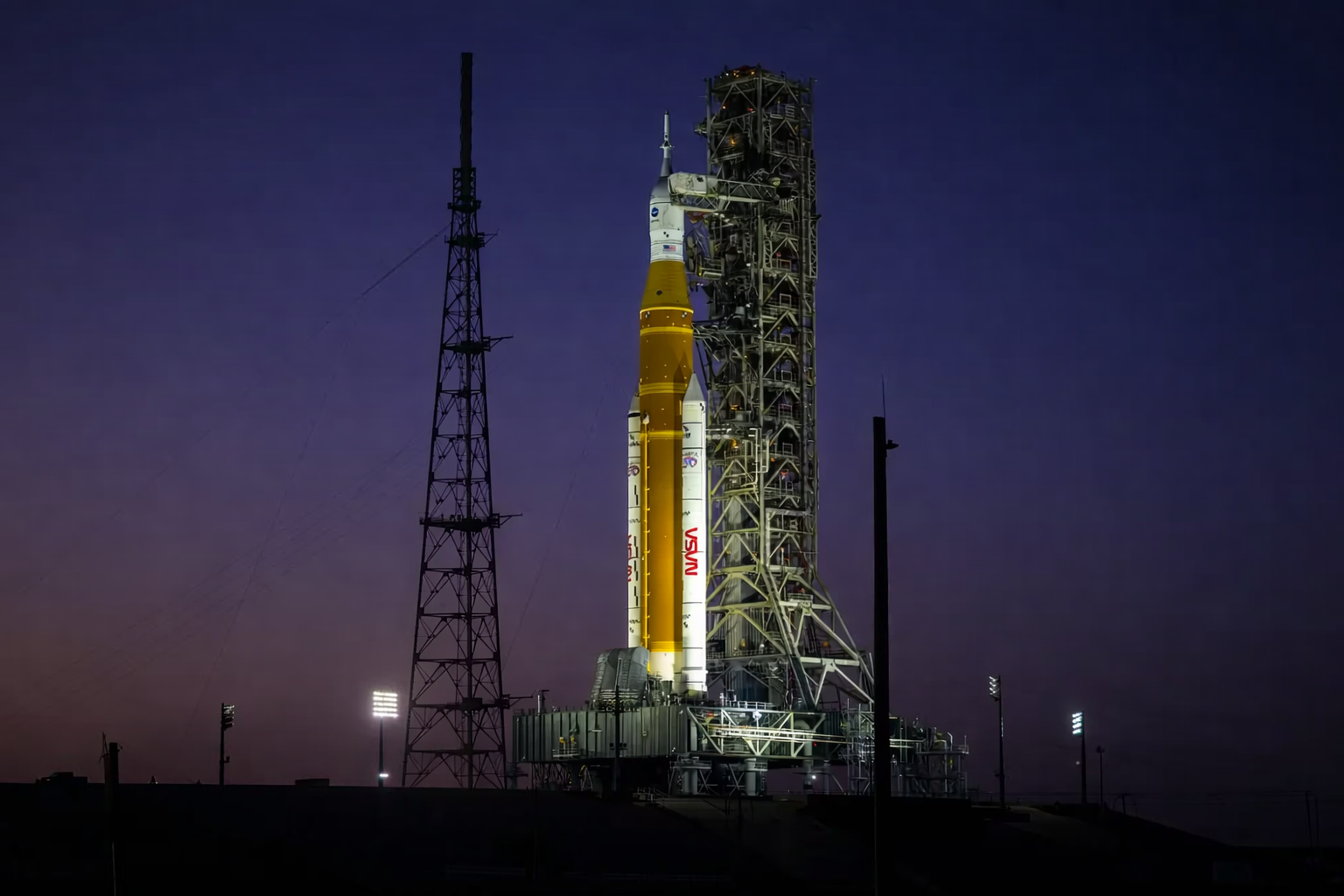
NASA is pushing forward with additional testing on its Space Launch System (SLS) after hydrogen leaks disrupted a recent wet dress rehearsal. The agency conducted a new “confidence test” on February 12 to evaluate repaired seals in the rocket’s liquid hydrogen fueling system — a critical step before the highly anticipated Artemis 2 mission.
The most recent test yielded useful data, but because of problems with ground support equipment, it was only partially successful. All the information you require on NASA’s current study into the SLS hydrogen leak and its implications for the Artemis program can be found here.
What Happened During the Latest SLS Hydrogen Test?
NASA performed a partial fueling test on the SLS core stage’s liquid hydrogen tank to confirm repairs made after leaks were detected during the February 2 wet dress rehearsal.
During that earlier rehearsal, engineers loaded the rocket with liquid hydrogen and liquid oxygen as part of a full countdown simulation. However, hydrogen leaks forced NASA to halt the test early. The suspected cause? Faulty seals in the hydrogen transfer lines feeding fuel into the rocket.
To address the issue, NASA replaced two seals and conducted a follow-up “confidence test” to evaluate whether the repairs were effective.
But the test encountered a new complication.
According to NASA’s official statement, teams experienced an issue with ground support equipment that reduced the flow of liquid hydrogen into the rocket. Despite this setback, engineers were still able to gather important data from the fueling interface — the same location linked to the earlier hydrogen leaks.
NASA emphasized that the test achieved several key objectives, even though it did not proceed under ideal conditions.
The agency now plans to inspect the ground equipment and replace a filter believed to have restricted hydrogen flow.
NASA Administrator Speaks on SLS Progress
Jared Isaacman referenced the test during live coverage of the Crew-12 launch on February 13, describing it as a “mini wet dress rehearsal.”
He stated:
“We’re doing a series of mini wet dress rehearsal tests today to make sure we give that vehicle the highest probability of success to get off the pad in early March.”
At a post-launch press conference, Isaacman acknowledged the ongoing hydrogen challenges, noting similarities to issues experienced during Artemis 1.
“On Artemis 1, we were combating hydrogen leaks multiple times. We obviously encountered that again on the Artemis 2 wet dress rehearsal.”
Encouragingly, early data suggests that the repaired seals did not show the same leak patterns observed during comparable stages of the earlier test.
Will There Be Another Full Wet Dress Rehearsal?
NASA has not yet confirmed whether it will conduct a second full wet dress rehearsal for Artemis 2. However, Isaacman made it clear that there is still time before the early March launch window.
“We have a lot of time ahead of us. We could undertake more than one wet dress, if necessary.”
This flexibility gives NASA room to ensure the rocket’s fueling system is fully validated before committing to launch.
Why Hydrogen Leaks Are a Big Deal for SLS
Liquid hydrogen is extremely cold and highly volatile, making it notoriously difficult to manage. Even minor seal imperfections can lead to leaks that pose safety and performance risks.
The Space Launch System, NASA’s most powerful rocket ever built, depends on precise fueling operations to deliver astronauts safely around the Moon.
Repeated hydrogen issues during Artemis 1 delayed that mission’s launch multiple times in 2022. NASA is determined not to repeat that scenario with Artemis 2, which will carry astronauts on a lunar flyby mission.
What This Means for the Artemis Program
The Artemis program aims to return humans to the Moon and establish a sustainable presence there before eventually heading to Mars.
The success of Artemis 2 is crucial because it will:
Be the first crewed mission using SLS
Test life support systems in deep space
Pave the way for a lunar landing on Artemis 3
NASA’s cautious approach to these hydrogen tests reflects lessons learned from previous missions. Engineers are prioritizing safety, reliability, and data-driven decisions over rushing toward a launch date.
Final Thoughts: Steady Progress, Careful Testing
NASA’s latest hydrogen confidence test may not have been flawless, but it represents steady progress. By identifying both seal performance and ground equipment issues, engineers are building confidence step by step.
With time still available before the Artemis 2 launch window opens, NASA appears committed to doing what it takes to ensure mission success.
Space exploration rarely follows a straight line — but each test brings the Artemis program closer to sending humans around the Moon once again.