
NASA Spacecraft Set for Uncontrolled Reentry: What Are the Risks?
It is anticipated that a retired NASA spacecraft would descend to Earth uncontrollably, possibly as early as Tuesday night. Experts caution that some debris may survive and get it to Earth, even though the majority of the spacecraft would burn up in the atmosphere during its catastrophic drop.
Officials say the incident emphasizes the rising problem of space debris in Earth’s orbit as well as the difficulties of managing aged spacecraft.
What Spacecraft Is Reentering Earth’s Atmosphere?
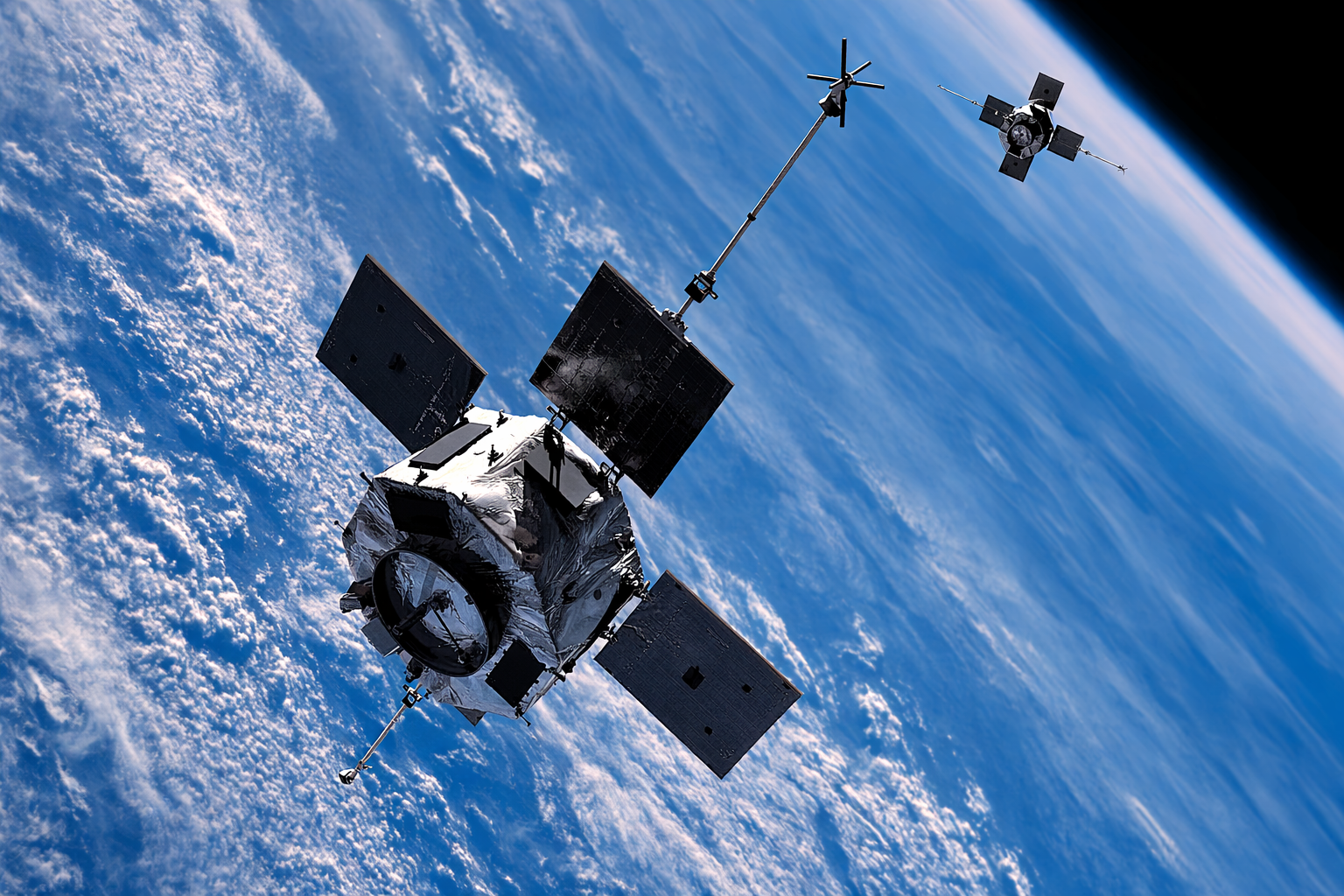
The spacecraft in question is Van Allen Probe A, one of two identical research satellites launched by NASA in 2012.
The mission was designed to study the Van Allen radiation belts, two powerful regions of charged particles trapped by Earth’s magnetic field. These radiation belts extend thousands of miles into space and play a critical role in protecting our planet from harmful cosmic radiation and solar winds.
Together with its twin satellite, Van Allen Probe B, the spacecraft collected valuable data about how these belts behave, especially during solar storms and intense space weather.
When Will the Spacecraft Reenter?
Early predictions from NASA and the United States Space Force suggest the spacecraft could enter Earth’s atmosphere around 7:45 p.m. Eastern Time, although scientists caution that there is an uncertainty window of plus or minus 24 hours.
As the probe descends into the atmosphere, extreme heat and friction will likely destroy most of the spacecraft. However, some components—especially dense metal parts—could potentially survive the intense reentry process.
What Are the Chances of Debris Causing Harm?
According to NASA, there is a 1 in 4,200 chance that someone could be hurt by falling debris.
Although that figure may seem alarming, scientists stress the risk is actually rather low. Senior technical fellow Darren McKnight of the space-tracking firm LeoLabs pointed out that earlier space debris incidents had much greater calculated risks but ultimately had no negative effects.
By contrast, the predicted probability of a person being struck by debris during the return of the Tiangong-1 space station was less than one in a trillion. In that instance, no injuries were reported.
Why Is the Spacecraft Returning Earlier Than Expected?
Originally, NASA predicted the spacecraft would remain in orbit until 2034. However, the probe is falling back to Earth years earlier due to increased atmospheric drag.
This unexpected change is largely linked to the solar maximum, a period when the Sun becomes more active and produces stronger solar storms. Increased solar activity heats and expands Earth’s upper atmosphere, creating more drag on satellites in orbit.
As a result, the spacecraft’s orbit decayed faster than scientists originally calculated.
NASA’s End-of-Life Plan for the Mission
From the beginning, NASA planned for the probes to eventually burn up in the atmosphere at the end of their mission.
Before retiring the spacecraft in 2019, engineers performed maneuvers to release any remaining fuel and ensure the probes would slowly lose altitude due to atmospheric drag. This strategy prevents defunct spacecraft from drifting indefinitely through orbit, where they could collide with operational satellites or structures like the International Space Station.
The Growing Problem of Space Debris
The reentry of Van Allen Probe A also highlights a broader concern: the increasing amount of space debris orbiting Earth.
Experts such as Marlon Sorge from The Aerospace Corporation say awareness of orbital debris risks has grown significantly over the past decade.
As space launches have become cheaper and more frequent, debris incidents have also increased. In recent years, fragments from rockets launched by companies like SpaceX and Blue Origin have been found on beaches and private property around the world.
In one notable case in 2024, a piece of debris from the International Space Station unexpectedly survived reentry and damaged a home in Florida.
How Common Are Spacecraft Reentries?
According to experts, uncontrolled reentries are not as rare as many people might think. McKnight explains that an object reenters Earth’s atmosphere roughly once a week, whether it’s a defunct satellite, rocket stage, or other orbital hardware.
Most of the time, these objects burn up completely before reaching the ground.
Looking Ahead
The reentry of Van Allen Probe A serves as a reminder of the complex challenges of managing spacecraft after their missions end. As the number of satellites in orbit continues to grow, scientists and space agencies are placing greater emphasis on responsible end-of-life planning.
Future missions may include designs that ensure spacecraft completely disintegrate during reentry, reducing the risk that any debris could reach Earth’s surface.
For now, experts emphasize that while the upcoming reentry carries a small risk, it remains very unlikely to cause harm.