Can It Succeed Where Apple Vision Pro Struggled?
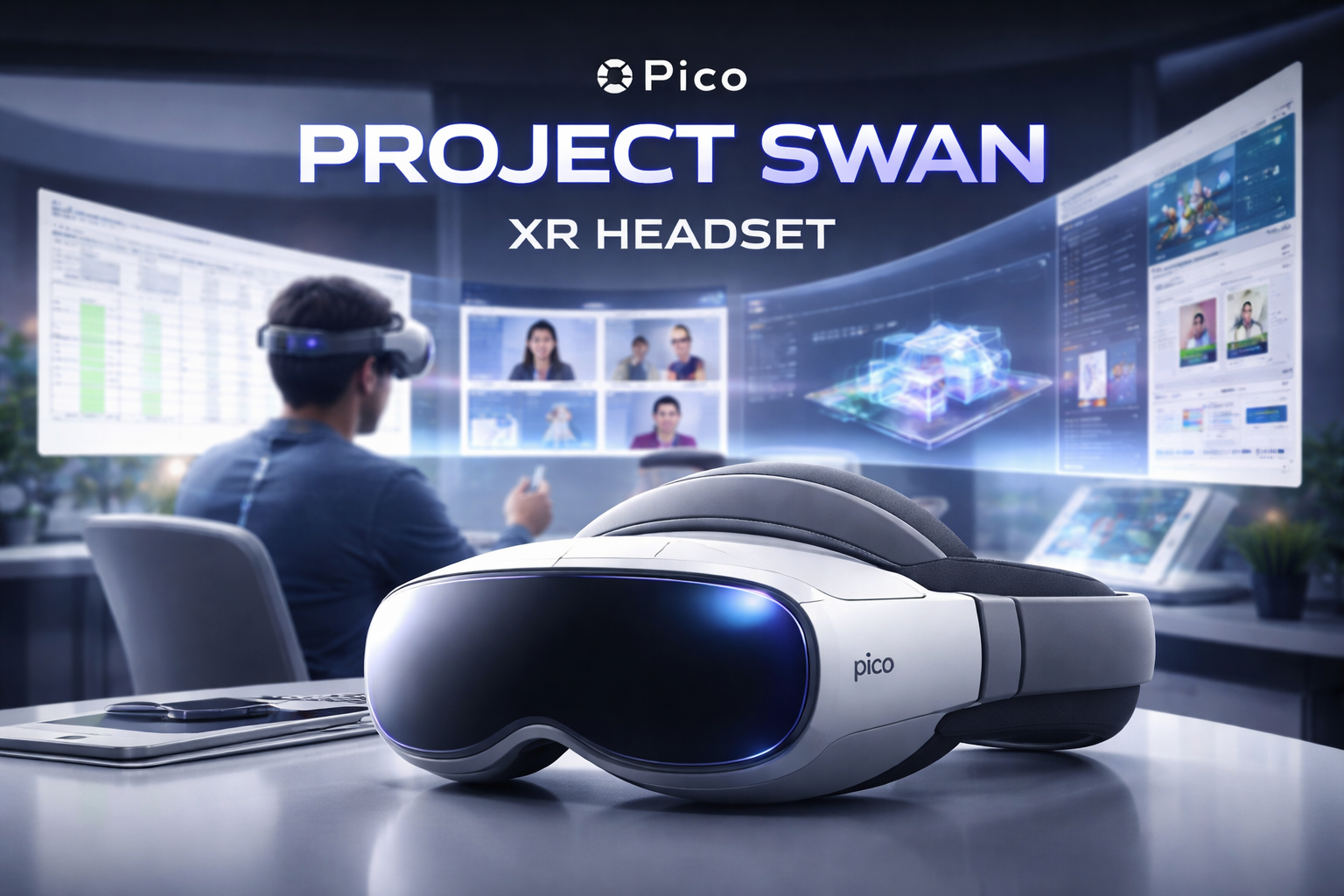
ByteDance is advancing with audacious goals as the global XR headset market heats up once more. The corporation is getting ready to introduce Project Swan, a new mixed reality gadget powered by the recently revealed Pico OS 6, through its subsidiary Pico.
The forthcoming headset, which was unveiled at Mobile World Congress 2026, is being marketed as more than simply a gaming accessory. By introducing immersive 3D workplaces into regular work life, Pico hopes to reinvent extended reality (XR) as a significant productivity tool.
Pico OS 6: Building a 3D Digital Office
At the heart of Project Swan is Pico OS 6, an operating system designed specifically for spatial computing and digital productivity. Unlike the older Pico 4 headset released in 2022, this OS is tailored for next-generation hardware.
PanoScreen is one of its most talked-about features. This feature keeps a complete 360-degree view of their real-world surroundings while enabling users to operate numerous programs concurrently inside a 3D environment. Imagine your coworkers appearing as interactive 3D avatars in your workspace, as spreadsheets, internet tabs, and design software float around you in virtual space.
Making XR “a practical computing tool, not just a gaming device” is the aim, according to Pico. The strategy used by Apple idea Pro when it debuted in 2024 is strikingly similar to this idea. But Pico wants to improve the idea and increase accessibility.
Competing in the Spatial Computing Race
The move into immersive productivity places Pico directly into competition with Apple and its premium headset. The Vision Pro, starting at $3,499, set a high benchmark for performance and display quality but struggled with adoption due to its price and bulky design.
Project Swan’s rumored specifications suggest Pico is targeting similar performance levels. The headset is expected to feature a micro-OLED display with nearly 4,000 pixels per inch and around 40 pixels per degree (PPD), with a “sweet spot” reaching 45 PPD. These numbers are crucial for reading small text clearly in virtual spreadsheets and productivity apps.
For Pico to succeed, however, it must balance performance, affordability, and comfort. Analysts suggest that lighter hardware and a lower price point could give Project Swan a competitive edge in the XR market.
Developer Ecosystem and Cross-Platform Strategy
Beyond hardware, Pico is investing heavily in software compatibility. Pico OS 6 supports development tools like OpenXR, WebXR, and the Spatial toolkit. Developers can build applications using Unity and Unreal Engine, making it easier to attract creators from the broader XR ecosystem.
The operating system also supports Android apps, web apps, and PCVR streaming. With its open-source WebSpatial toolkit, developers can create spatial applications using HTML and CSS. These apps can run across Pico OS, Apple’s visionOS, and Android XR platforms—an approach that emphasizes flexibility and cross-platform compatibility.
The Future of XR Workspaces
As extended reality shifts from gaming to enterprise and productivity, Project Swan represents Pico’s boldest attempt yet to reshape the mixed reality workspace. While it remains to be seen whether Pico can overcome the adoption challenges faced by Apple Vision Pro, its focus on immersive digital offices and developer-friendly tools signals a clear strategic direction.
If Pico can deliver a lighter, more affordable headset with strong app support, Project Swan could mark a turning point in the evolution of spatial computing—and bring XR into mainstream professional life.