SMILE Spacecraft Heads to French Guiana for Historic Solar Wind Mission Launch
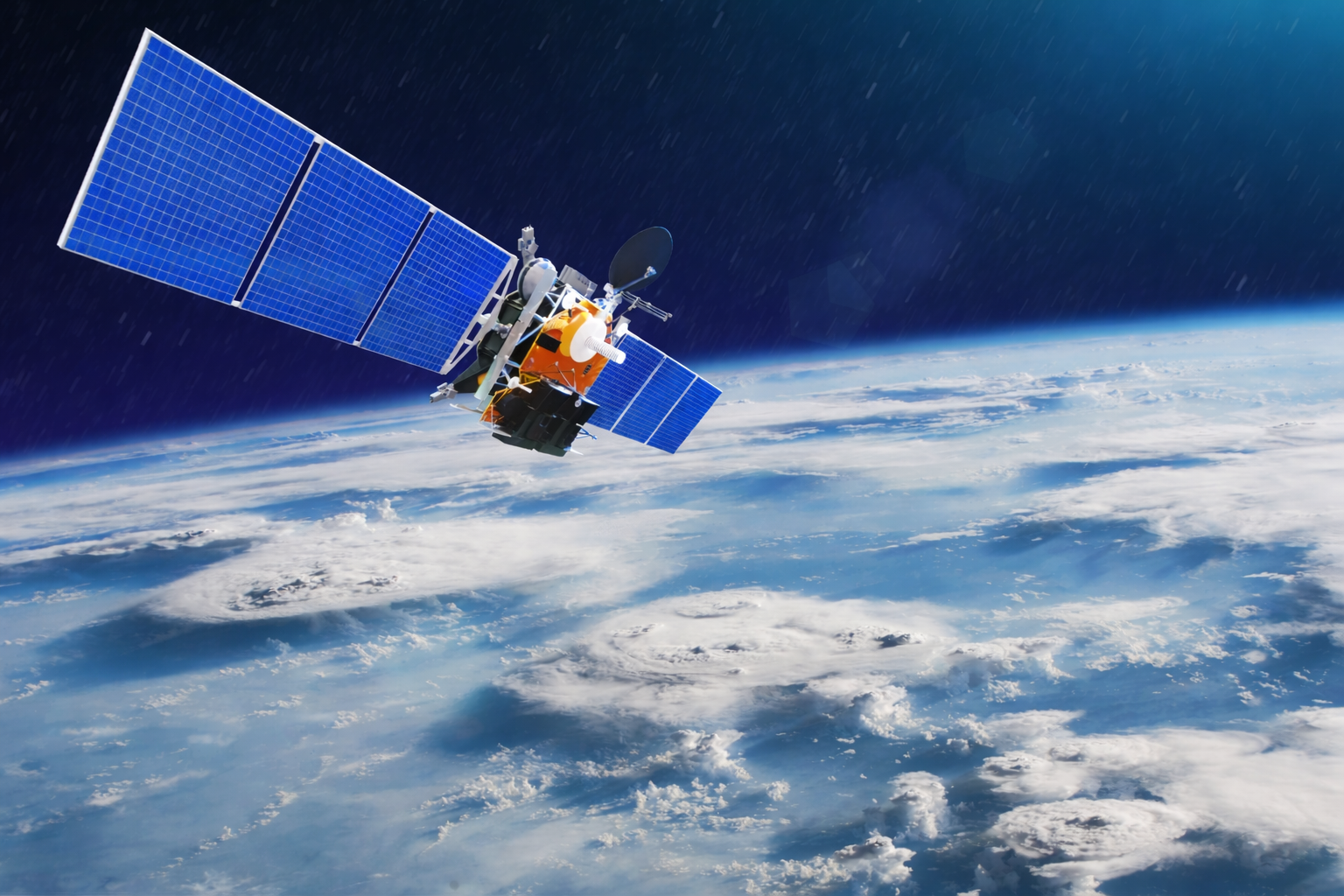
The SMILE spacecraft has officially begun its journey to French Guiana, marking a major milestone for one of the most ambitious international space science missions in recent years. The Solar Wind Magnetosphere Ionosphere Link Explorer (SMILE) is a joint mission between the European Space Agency (ESA) and the Chinese Academy of Sciences, designed to revolutionize our understanding of space weather and the interaction between Earth and the Sun.
Scheduled to launch between 8 April and 7 May 2026 from Kourou, French Guiana, SMILE represents a landmark European-Chinese collaboration with strong British leadership at its core.
From Europe to South America: SMILE’s Journey to Launch
On February 11, SMILE left ESA’s technical center in the Netherlands and drove to the Port of Amsterdam. It was then carried onto the cargo ship Colibri in preparation for its transatlantic journey.
Interestingly, Colibri previously transported the James Webb Space Telescope in 2021 — a mission that went on to redefine modern astronomy. Now, the vessel is carrying SMILE and its delicate equipment across the Atlantic, with arrival expected before the end of February.
During its journey south, the ship stopped in Saint-Nazaire, France, to collect the upper stage of the Vega-C rocket, which will carry SMILE into orbit. With both spacecraft and rocket components now travelling together, preparations for launch are entering their final phase.
Understanding Space Weather and Earth’s Magnetosphere
Once in orbit, SMILE will provide the first complete global view of how Earth’s magnetosphere responds to the solar wind — streams of charged particles emitted by the Sun.
Earth’s magnetic field acts as a protective shield against solar activity. However, disturbances can trigger geomagnetic storms, potentially disrupting satellite navigation, communication networks, and even power grids.
SMILE has four cutting-edge scientific instruments, such as particle and magnetic field detectors, soft X-ray imagers, and ultraviolet imagers. These instruments will assist researchers in monitoring the entry of solar energy into near-Earth space and observing the limits where the solar wind interacts with the Earth’s magnetic environment.
The mission is part of ESA’s Cosmic Vision programme, which supports cutting-edge space science projects aimed at answering fundamental questions about our Universe.
Strong UK Leadership in the SMILE Mission
The United Kingdom has played a central role in SMILE’s development. British researchers are leading the soft X-ray imager — one of the mission’s key instruments — and co-leading the overall science programme.
UK space companies such as Teledyne e2v and Photek Ltd have also supplied critical hardware, highlighting Britain’s growing influence in global space technology.
Final Preparations in Kourou
During its sea voyage, SMILE is being carefully protected. Its container is flushed with nitrogen to eliminate oxygen and moisture, while temperature and humidity are continuously monitored.
Upon arrival in Kourou, European and Chinese engineers will conduct final testing, fuelling, and integration with the Vega-C rocket — bringing the world one step closer to a groundbreaking new era in space weather research.