The “Holy Grail” Breakthrough That Could Transform Quantum Computing
Quantum computing has long promised ultra-fast processing power and revolutionary advances in technology. Yet one persistent challenge remains: stability and energy efficiency. Now, scientists may have uncovered a major breakthrough — a rare metal alloy that could represent the long-sought triplet superconductor, often described as the “holy grail” of quantum computing.
Researchers believe this discovery could pave the way for ultra-fast quantum computers that operate with virtually no energy loss.
What Is a Triplet Superconductor — and Why Does It Matter?
Superconductors are materials that conduct electricity without resistance, meaning electrical current flows without losing energy as heat. Traditional superconductors, known as singlet superconductors, allow charge transport but do not carry electron spin.
Triplet superconductors are fundamentally different.
In these materials, superconducting particles carry electron spin, a quantum property that enables new possibilities in spintronics — a field that uses spin instead of electrical charge to process and store information.
According to Professor Jacob Linder of the Norwegian University of Science and Technology (NTNU), triplet superconductors enable something remarkable:
The ability to transport both electrical current and spin current with zero resistance.
This dual capability could dramatically increase quantum computing stability while reducing energy consumption to near zero — a critical step toward scalable and commercially viable quantum systems.
NbRe Alloy: A Promising Quantum Material
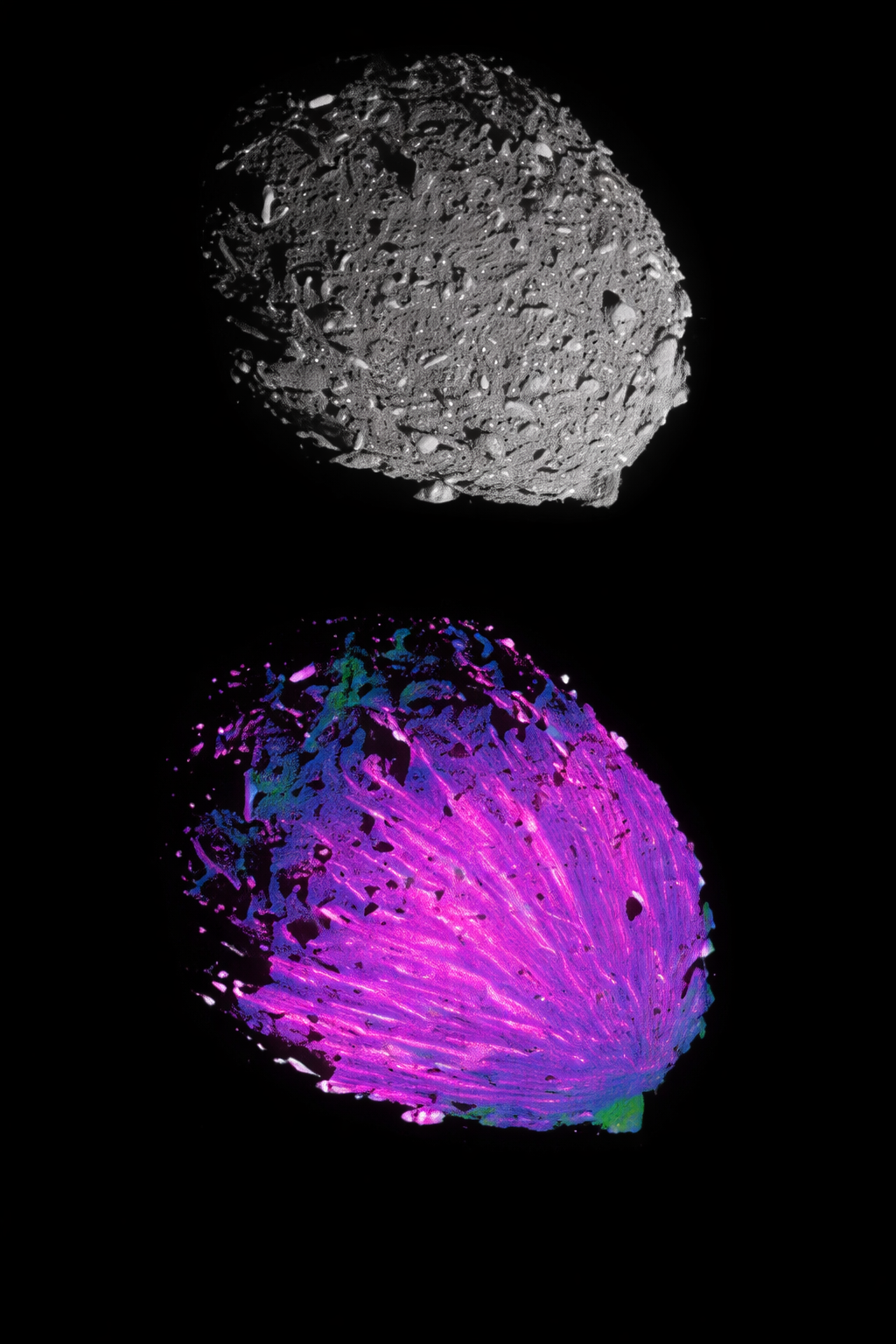
The potential breakthrough centers on NbRe, a niobium-rhenium alloy composed of two rare metals. Early experimental results suggest that NbRe behaves differently from conventional superconductors, displaying properties consistent with triplet superconductivity.
The findings, published in Physical Review Letters and highlighted as an editor’s recommendation, indicate that NbRe’s electronic behavior does not match what scientists would expect from traditional singlet superconductors.
However, researchers caution that further verification is required. Independent experimental replication and additional testing will determine whether NbRe truly qualifies as a triplet superconductor.
If confirmed, it would mark a major milestone in quantum materials research.
Solving Quantum Computing’s Stability Problem
One of the biggest obstacles in quantum computing today is maintaining computational accuracy. Quantum systems are highly sensitive to environmental interference, which can cause errors and instability.
Triplet superconductors may help address this challenge by enabling stable spin transport without energy dissipation. This could significantly improve quantum error correction, coherence times, and overall device reliability.
In practical terms, future energy-efficient quantum computers could perform calculations at unprecedented speeds while consuming minimal electricity.
Superconductivity at 7 Kelvin: A Practical Advantage
Another notable feature of NbRe is its superconducting temperature. The alloy transitions into a superconducting state at 7 Kelvin (K).
While 7K may sound extremely cold — just above absolute zero — it is relatively “high temperature” in superconductivity research. Many other candidate triplet superconductors require temperatures closer to 1K, making NbRe far more practical for experimental and technological applications.
This comparatively higher operating temperature improves feasibility for future quantum hardware development.
The Future of Spintronics and Quantum Technology
If NbRe is verified as a true triplet superconductor, its implications extend beyond quantum computing. It could accelerate advancements in:
- Spintronics
- Low-power electronics
- High-speed data transmission
- Next-generation computing architecture
The ability to transmit spin signals with zero resistance could redefine how information is processed and stored.
A Step Closer to the Quantum Future
While further confirmation is required, the discovery of triplet-like behavior in NbRe represents an exciting step forward in the search for advanced superconducting materials.
Quantum computing will not transform overnight. But breakthroughs like this demonstrate meaningful progress toward faster, more stable, and energy-efficient quantum systems.
If validated, triplet superconductors may no longer be theoretical aspirations — they could become the foundation of tomorrow’s most powerful technologies.