World’s First Commercial Space Station Gets Major Funding Boost
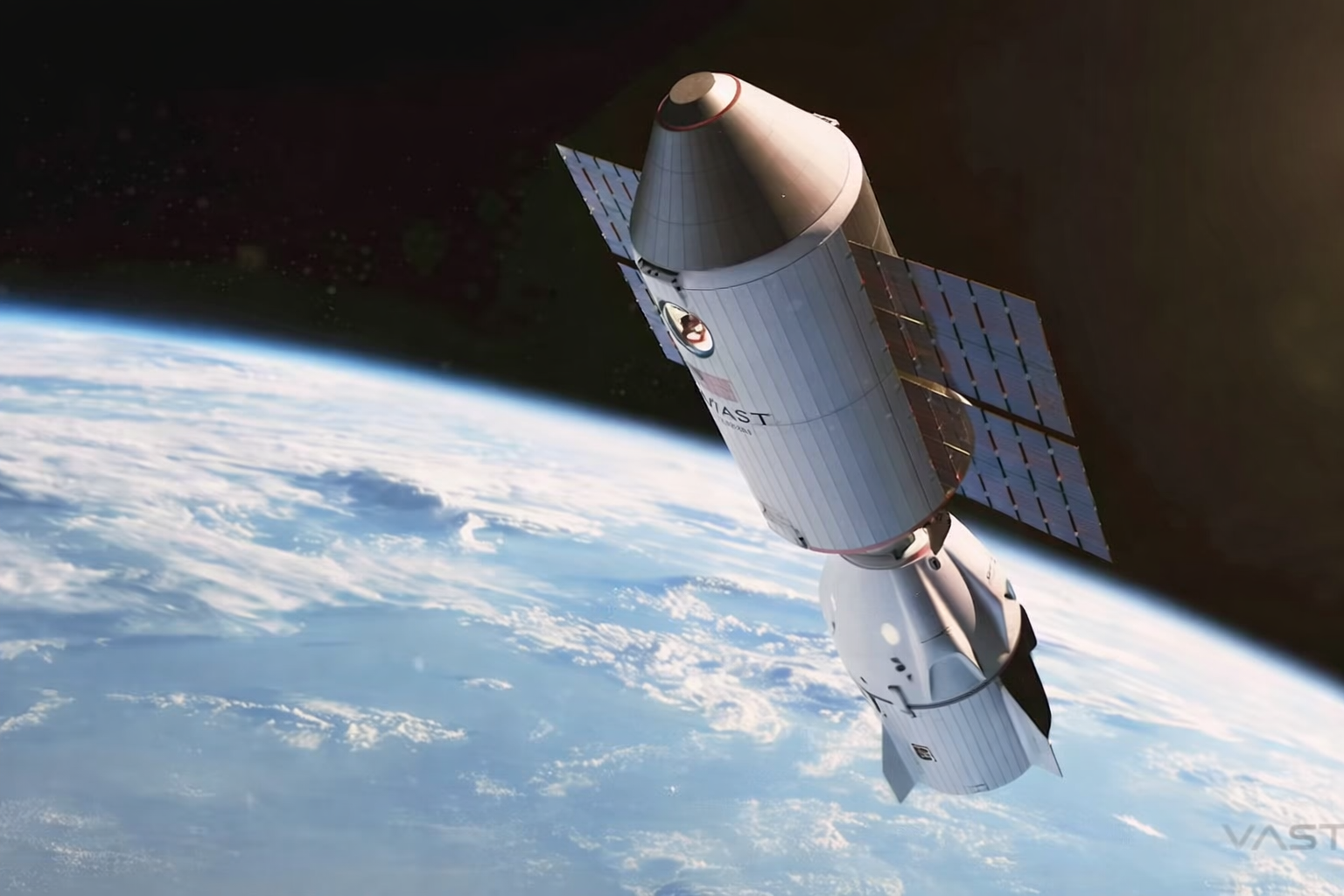
A new era in the global space industry is beginning as private enterprises get more involved in the construction and management of infrastructure in orbit. One of the most ambitious initiatives is being carried out by Vast, which has raised an additional $500 million to expedite the construction of what would eventually be the first commercial space station in history. By 2027, the corporation hopes to launch its first station into orbit, which would be a significant step toward a privately run space economy.
Vast’s Vision for the Future of Space Stations
Since its founding in 2021, Vast has established itself as a major player in the competition to construct the next generation of orbital homes. Its long-term plan is to build future dwellings for journeys to the Moon and Mars, as well as sophisticated stations in Low Earth Orbit.
CEO Max Haot claims that the increased investment demonstrates the company’s increasing confidence in its long-term strategy and engineering approach. He pointed out that a significant turning point in the low-Earth orbit economy is near, where commercial manufacturing, research, and space tourism might grow quickly.
Governments, academic institutions, and private businesses will be able to undertake experiments and manufacturing processes that are not feasible on Earth thanks to Vast’s forthcoming Haven series of space stations, which are intended to offer safe and affordable access to microgravity.
Haven-1: The First Step Toward a Commercial Space Economy
The company’s first station, Haven-1, is scheduled to launch in 2027. Once operational, it could become the first privately built and operated space station in orbit.
In addition to hosting astronauts and researchers, Haven-1 will support a private astronaut mission organized with NASA. This mission will demonstrate how commercial stations can support crewed operations and scientific work in space.
Vast is also competing for the Commercial Low Earth Orbit Destinations Phase 2 contract, a program aimed at building replacements for the aging International Space Station, which is expected to retire around 2030.
Haven-2 and the Post-ISS Era
Beyond Haven-1, Vast is planning a larger successor called Haven-2. This station is designed to ensure continuous human presence in low-Earth orbit after the International Space Station is retired.
The newly announced funding includes $300 million in Series A equity and $200 million in debt financing. These resources will be used to expand manufacturing facilities, hire additional engineers, and accelerate development of the Haven station series.
So far, over $1 billion has been invested in Vast’s technologies and facilities. The company also claims its vertically integrated manufacturing model has reduced space station structure costs by up to 10 times compared with traditional programs.
A New Era of Commercial Space Infrastructure
As governments increasingly rely on private industry, companies like Vast are playing a crucial role in shaping the future of human spaceflight. With strong financial backing and ambitious timelines, the company’s Haven stations could soon become the foundation of the next generation of orbital research, manufacturing, and exploration.
If successful, this project may mark the beginning of a commercial space station era, where private platforms replace government-run stations and open space to new industries and opportunities.