How Mars’ Toxic Soil Could Help Build Stronger Bricks for Future Colonies
As space agencies and private companies race toward establishing a human presence beyond Earth, one thing is clear: using local resources on the Moon and Mars is essential. Transporting building materials from Earth is astronomically expensive. Every kilogram launched aboard rockets like NASA’s Artemis program missions costs thousands of dollars.
That’s why scientists are turning to in-situ resource utilization (ISRU)—the idea of building with what’s already there. On Mars, that means working with Martian regolith, the dusty soil covering the planet’s surface.
Mars, however, poses a special difficulty. Perchlorates are a hazardous chemical substance found in its soil. These substances were thought to be a significant barrier to colonization for many years. According to startling new research, they might even aid in the construction of more robust structures on the Red Planet.
What Are Perchlorates in Martian Soil?
Perchlorates are chlorine-based salts found in concentrations of about 0.5–1% of Martian soil. They are:
- Toxic to most forms of life
- Potentially hazardous to astronauts
- Considered a fire risk in laboratory simulations
Because of these risks, many Mars soil simulants used in experiments excluded perchlorates. That means earlier efforts to build Martian bricks may not have fully represented real Martian conditions.
Researchers from the University of Florida and the Indian Institute of Science, however, adopted a different strategy in a recent study that was published in PLOS One. They purposefully added perchlorates rather than avoiding them.
And the results were unexpected.
Turning Martian Regolith Into Bricks
Scientists have long experimented with transforming Martian regolith into construction materials. One promising method is biocementation—a process where bacteria bind soil particles together into solid material.
In this study, researchers created a slurry made of:
- Martian soil simulant
- Perchlorates
- Water
- Bacteria
- Natural additives
They then molded this mixture into bricks and tested their compressive strength, a key measure of how much pressure a material can withstand before breaking.
The strongest bricks didn’t just survive—they outperformed expectations.
The Role of Bacteria in Space Construction
The star of the experiment was a strain of bacteria called Sporosarcina pasteurii.
This bacterium is known for its ability to perform ureolysis, a chemical reaction that produces calcium carbonate—the same mineral found in limestone. When produced in soil, it acts like a natural cement.
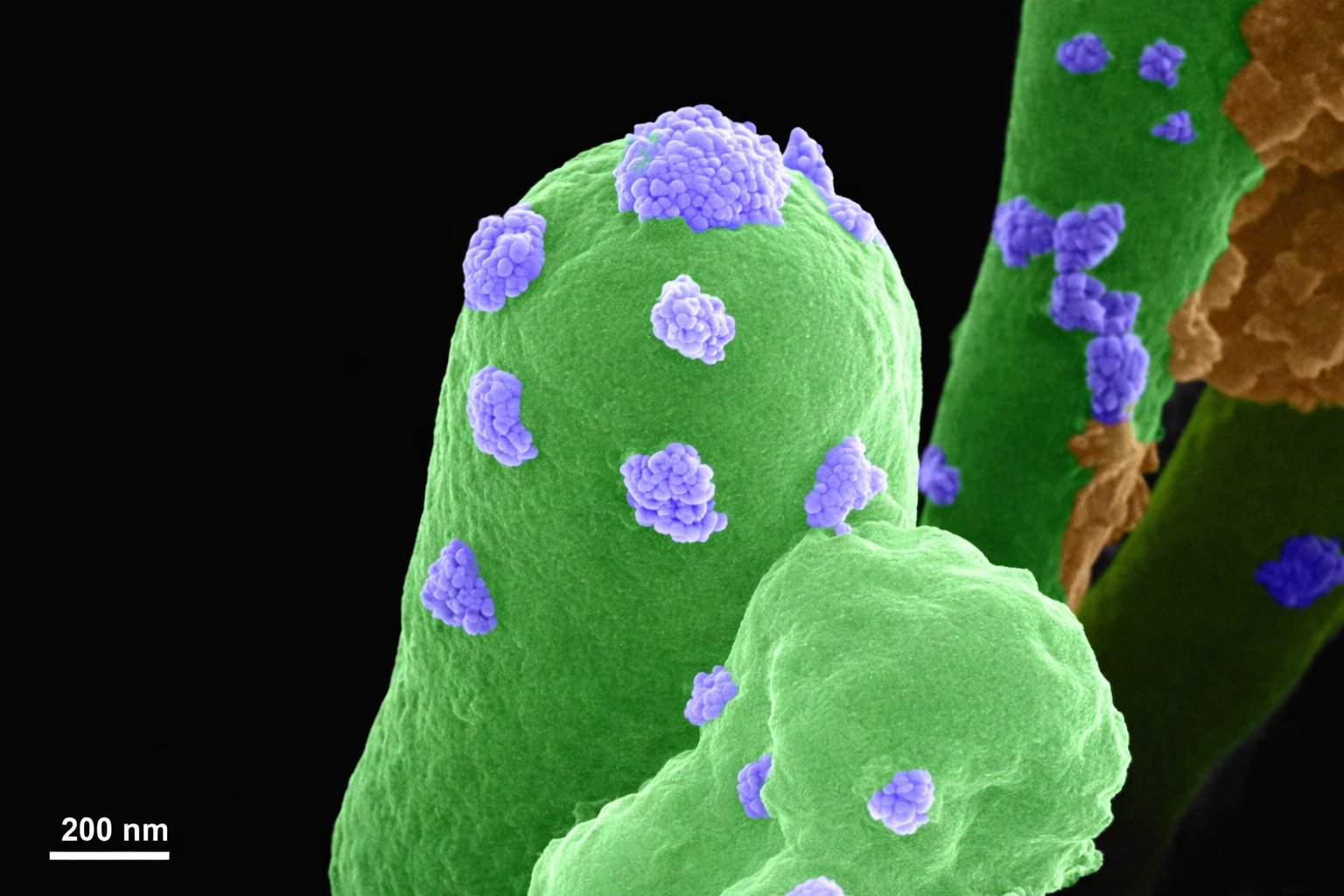
Interestingly, when exposed to perchlorates, the bacteria:
- Formed dense cell clusters
- Produced an extracellular matrix (ECM)
- Created microscopic “microbridges” between soil particles
These microbridges appear to strengthen the bond between bacteria and minerals, potentially improving structural integrity.
Instead of being killed by perchlorates, the bacteria seemed to respond defensively—producing structures that ultimately made the bricks stronger.
Guar Gum: A Natural Boost for Martian Bricks
Bacteria alone weren’t enough to create strong bricks. In fact:
- Soil + water → fell apart
- Soil + bacteria + water → even weaker
The breakthrough came when researchers added guar gum, a natural adhesive derived from the guar bean plant.
Guar gum served two purposes:
- Adhesive – Helped bind particles together
- Nutrient source – Acted as feedstock for the bacteria
When combined with bacteria, guar gum made the bricks more than three times stronger than samples using either component alone.
But here’s where it gets even more interesting.
Why Perchlorates Made the Bricks Stronger
The most surprising result?
The strongest bricks came from a combination of:
- Bacteria
- Guar gum
- Perchlorates
This mixture had more than double the compressive strength of the bacteria + guar gum mixture without perchlorates.
And notably, it performed better even without nickel chloride—a catalyst initially thought necessary for the ureolysis reaction.
Researchers speculate that the bacteria’s stress response to perchlorates triggered enhanced ECM production. That dense matrix and those microbridges may have reinforced the brick’s internal structure.
In simple terms:
The toxic chemical forced the bacteria to build stronger support systems—making the bricks tougher.
What This Means for Mars Colonization
This discovery could significantly impact future Mars missions, including efforts supported by NASA and commercial players like SpaceX.
Here’s why it matters:
1. Reduced Dependence on Earth Supplies
If perchlorates in Martian soil can enhance brick strength, there’s no need to remove them before construction. That saves energy, time, and cost.
2. Safer Habitat Construction
Stronger bricks mean safer shelters capable of withstanding:
- Marsquakes
- Extreme temperature swings
- Meteorite impacts
3. Smarter In-Situ Resource Utilization (ISRU)
Instead of treating perchlorates solely as a hazard, future missions may incorporate them into building strategies.
The Future of Martian Construction Technology
While this research is promising, more studies are needed to understand:
- The exact mechanism behind ECM strengthening
- Long-term durability under Martian conditions
- Scalability for large habitat construction
- However, this discovery alters the story.
- What was formerly thought to be a hazardous contaminant can turn out to be a valuable building resource.
- Innovations like biocementation have the potential to revolutionize space architecture as mankind gets ready for long-term trips under initiatives like NASA’s Artemis program and future Mars expeditions.
Final Thoughts: From Obstacle to Opportunity
Mars has always challenged scientists with its harsh environment. Toxic soil, extreme cold, and thin atmosphere make it one of the most difficult places to survive.
Yet this study shows something powerful:
Sometimes the very thing that seems like a barrier can become the solution.
Perchlorates, which were formerly only thought to pose a risk to astronauts and life support systems, could contribute to the development of future Martian cities.
That serves as a reminder that space travel involves more than just propulsion systems and rockets. It involves gaining a completely new understanding of chemistry, biology, and materials.
Even though the Red Planet is poisonous, it might be prepared to assist us in constructing a dwelling.