Elon Musk’s New V3 Megarocket to Test Revolutionary Heat Shield Technology in Space
SpaceX Prepares for Historic Starship Flight 12 Launch
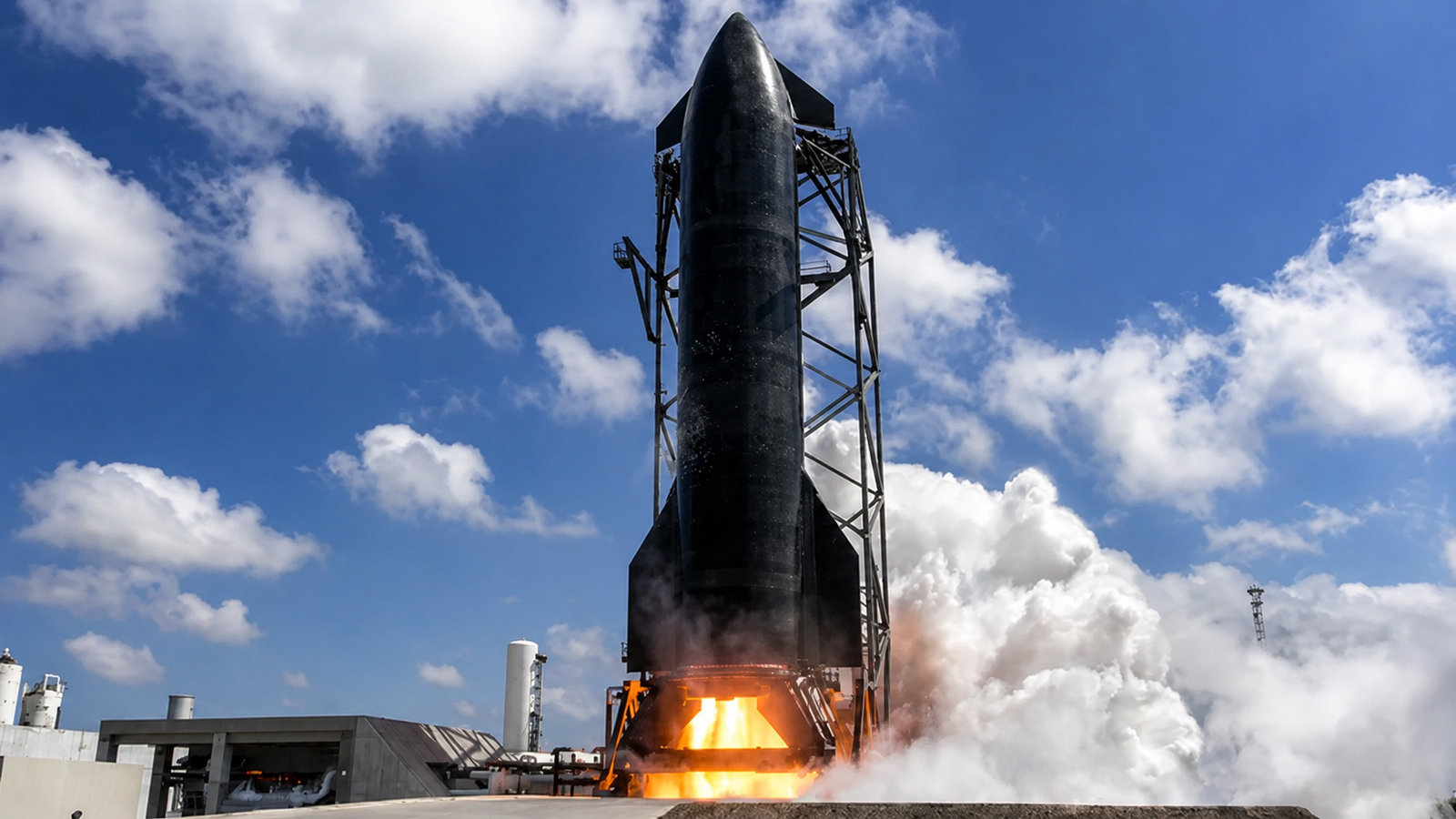
SpaceX is preparing for another major milestone in space exploration as the company gets ready to launch the highly anticipated Starship Flight 12 mission. Scheduled for Tuesday evening, May 19, the mission will mark the first launch of the powerful new Starship V3 megarocket — an upgraded version of the world’s largest and most powerful rocket ever built.
After nearly seven months without a Starship launch, excitement is rapidly building among space enthusiasts, aerospace engineers, and industry analysts worldwide. The Flight 12 mission is expected to showcase major technological upgrades, improved spacecraft systems, and a completely new in-space experiment designed to test the future of reusable rocket technology.
Most importantly, Starship Flight 12 will attempt something never done before during a SpaceX test mission: the spacecraft will inspect its own heat shield while flying through space.
Starship V3 Introduces Major Upgrades for Future Mars Missions
The upcoming launch will introduce the advanced Starship V3, a heavily upgraded version of SpaceX’s next-generation rocket system. According to SpaceX, the V3 model includes several engineering modifications and performance improvements aimed at making Starship more reliable, more reusable, and more capable for future deep-space missions.
The Starship rocket system is central to Elon Musk’s long-term vision of transforming humanity into a multi-planetary civilization. SpaceX plans to use Starship for multiple ambitious missions, including launching next-generation Starlink satellites, transporting astronauts to the Moon under NASA’s Artemis program, and eventually carrying humans to Mars.
The long delay between launches reportedly allowed engineers to perform extensive upgrades and testing on the new V3 design. As a result, Flight 12 is expected to become one of the most important Starship test flights to date.
Starship Flight 12 Will Deploy Dummy Starlink Satellites
One of the most exciting objectives of Flight 12 involves the deployment of 22 dummy Starlink satellites during the mission. These test payloads are designed to simulate the size and weight of SpaceX’s future next-generation Starlink broadband satellites.
The Starlink satellite network remains one of SpaceX’s most valuable projects, providing high-speed internet coverage across the globe through a massive constellation of low-Earth orbit satellites. Elon Musk has repeatedly stated that Starship will play a critical role in rapidly expanding the Starlink megaconstellation in the coming years.
Previous Starship test flights carried only eight or 10 Starlink mass simulators, making the deployment of 22 payloads during Flight 12 a significant increase. The mission represents another step toward turning Starship into a fully operational satellite-launch platform capable of carrying enormous payloads into orbit.
SpaceX’s New Inspector Satellites Will Examine Starship’s Heat Shield
Perhaps the most groundbreaking aspect of Flight 12 is the inclusion of two special inspector satellites that will perform an in-space analysis of Starship’s heat shield system.
According to SpaceX, the final two satellites deployed during the mission will maneuver around the spacecraft and capture detailed imagery of Starship’s thermal protection tiles. The images will then be transmitted back to engineers on Earth for analysis.
The goal of this innovative experiment is to help SpaceX study the condition of Starship’s heat shield before atmospheric reentry. Engineers hope the data will improve future reusable launch systems and reduce the time required to inspect the spacecraft after landing.
SpaceX also revealed that several heat shield tiles on the vehicle have been intentionally painted white to simulate missing or damaged tiles. These markings will serve as imaging targets for the inspector satellites during the mission.
This type of self-inspection technology could become extremely important for future deep-space missions, lunar landings, and Mars exploration programs.
Why Starship’s Heat Shield Is So Important
One of the biggest technical challenges facing SpaceX today is creating a fully reusable orbital heat shield system. Protecting spacecraft during atmospheric reentry has always been one of the most difficult aspects of spaceflight because vehicles experience extreme temperatures and intense aerodynamic stress while returning to Earth.
Unlike traditional spacecraft, Starship is designed to launch, land, refuel, and fly again rapidly — potentially multiple times per day in the future. Achieving that level of reusability requires an exceptionally durable thermal protection system.
The Starship heat shield consists of approximately 40,000 hexagonal heat-resistant tiles attached to the spacecraft’s exterior. These tiles are designed to protect the vehicle from temperatures generated during reentry into Earth’s atmosphere.
Elon Musk has repeatedly described the heat shield as the single biggest obstacle preventing Starship from achieving full operational reusability.
According to Musk, no company in history has successfully created a completely reusable orbital heat shield system capable of handling repeated missions without extensive maintenance.
Elon Musk Says Reusable Heat Shield Is Starship’s Biggest Challenge
During a recent podcast interview, Elon Musk explained that Starship’s current heat shield technology still requires significant improvements before the rocket can support rapid turnaround launches.
While previous Starship missions successfully survived atmospheric reentry and soft ocean splashdowns, the spacecraft lost numerous heat shield tiles during flight. Musk admitted that although the vehicles survived, the heat shield damage required extensive repair work after each mission.
For SpaceX’s long-term vision to succeed, engineers must develop a system that can withstand repeated launches and reentries with minimal maintenance. Musk emphasized that inspecting and replacing thousands of heat shield tiles after every flight would make rapid reusability impractical.
That is why Flight 12’s heat shield inspection experiment is considered so important. The mission could provide valuable data that helps SpaceX improve thermal protection technology for future reusable spacecraft.
Super Heavy Booster and Ship Will Follow Familiar Flight Path
Although Flight 12 introduces several new technologies, the overall flight profile will remain similar to previous Starship test missions.
The massive Super Heavy Booster will power Starship into space before separating from the upper-stage spacecraft approximately a few minutes after launch. The booster is then expected to perform a controlled splashdown in the Gulf of Mexico around seven minutes after liftoff.
Unlike earlier missions, however, SpaceX will not attempt to catch the Super Heavy booster using the launch tower’s giant “chopstick” arms. Previous successful booster catches demonstrated impressive engineering precision, but the company appears focused primarily on testing Starship V3 systems during Flight 12.
Meanwhile, the Ship upper stage will continue along a suborbital trajectory before eventually splashing down in the Indian Ocean roughly 65 minutes after launch.
Flight 12 Could Shape the Future of Space Exploration
SpaceX’s Starship program is widely viewed as one of the most ambitious aerospace projects ever attempted. The company hopes Starship will eventually revolutionize space travel by dramatically lowering launch costs and enabling large-scale missions beyond Earth orbit.
NASA is already relying on Starship technology for future Artemis Moon missions, where a modified version of the spacecraft is expected to land astronauts on the lunar surface later this decade.
Beyond the Moon, Elon Musk continues pushing toward his long-term goal of establishing a permanent human settlement on Mars. Achieving that vision will require fully reusable spacecraft capable of transporting massive cargo loads and large numbers of passengers across interplanetary distances.
Every Starship test flight therefore plays a critical role in advancing future human space exploration.
Final Thoughts on SpaceX Starship Flight 12
The upcoming Starship Flight 12 mission could become one of the most important SpaceX launches in recent years. With the debut of the upgraded Starship V3 rocket, the deployment of next-generation Starlink simulators, and the groundbreaking heat shield inspection experiment, the mission represents another giant leap toward fully reusable space travel.
If successful, Flight 12 could help SpaceX solve one of the most difficult engineering problems in modern aerospace history while bringing humanity one step closer to returning to the Moon and eventually reaching Mars. As the countdown begins, millions around the world will be watching closely to see whether Elon Musk’s Starship program can once again push the boundaries of what is possible in space exploration.