Too Many Satellites? Earth’s Orbit Is Headed for a Crisis — But We Can Still Prevent It
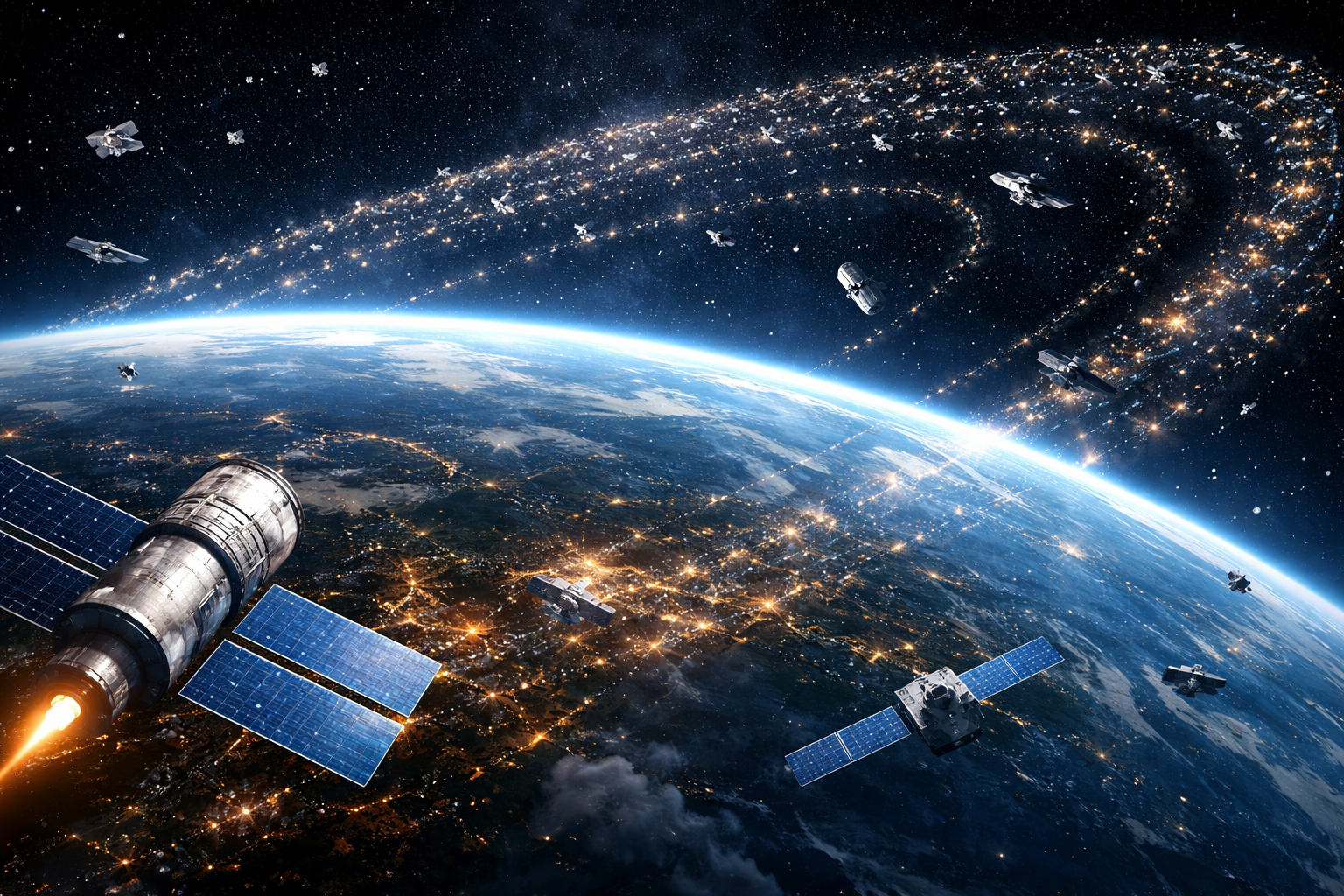
The rate at which the Earth’s orbit is filling up is unprecedented. Experts caution that we might be reaching a tipping point, with thousands of satellites currently orbiting the earth and over a million planned. Space operations, the night sky, scientific research, and even cultural customs could all be irrevocably changed if something isn’t done quickly.
The good news? This impending disaster can still be avoided.
SpaceX’s One Million Satellite Proposal Raises Alarm
On January 30, 2026, SpaceX submitted an application to the U.S. Federal Communications Commission (FCC) seeking approval for a megaconstellation of up to one million satellites. These satellites would operate in low Earth orbit (LEO) between 500 and 2,000 kilometers above Earth, designed in part to power space-based data centers.
To maximize operational efficiency, some of the suggested orbits would provide almost continual exposure to sunlight. Although opinions are presently being accepted from the public, the proposal marks a significant increase in the scope of satellite deployment.
And SpaceX is not alone.
The Rapid Rise of Satellite Megaconstellations
As of February 2026:
- Approximately 14,000 active satellites are already in orbit
- An additional 1.23 million proposed satellite projects are under development
Most megaconstellation satellites are designed for single purposes—such as internet connectivity—and have short lifespans of around five years. However, companies plan continuous replacement and expansion, effectively industrializing low Earth orbit.
This raises urgent questions about space sustainability, orbital congestion, and the long-term future of Earth’s orbital environment.
How Satellite Growth Is Changing the Night Sky Forever
One of the most immediate and visible impacts of megaconstellations is light pollution from satellites.
Satellites in low Earth orbit reflect sunlight for roughly two hours after sunset and before sunrise. Even with efforts to reduce brightness, many appear as moving points of light streaking across the sky.
In 2021, astronomers estimated that within a decade, 1 in every 15 visible points of light in the night sky would be a satellite. That projection was based on just 65,000 proposed satellites at the time.
With plans now scaling into the millions, the night sky could change permanently for generations.
This phenomenon is known as “shifting baseline syndrome.” Each generation accepts a progressively more degraded sky as normal. For the first time in human history, children today may grow up without experiencing the same natural night sky seen by all previous generations.
The Growing Risk of Kessler Syndrome
Beyond light pollution, the sheer volume of satellites increases the risk of Kessler syndrome—a cascading chain reaction of collisions in orbit.
Currently:
- There are more than 50,000 pieces of debris larger than 10 centimeters in orbit
- If satellites stopped performing collision avoidance maneuvers, a major collision could occur every 3.8 days
Without a unified global space traffic management system, orbital congestion could spiral out of control, threatening both commercial and scientific missions.
Environmental Impacts: From Launch Emissions to Atmospheric Pollution
The environmental cost of megaconstellations extends beyond orbit.
1. Rocket Launch Emissions
Launching thousands—or millions—of satellites consumes vast quantities of fossil fuels, contributing to greenhouse gas emissions and potential ozone layer damage.
2. Atmospheric Metal Deposition
At the end of their operational lives, satellites are designed to burn up in the atmosphere. This releases metals into the stratosphere, potentially contributing to:
- Ozone depletion
- Chemical atmospheric reactions
- Unknown long-term environmental effects
These impacts are not fully understood—and are largely absent from current regulatory assessments.
Cultural and Indigenous Impacts Often Ignored
Perhaps the most overlooked consequences are cultural.
For many Indigenous communities worldwide, the night sky is essential for:
- Oral traditions
- Navigation
- Hunting practices
- Spiritual ceremonies
- Cultural continuity
Satellite light pollution disrupts these longstanding traditions. Yet cultural impacts are rarely considered in the technical approval process.
This represents a regulatory blind spot—one that fails to account for how megaconstellations alter shared human heritage.
Legal Gaps in International Space Law
Under international space law, countries—not private companies—are liable for damage caused by space objects launched under their jurisdiction.
As private corporations dominate space development, legal experts are questioning whether current frameworks can adequately hold companies accountable for:
- Environmental harm
- Orbital collisions
- Ground casualties
- Cultural impacts
The rapid commercialization of space has outpaced regulatory evolution.
Why We Need a Dark Skies Impact Assessment
To address these growing concerns, space lawyers Gregory Radisic and Natalie Gillespie have proposed a Dark Skies Impact Assessment (DSIA).
This assessment would systematically evaluate the full consequences of satellite constellations before approval.
How It Would Work:
1. Multi-Stakeholder Evidence Gathering
Input from:
- Astronomers
- Atmospheric scientists
- Environmental researchers
- Cultural scholars
- Indigenous communities
- Industry representatives
2. Cumulative Impact Modeling
Analysis of:
- Skyglow and visibility changes
- Orbital congestion
- Collision risk
- Potential ground hazards
3. Clear Protection Criteria
Defining when unobstructed sky access is critical for:
- Science
- Navigation
- Education
- Cultural practices
4. Mitigation Pathways
Encouraging:
- Reduced satellite brightness
- Alternative orbital designs
- Deployment adjustments
- Fewer satellites per project
5. Transparency and Policy Integration
Independent review and direct ties to licensing decisions.
Importantly, a Dark Skies Impact Assessment is not a veto tool. It does not halt space development. Instead, it improves decision-making by clarifying trade-offs and reducing harm.
The Urgency of Proactive Regulation
Current satellite regulations focus mainly on:
- Radio frequency allocation
- Launch safety
- Earth-based environmental impacts
- Liability
What they fail to capture are the broader consequences for astronomy, cultural heritage, and long-term orbital sustainability.
If governments wait until space becomes dangerously congested, reversing damage may be impossible.
The Future of Earth’s Orbit: A Critical Turning Point
The question is no longer whether Earth’s orbit will change—it already has.
The real question is whether global leaders will act before those changes become permanent.
With more than a million satellites proposed, we stand at a crossroads. Responsible governance, international cooperation, and comprehensive environmental assessments could ensure that innovation in space does not come at the cost of science, culture, and planetary safety.
Earth’s orbit is a shared resource. Protecting it is not anti-technology—it is pro-future.
Conclusion: We Still Have Time to Act
Satellite megaconstellations offer undeniable benefits, from global internet connectivity to advanced communications infrastructure. But without stronger oversight and thoughtful policy reform, we risk turning low Earth orbit into an unstable and polluted environment.
A Dark Skies Impact Assessment represents a practical, balanced solution—one that protects innovation while safeguarding our shared sky.
The night sky belongs to everyone. Ensuring its preservation may be one of the most important space policy decisions of our time.
SEO Keywords Included:
satellite megaconstellation, SpaceX satellite proposal 2026, low Earth orbit congestion, Kessler syndrome risk, space debris crisis, satellite light pollution, night sky visibility, Dark Skies Impact Assessment, space traffic management, environmental impact of satellites, orbital sustainability, satellite regulation gaps