Blood Moon Lunar Eclipse, Planet Parade & Venus-Saturn Conjunction
For stargazers around North America, March 2026 is expected to be a memorable month. A spectacular planetary procession and a dramatic red moon lunar eclipse are just two of the uncommon celestial occurrences that skywatchers will be able to see. It’s obvious that March is a must-watch month for astronomy enthusiasts when you consider the increased likelihood of seeing the northern lights and the greater sight of the Milky Way center.
Here are some things to watch for in the March night sky.
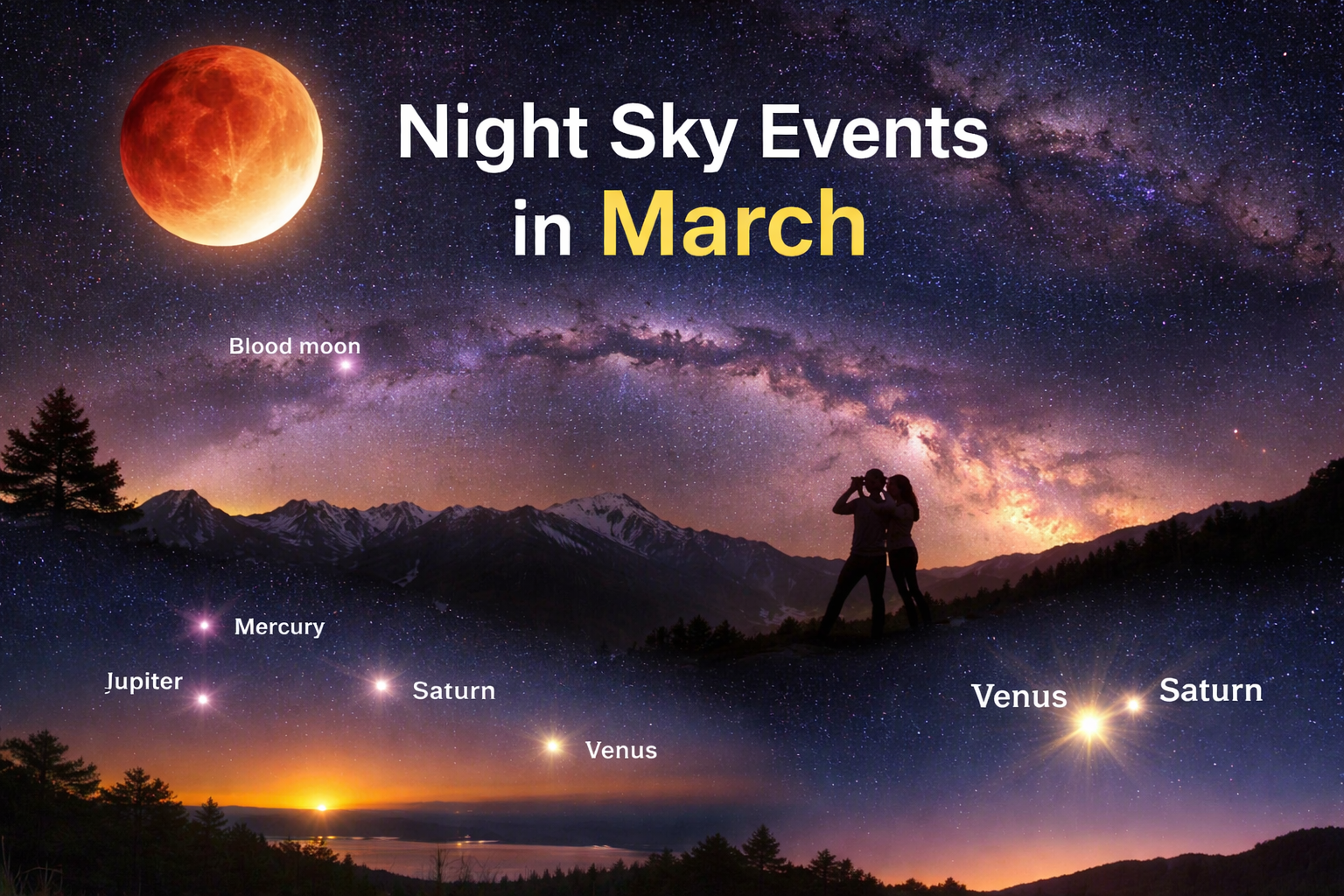
Planet Parade – March 1
If you missed February’s planetary alignment, don’t worry — early March still offers a chance to catch a mini planet parade. On March 1, look toward the western horizon just after sunset.
You’ll be able to spot Mercury, Venus, and Saturn glowing low in the sky. Meanwhile, Jupiter will shine brightly higher in the southeast.
Although Uranus and Neptune are technically above the horizon, they require binoculars or a telescope to see clearly. Stargazers should always wait until the sun has fully set before using optical equipment to scan the western sky.
Total Lunar Eclipse – March 3
The biggest highlight of the month arrives in the early hours of March 3 with a breathtaking Total Lunar Eclipse. This event will transform the full worm moon into a deep red “blood moon.”
The umbra is the shadow created when Earth passes directly between the sun and the moon during a total lunar eclipse. Shorter blue wavelengths of sunlight disperse as it passes through Earth’s atmosphere, giving the moon an eerie copper glow from longer red wavelengths.
All 50 states in the United States will be able to see the eclipse. The finest view is on the West Coast, where observers can witness the full progression from partial eclipse to totality and back again. Finding a clear western horizon will be crucial because the eclipse happens closer to moonset on the East Coast.
Venus-Saturn Conjunction – March 7–8
The celestial show continues on March 7 and 8, when Venus and Saturn appear exceptionally close together in the evening sky.
This planetary conjunction will be visible just above the western horizon for about 45 minutes after sunset. The planets will look close enough to fit within a pair of binoculars, creating a striking visual pairing. Even on the days surrounding March 7 and 8, the two planets will remain noticeably near each other.
More March Skywatching Highlights
Beyond these headline events, March also brings increased aurora borealis activity around the spring equinox and improving views of the Milky Way core in darker skies.
Whether you’re a seasoned astronomer or simply curious about the cosmos, March 2026 offers a rare lineup of night sky events that shouldn’t be missed. Clear skies and a little patience are all you need to witness nature’s most spectacular light show.