
Why Their Growth Slowed
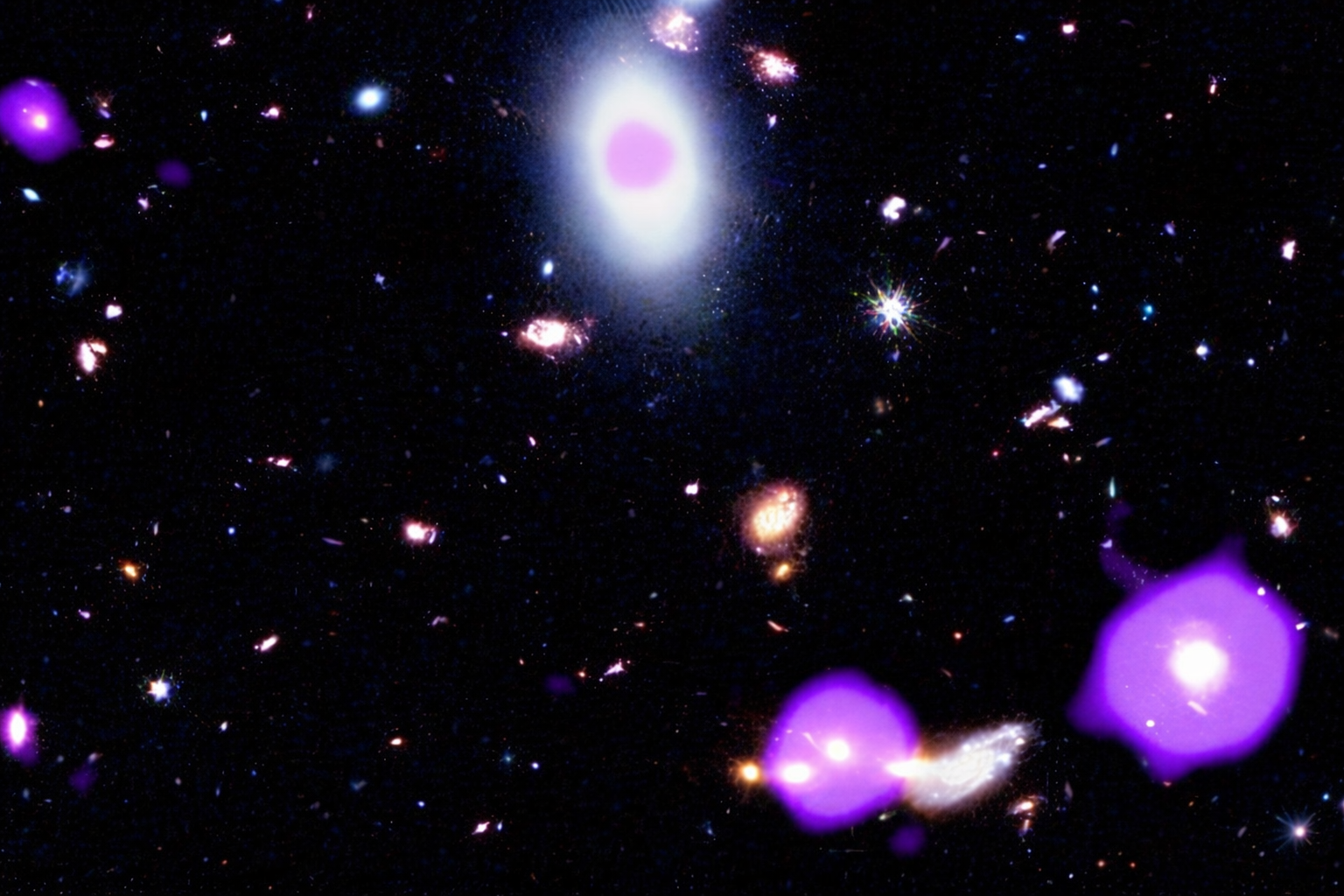
A groundbreaking discovery by NASA is reshaping how we understand the universe. Using the powerful Chandra X-ray Observatory, astronomers have uncovered a fascinating cosmic mystery: supermassive black holes have dramatically slowed their growth over billions of years.
This discovery not only changes our understanding of black holes but also provides deep insights into the evolution of galaxies and the universe itself.
What Are Supermassive Black Holes?
Supermassive black holes are the largest known black holes in the universe, with masses ranging from millions to billions of times the Sun. They sit at the centers of most galaxies, including our own Milky Way.
In the early universe, these cosmic giants were extremely active, consuming massive amounts of gas and dust. But today, most of them appear surprisingly quiet.
A 10-Billion-Year Cosmic Slowdown
The new study, published in The Astrophysical Journal, reveals that black hole growth has undergone a dramatic transformation.
Key Findings:
- Early universe: Rapid and aggressive growth
- Present universe: Slow, almost inactive growth
- Timeline: Over 10 billion years of evolution
Scientists describe this transition as moving from:
- “Hectic” → “Leisurely” → “Glacial” growth
This means that black holes, once among the most energetic objects in the universe, have now largely lost their appetite.
How Scientists Made This Discovery
Researchers used deep X-ray observations to track black hole activity across cosmic history.
The Process:
- Studied hot gas emissions falling into black holes
- Combined data from multiple X-ray telescopes
- Analyzed both bright and faint black holes
This multi-observatory approach provided one of the most complete pictures ever of black hole growth.
Why Did Black Hole Growth Slow Down?
The study highlights several possible reasons behind this cosmic slowdown.
1. Decline in Gas Supply
In the early universe:
- Galaxies were rich in cold gas
- Black holes had abundant “fuel”
Over time:
- Gas was used up in star formation
- Less material remained for black holes
2. Fewer Galaxy Collisions
In the past:
- Frequent galaxy mergers pushed gas toward black holes
Today:
- Galaxies are more stable
- Fewer collisions = less feeding material
3. Energy Feedback Effects
Black holes themselves may limit their growth:
- Powerful emissions heat surrounding gas
- Gas becomes harder to absorb
- Some material is even blown away
4. Evolution of the Universe
As the universe matured:
- Structures became more stable
- Chaotic conditions decreased
- Growth naturally slowed
Why This Discovery Matters
Understanding black hole growth is crucial for explaining how galaxies evolve.
Impact on Science:
- Reveals how galaxies transitioned over time
- Explains changes in star formation rates
- Helps map the structure of the universe
Black holes don’t just sit at the center of galaxies—they actively shape them.
The Role of Multi-Telescope Observations
A major strength of this research is its use of multiple observatories.
By combining data:
- Scientists captured both bright quasars and faint black holes
- Created a more balanced and accurate cosmic timeline
This method highlights the importance of collaborative space science.
A New Era of Cosmic Exploration
This discovery opens the door for future research using next-generation telescopes.
Upcoming missions will:
- Study even earlier black holes
- Explore the first stages of black hole formation
- Provide deeper insights into dark matter and galaxy evolution
The universe still holds many secrets, and this is just the beginning.
Final Thoughts
NASA’s latest findings reveal a universe that has dramatically changed over time. Once dominated by fast-growing, energy-hungry black holes, it has now entered a quieter, more stable phase.
This discovery not only answers long-standing questions but also raises new ones about the future of cosmic evolution.
As scientists continue to explore deeper into space and time, we move closer to understanding the true story of our universe—from its chaotic beginnings to its calm present.