
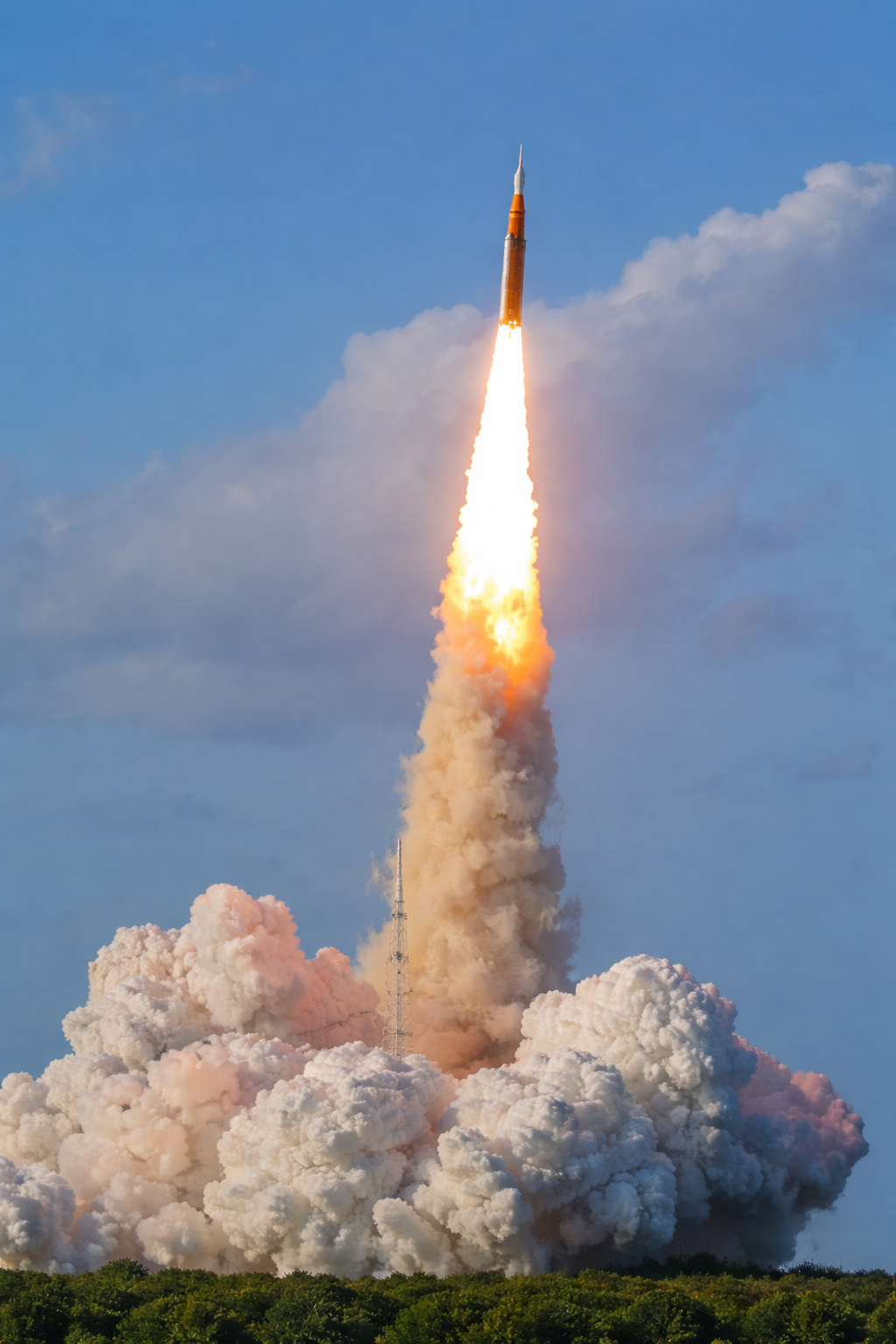
What Nearly Went Wrong and What Still Could
The Artemis II mission is one of the most important space missions in modern history. Led by NASA, it marks humanity’s return to deep space exploration after more than 50 years.
But just hours before launch, things almost didn’t go as planned.
From a faulty space toilet to critical safety system concerns, engineers faced intense pressure. Thanks to quick thinking and expert teamwork, the mission was saved.
In this article, we’ll explore what nearly went wrong, how NASA handled it, and what risks still remain as astronauts prepare for their journey to the Moon.
Table of Contents
- What is the Artemis II Mission?
- Major Issues Before Launch
- The Space Toilet Problem
- Safety System Concerns
- The Intense Final Countdown
- Testing the Spacecraft in Orbit
- What Could Still Go Wrong
- FAQs (Featured Snippet Section)
H2: What is the Artemis II Mission?
The Artemis II mission is NASA’s first crewed mission aimed at returning humans to the Moon since the Apollo era.
Astronauts aboard the Orion spacecraft will orbit Earth and later head toward the Moon, testing systems for future lunar landings.
This mission is a major step toward long-term human presence on the Moon.
Internal Link Example:
Read more about NASA missions on your blog: “NASA Moon Missions Explained”
External Link Example:
Learn more on NASA’s official website: https://www.nasa.gov
H2: Major Issues Before Launch
In the final hours before liftoff, multiple technical problems appeared:
- Faulty waste management system
- Communication issue in flight termination system
- Unexpected temperature readings in launch abort system
Each of these issues had the potential to delay or cancel the mission.
But NASA engineers acted quickly.
H2: The Space Toilet Problem
H3: Why Waste Management Matters in Space
In space, even basic human needs become complex.
Due to zero gravity:
- Liquids float instead of flowing
- Waste must be carefully controlled
- Astronauts need special systems to function normally
H3: What Went Wrong
Sensors in the spacecraft’s toilet system showed unusual readings.
Astronaut Christina Koch stepped in and manually fixed the issue under guidance from mission control.
Soon after, the message came:
“Toilet is go for use.”
H3: How the System Works
NASA’s Universal Waste Management System includes:
- Airflow technology to manage waste
- Funnels and hoses for urine collection
- Sealed containers for solid waste
- Restraints to keep astronauts stable
NASA invested over $23 million into this advanced system.
H2: Safety System Concerns
H3: Flight Termination System Issue
This system is designed to:
- Destroy the rocket if it goes off course
- Protect people on the ground
Problem:
- Communication failure
Solution:
- Engineers used backup hardware from older Space Shuttle systems
H3: Launch Abort System Warning
This system allows astronauts to escape in an emergency.
Problem:
- Higher-than-normal temperature reading
Decision:
- Engineers determined it was safe to proceed
H2: The Intense Final Countdown
As engineers worked through issues, the countdown paused at 10 minutes.
Then came the final system checks:
- “Booster, go”
- “Guidance, go”
- “Range, go”
Each confirmation reduced tension.
Finally, the launch director gave the command:
“You are go for launch.”
The rocket lifted off, marking a historic moment for humanity.
H2: Testing the Spacecraft in Orbit
After reaching orbit, astronauts began an unusual task:
Trying to break the spacecraft—on purpose.
H3: Why Test Like This?
NASA wants to ensure:
- The spacecraft can handle extreme conditions
- All systems work perfectly before deep space travel
H3: Tests Being Performed
Astronauts are:
- Switching communication systems
- Running computers in different modes
- Moving inside the cabin to test air quality
- Firing thrusters to check performance
They are also testing the European-built service module to ensure accuracy.
H2: What Could Still Go Wrong?
Even now, risks remain.
Before heading to the Moon, NASA must confirm:
- Life support systems are stable
- Communication systems are reliable
- Navigation systems are accurate
If any major issue appears:
NASA will cancel the Moon journey
The crew will return safely to Earth
Safety always comes first.
H2: Key Takeaways
- Artemis II faced multiple technical issues before launch
- A faulty toilet system required manual repair
- Critical safety systems showed warning signs
- NASA engineers solved problems quickly
- Astronauts are now testing the spacecraft in orbit
- The Moon mission could still be delayed if risks appear
H2: FAQs (Featured Snippet Optimization)
Q1: What is Artemis II mission?
Artemis II is NASA’s first crewed mission to orbit the Moon in over 50 years, testing systems for future lunar landings.
Q2: What problems did Artemis II face?
The mission faced issues with a space toilet, flight termination system, and launch abort system before launch.
Q3: Is Artemis II mission safe?
Yes, NASA resolved all major issues, but continuous testing is being done to ensure astronaut safety.
Q4: Can Artemis II still be canceled?
Yes, if any serious problem arises during testing, NASA may cancel the Moon journey and return astronauts safely.