A Breakthrough in Space Science
One of the most fascinating new findings in contemporary astronomy is the dirty fireball explosion. This long-theorized cosmic event may have finally been detected for the first time by scientists utilizing the Einstein Probe.
This uncommon kind of star explosion may alter our understanding of how huge stars die and how black holes form. Let’s examine the significance of this finding.
What Is a Dirty Fireball Explosion?
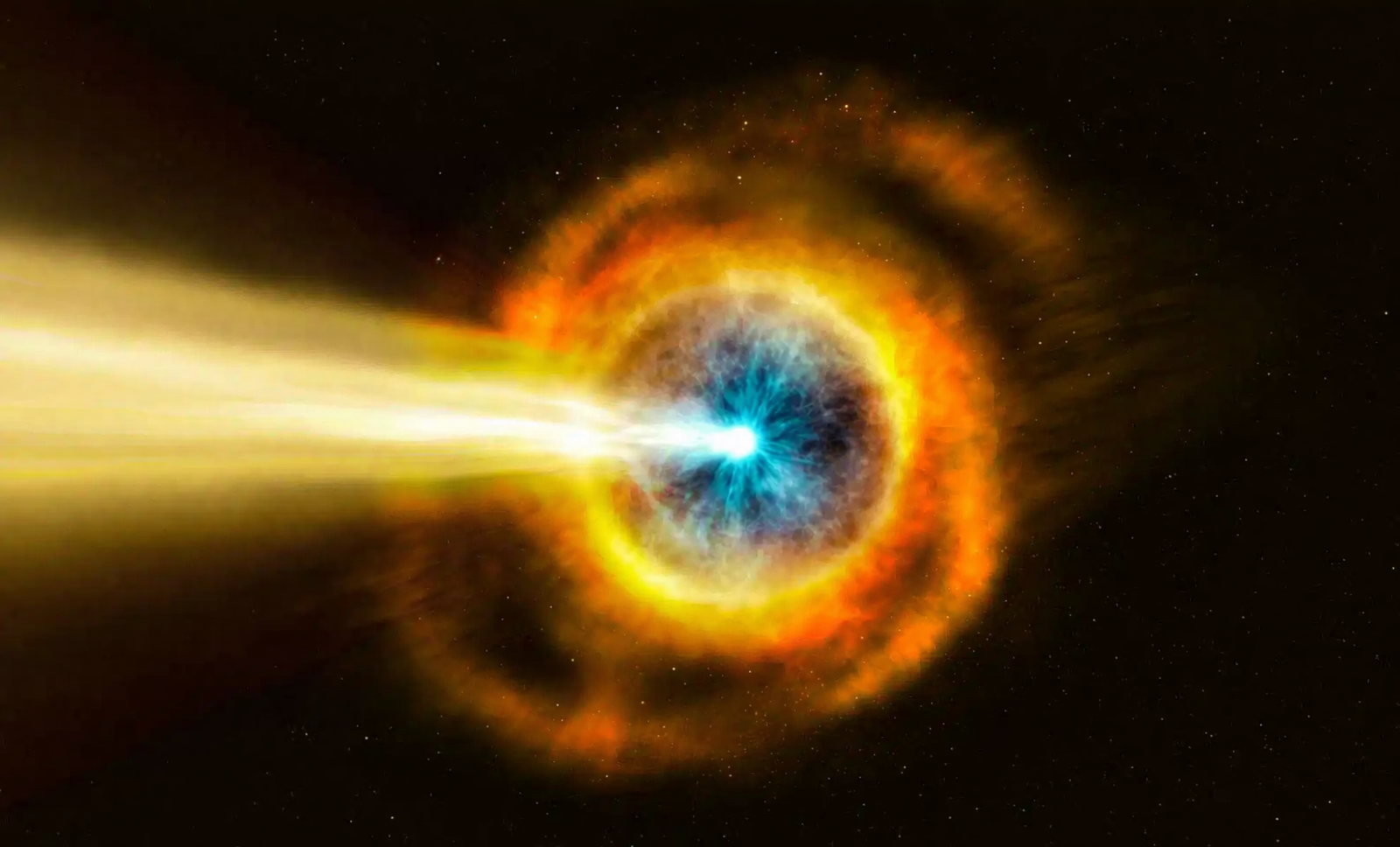
A dirty fireball explosion happens when a massive star collapses and forms a black hole. During this process, energy is released in a chaotic and less focused way compared to other cosmic explosions.
Key Characteristics
- Occurs during star collapse
- Produces intense X-ray radiation
- Contains heavy elements
- Less structured than gamma-ray bursts
Unlike traditional explosions, this event is “dirty” because it includes a mix of matter and radiation, rather than clean, focused energy beams.
Discovery by Einstein Probe Telescope
The breakthrough came when scientists detected a powerful X-ray flash named EP241113a.
What Happened?
- The Einstein Probe observed an unusual burst
- The signal matched predictions from dirty fireball theory
- The discovery was documented in early research publications
This observation is important because scientists have been searching for evidence of this phenomenon for over 30 years.
How Massive Stars Die
To understand this discovery, we need to look at how stars end their lives.
Stages of Stellar Death
- A massive star runs out of fuel
- Gravity causes the core to collapse
- A black hole may form
- A powerful explosion releases energy
These events often create:
- Supernova
- Gamma-ray burst
- Or now, possibly a dirty fireball explosion
Why This Discovery Matters
This discovery could answer major questions in astrophysics.
Key Benefits
- Better understanding of black hole formation
- Insights into high-energy radiation
- Knowledge about heavy elements in space
It may also explain how chaotic energy flows during star collapse.
Dirty Fireball vs Gamma-Ray Bursts
Many people confuse dirty fireballs with gamma-ray bursts, but they are different.
Main Differences
| Feature | Dirty Fireball Explosion | Gamma-Ray Burst |
| Energy Release | Chaotic | Focused |
| Radiation Type | X-ray dominant | Gamma-ray |
| Structure | Disordered | Jet-like |
| Observations | Rare (new) | Common |
This comparison shows why the discovery is so important—it adds a new category of cosmic explosions.
A New Era in High-Energy Space Discovery
The Einstein Probe is designed to detect extreme cosmic events.
What Makes It Special
- High sensitivity to X-ray signals
- Wide field of view
- Real-time detection capability
This technology allows scientists to capture rare events like the dirty fireball explosion.
Future of Space Research
If confirmed, this discovery could open new research paths.
What Scientists Will Study Next
- More dirty fireball events
- Behavior of collapsing stars
- Formation of heavy elements
It may also improve our understanding of the universe’s structure.
and AI from Google and NVIDIA.
Featured Snippet Optimization
What is a dirty fireball explosion?
A dirty fireball explosion is a rare cosmic event that occurs when a massive star collapses into a black hole, releasing chaotic X-ray radiation mixed with heavy elements.
Final Thoughts
The dirty fireball explosion could be one of the most important discoveries in modern astrophysics.
For decades, scientists believed this type of explosion existed—but had no proof. Now, thanks to the Einstein Probe, we may finally have evidence.
If confirmed, this finding will:
- Redefine how we understand star death
- Expand our knowledge of black holes
- Open new frontiers in space research
The universe continues to surprise us—and this discovery proves there is still so much to learn