Faster Performance but Battery Life Takes a Hit
Introduction
With the release of the most recent laptop CPU generation, Qualcomm is obviously changing its priorities. Performance is the top priority with the new Snapdragon X2 Elite Extreme CPU, but there is a notable price tag. Although new CPU offers quicker speeds, early testing reveals that its battery life isn’t as good as that of its predecessor.
We’ll analyze real-world performance, battery benchmarks, and the implications for consumers thinking about a next-generation Windows-on-Arm laptop in this blog.
Snapdragon X2 Elite: Built for Speed
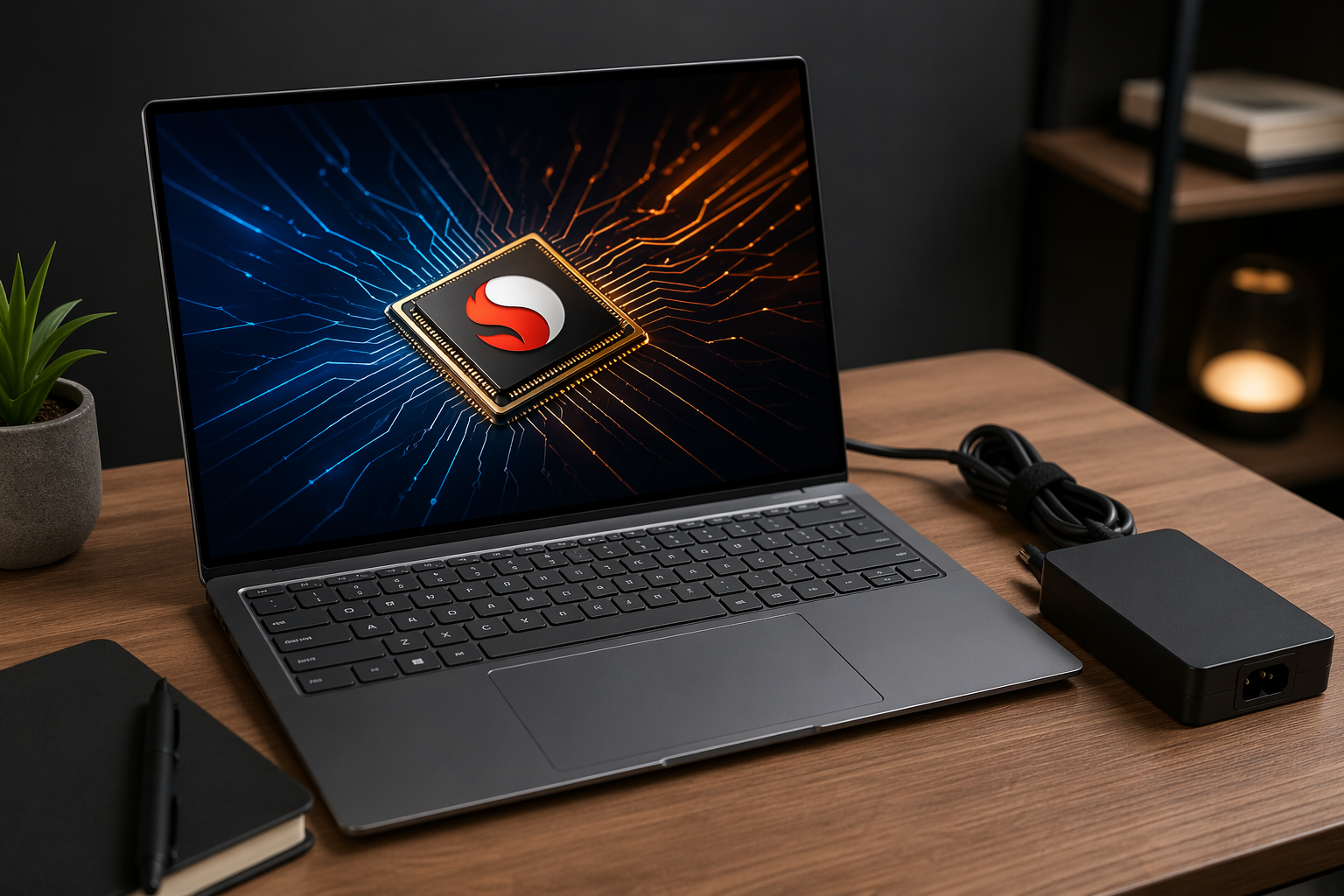
The Snapdragon X2 Elite Extreme (X2E94100) is part of Qualcomm’s second-generation push into high-performance laptop processors. Packed with 12 Prime cores and 6 performance cores, and reaching speeds of up to 4.7GHz, this chip is clearly designed to handle demanding productivity tasks with ease.
When tested inside the Asus Zenbook A16, the performance-first approach becomes obvious. Even the inclusion of a 140-watt charger hints at higher power consumption compared to earlier models.
This isn’t just a minor upgrade—it’s a strategic shift toward competing more aggressively with traditional laptop processors from Intel and AMD.
Real-World Battery Testing: A Modern Approach
Battery testing has evolved. Instead of outdated looping video tests with dimmed screens, a more realistic approach involves streaming content online. This method stresses multiple components simultaneously—CPU, display, and wireless connectivity.
For this test, continuous streaming of the popular anime One Piece on Netflix was used. It’s a practical way to simulate how users actually consume content today.
Battery Life Results: Good, But Not the Best
The results tell an interesting story:
- Asus Zenbook A16 (Snapdragon X2 Elite Extreme): ~13 hours 4 minutes
- Asus Zenbook Duo (Intel Core Ultra 300): ~16.5 hours
On paper, 13 hours is still impressive—it easily covers long flights or full workdays. However, compared to competitors and even earlier Snapdragon chips, the drop in efficiency is noticeable.
Why the Difference Matters
One key factor is battery size. Some competing laptops, especially those powered by Intel’s latest chips, use larger batteries—up to 99Wh, the maximum allowed for air travel.
This creates an uneven playing field:
- Larger batteries = longer runtime
- Smaller batteries = lighter laptops but shorter usage
When comparing efficiency (battery life relative to battery capacity), Snapdragon chips still show strong potential. In fact, pairing them with larger batteries could deliver exceptional results.
Performance vs Battery Life: The Trade-Off
Qualcomm’s new direction is clear: prioritize speed, even if it impacts battery life.
This makes the Snapdragon X2 Elite ideal for:
- Heavy multitasking
- Productivity workloads
- Users who value performance over endurance
However, if your priority is maximum battery efficiency, the first-generation Snapdragon X Elite may still be the better choice.
Should You Upgrade?
The answer depends on your needs:
- Choose Snapdragon X2 Elite if you want faster performance and better productivity handling.
- Stick with Snapdragon X Elite (Gen 1) if battery life is your top concern.
Either way, Qualcomm continues to push the boundaries of Windows-on-Arm laptops, even if it means making tough trade-offs.
Final Thoughts
The Snapdragon X2 Elite Extreme represents a bold step forward. It proves that Qualcomm is serious about competing in the high-performance laptop space. While battery life takes a slight hit, the gains in speed may be worth it for many users.
In the end, it’s all about balance—and this generation leans heavily toward power over efficiency.