New Study Raises Alarming Concerns
Growing Use of AI in Education Sparks Debate
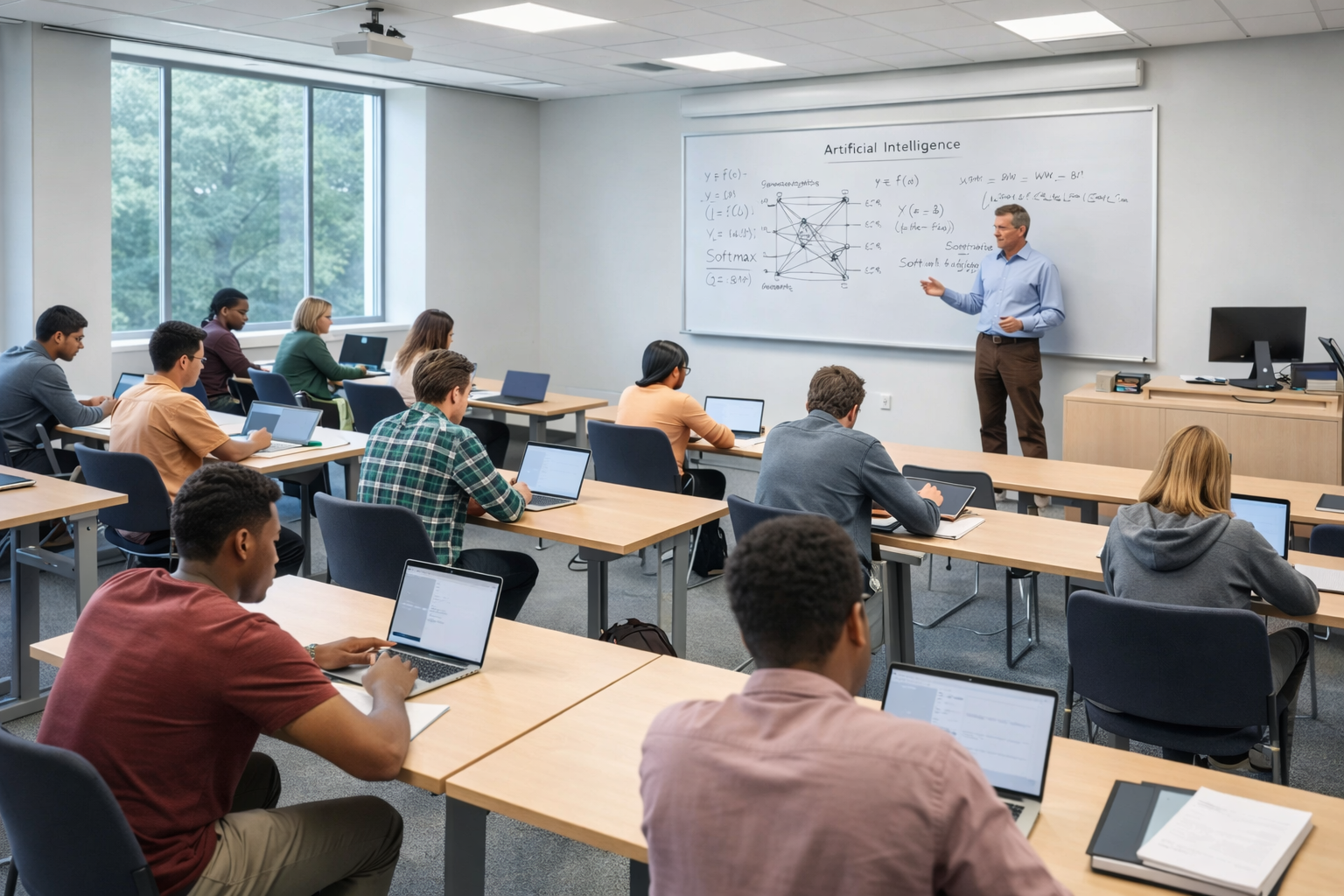
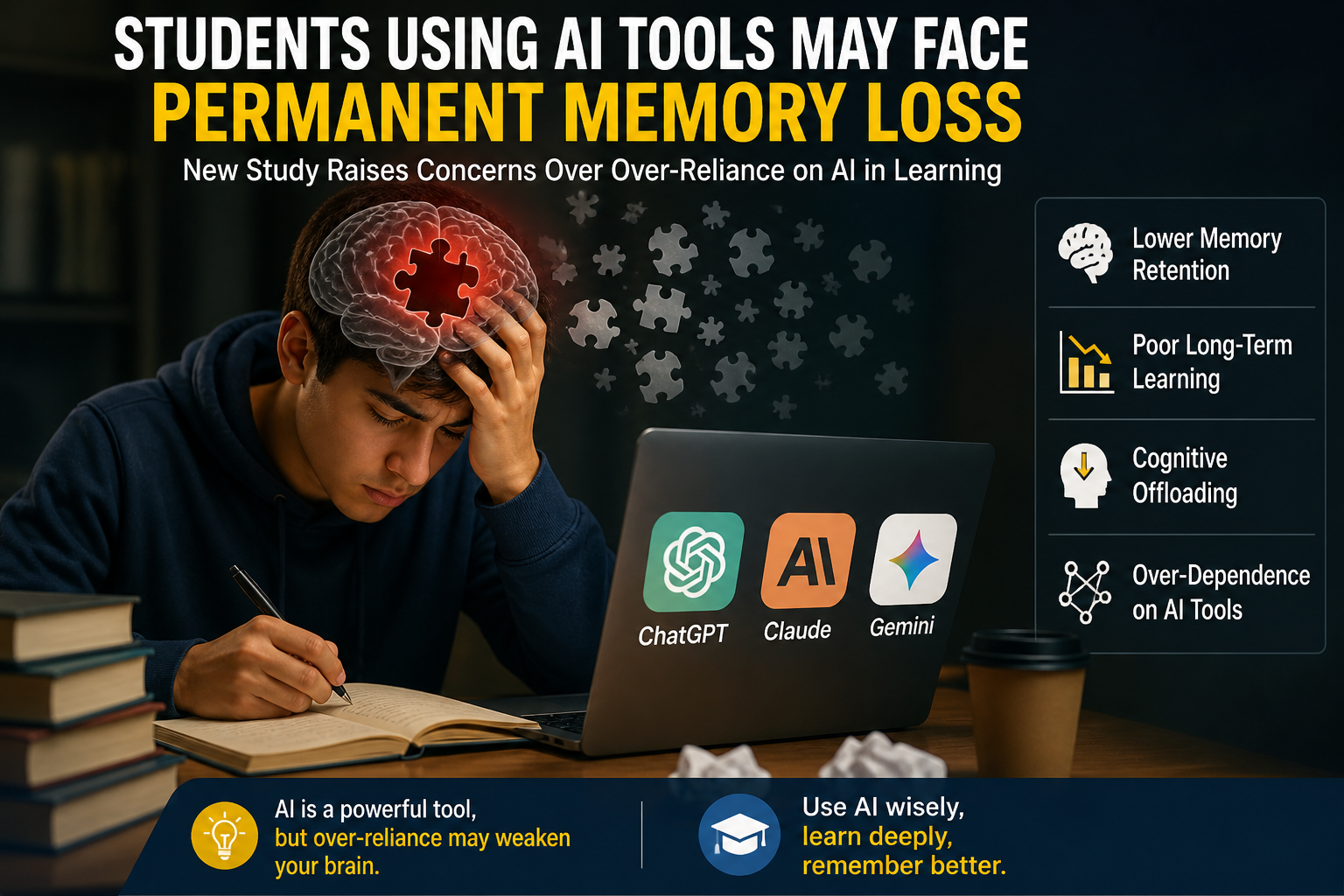
The rapid rise of artificial intelligence tools such as ChatGPT, Claude, and Gemini has transformed the way students learn, research, and complete assignments. These tools provide instant answers, explanations, and even full solutions, making studying faster and more convenient than ever before.
However, while this technological shift has been widely praised for improving efficiency, a new study suggests there may be hidden downsides. Researchers are now questioning whether heavy reliance on AI could negatively impact students’ memory and long-term cognitive development.
New Research Examines AI’s Impact on Learning
A recent peer-reviewed study published in Social Sciences & Humanities Open explored how unrestricted access to AI tools affects student learning outcomes. The research focused on university students and aimed to understand whether AI assistance enhances or weakens knowledge retention over time.
The study is particularly important as educational institutions worldwide are still trying to figure out how to integrate AI into classrooms without harming traditional learning processes.
How the Study Was Conducted
To ensure reliable results, researchers designed a controlled experiment involving 120 participants. These students were divided into two groups:
- One group was allowed to use AI tools like ChatGPT as a study aid.
- The second group relied solely on traditional learning methods without any AI assistance.
Both groups were given the same learning material and study time. After completing their sessions, they were tested immediately and then again after a period of 45 days through a surprise retention test.
This approach helped researchers measure not just short-term understanding but also long-term memory retention, which is crucial for real learning.
Key Findings: AI Users Show Lower Memory Retention
The results of the study revealed a significant difference between the two groups. Students who used AI tools scored an average of 57.5% on the delayed test, while those who studied without AI scored 68.5%.
This gap suggests that while AI may help students grasp concepts quickly, it does not necessarily support long-term memory. In fact, reliance on AI tools may reduce the mental effort required during learning, leading to weaker retention over time.
Understanding “Cognitive Offloading”
Researchers attribute this decline in memory performance to a concept known as Cognitive Offloading. This occurs when individuals rely on external tools to handle thinking processes instead of using their own memory and reasoning abilities.
In simple terms, when students depend on AI to provide answers instantly, they may skip the mental work needed to truly understand and remember information. Over time, this habit can weaken the brain’s natural ability to store and recall knowledge.
The Role of ‘Desirable Difficulties’ in Learning
Another important concept highlighted in the study is “desirable difficulties.” This idea suggests that learning becomes more effective when it involves effort and challenges. Struggling with complex problems forces the brain to engage deeply, strengthening memory and understanding.
AI tools, however, often remove this struggle by offering immediate solutions. While this makes studying easier, it can reduce the cognitive effort that is essential for long-term learning. As a result, students may understand topics temporarily but fail to retain them over time.
Does AI Permanently Damage Memory or Intelligence?
Despite some alarming interpretations circulating online, the study does not claim that AI tools permanently damage memory, creativity, or intelligence. Instead, it highlights potential risks associated with excessive and unstructured use.
The researchers caution that over-reliance on AI can create dependency patterns, where students begin to treat these tools as a “cognitive crutch.” This means they may rely more on automated systems rather than developing their own critical thinking and problem-solving skills.
Shifting Learning Behavior in the AI Era
The study also points to a broader shift in how students approach learning. Instead of focusing on remembering information, many learners are now prioritizing the ability to quickly find answers using AI or digital tools.
While this skill is valuable in today’s information-driven world, it raises concerns about whether students are losing the ability to deeply understand and retain knowledge. This shift could have long-term implications for education systems and workforce readiness.
Why Educators Are Paying Attention
As AI tools continue to expand across schools and universities, educators are increasingly concerned about their impact. The challenge lies in balancing the benefits of technology with the need to preserve fundamental learning skills.
Many experts believe that banning AI entirely is neither practical nor beneficial. Instead, the focus should be on teaching students how to use AI responsibly and effectively, without compromising their cognitive development.
Finding the Right Balance: Smart Use of AI in Education
The study suggests that structured and limited use of AI could offer the best of both worlds. When used correctly, AI can enhance learning by providing explanations, guiding research, and supporting problem-solving.
However, students should avoid using AI as a shortcut for every task. Engaging actively with study material, practicing problem-solving, and allowing room for struggle are essential for building strong memory and critical thinking skills.
Conclusion: A Wake-Up Call for the Future of Learning
The growing popularity of AI tools like ChatGPT, Claude, and Gemini marks a new era in education. While these technologies offer undeniable advantages, this study serves as an important reminder that convenience should not come at the cost of cognitive development.
Rather than fearing AI, students and educators should aim to use it wisely. By combining traditional learning methods with thoughtful AI integration, it is possible to enjoy the benefits of technology while preserving the skills that truly matter.