End of an Era for Its High-End Desktop Line
Apple has formally discontinued its flagship desktop, the Mac Pro, marking the end of an important chapter in the history of computing. The Mac Pro, which was once thought to be the ultimate in professional-grade performance and customization, has been decommissioned, and there are currently no plans for a replacement.
This choice is part of a larger change in Apple’s approach brought about by the company’s move to Apple Silicon and the shifting needs of the market for professional computers.
The Final Mac Pro: M2 Ultra Model
The last iteration of the Mac Pro, powered by the M2 Ultra chip and released in mid-2023, is no longer available for purchase. According to reports, Apple has no immediate plans to develop a successor.
For many observers, this announcement doesn’t come as a surprise. The Mac Pro had been gradually losing relevance, especially as Apple focused more on compact yet powerful systems like the Mac Studio and Mac mini.
A Legacy That Started in the 1990s
The Mac Pro’s origins trace back to the late 1990s when Steve Jobs returned to Apple and simplified its product lineup into four core categories:
- Consumer desktop
- Consumer laptop
- Professional desktop
- Professional laptop
The professional desktop category was initially filled by the Power Mac, which later evolved into the Mac Pro during Apple’s transition to Intel processors in the mid-2000s.
For years, the Mac Pro stood as a symbol of raw power, modularity, and professional flexibility.
The Rise—and Struggles—of Innovation
The 2013 “Trash Can” Design
In 2013, Apple introduced a radically redesigned Mac Pro—a compact cylindrical machine that quickly earned the nickname “trash can.” While innovative in appearance, it came with significant limitations.
The design relied on a dual-GPU architecture and a tightly packed thermal core. This made upgrades and future improvements difficult. As workloads evolved, the system struggled to keep up.
Apple later admitted the design had boxed them into a “thermal corner,” limiting flexibility and scalability.
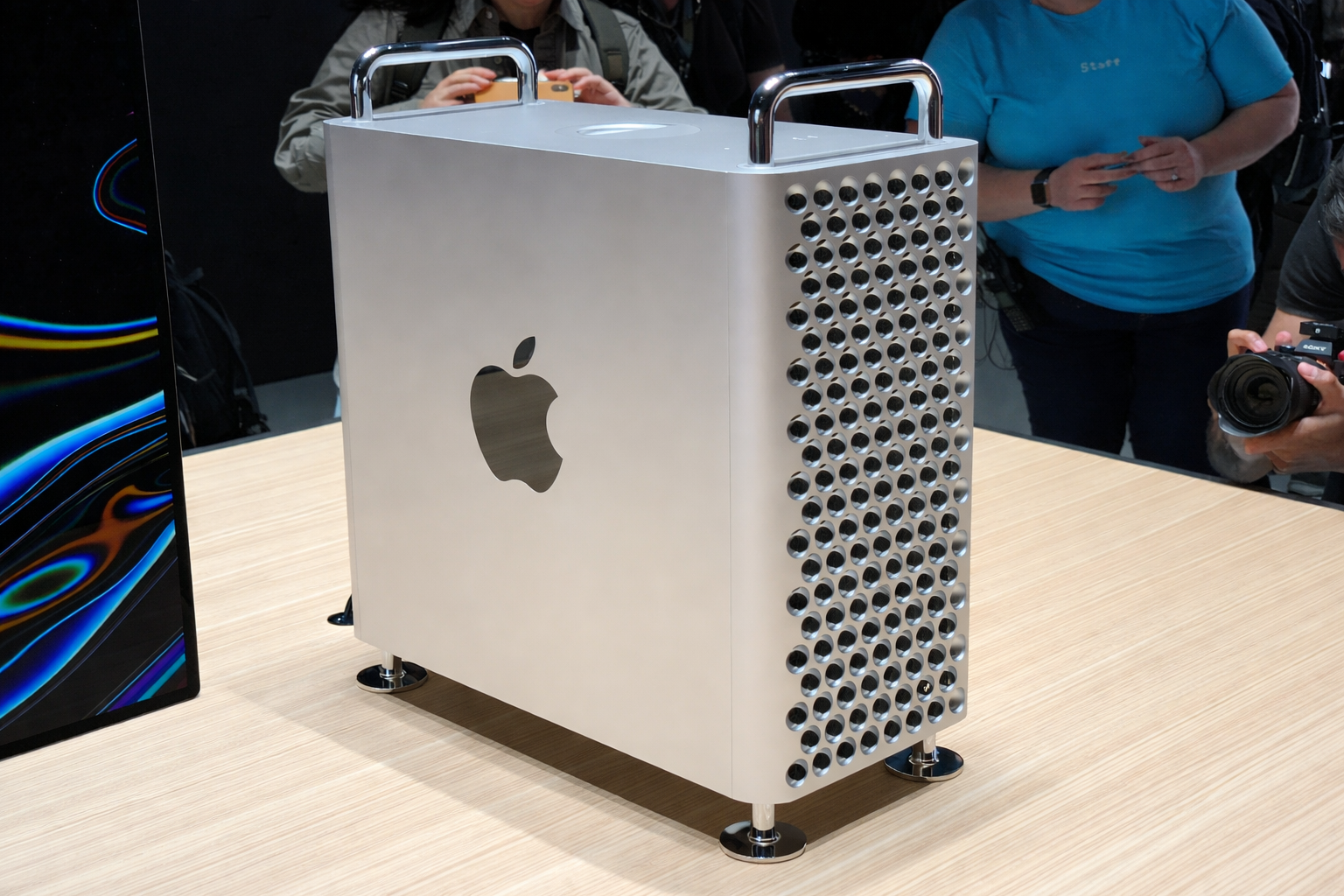
The 2019 Return to Modularity
In response, Apple reintroduced a more traditional tower design in 2019. This version:
- Featured a modular structure
- Allowed internal upgrades
- Included PCIe expansion slots
- Came with a high price tag starting at $6,000
While it was praised for returning to the needs of professionals, it arrived too late—and at a time when Apple was preparing for a major transition.
Apple Silicon Changed Everything
The introduction of Apple Silicon chips fundamentally altered the Mac ecosystem.
Key changes included:
- Unified memory architecture (no RAM upgrades)
- Integrated GPUs (no support for external graphics cards)
- High-performance built-in media engines
- Reduced need for internal expansion
These innovations made large, customizable desktop towers less necessary. Instead, Apple began offering powerful, compact machines that delivered exceptional performance without the complexity of upgrades.
Mac Studio and Mac Mini Take Over
With the Mac Pro gone, Apple’s desktop lineup is now led by:
- Mac Studio (with M3 Ultra and M4 Max chips)
- Mac mini (with M4 Pro chip)
These systems provide professional-level performance in smaller, more efficient designs—aligning with Apple’s modern hardware philosophy.
Why Apple Killed the Mac Pro
Several key factors contributed to the Mac Pro’s discontinuation:
1. Declining Relevance
The demand for large, upgradeable desktop systems has decreased as integrated performance improves.
2. Apple Silicon Limitations
The architecture doesn’t support traditional upgrades like RAM or GPUs, making modular systems less practical.
3. High Cost, Low Audience
With entry prices starting around $6,000, the Mac Pro was never a mass-market device.
4. Better Alternatives
Devices like the Mac Studio offer similar or better performance in a smaller form factor.
The End of an Icon
The Mac Pro joins other discontinued Apple products, such as:
- 27-inch iMac (2009–2020)
- iMac Pro (2017–2017)
Together, these changes highlight Apple’s shift away from niche, high-cost hardware toward streamlined, efficient systems.
Final Thoughts
The discontinuation of the Mac Pro signals more than just the end of a product—it represents a shift in how professional computing is defined.
Where once power meant size and expandability, today it means efficiency, integration, and performance per watt.
For longtime Apple users and professionals, the Mac Pro will remain a symbol of a different era—one where customization and raw hardware ruled. But in the age of Apple Silicon, the future clearly belongs to compact powerhouses.