How NASA Astronauts Survive 3,000°C Heat During Return to Earth
Returning from space is frequently riskier than going out, and the last stage of the Artemis II mission may be the most hazardous of them.
The crew of Artemis II will confront a formidable task:returning to Earth’s atmosphere at hypersonic speeds while withstanding temperatures as high as thousands of degrees Celsius, having traveled further from Earth than any human in history.
How, therefore, do astronauts make it through such a violent descent? Let’s explain it in plain, uncomplicated terms.
A Historic Mission Reaching Record Distances
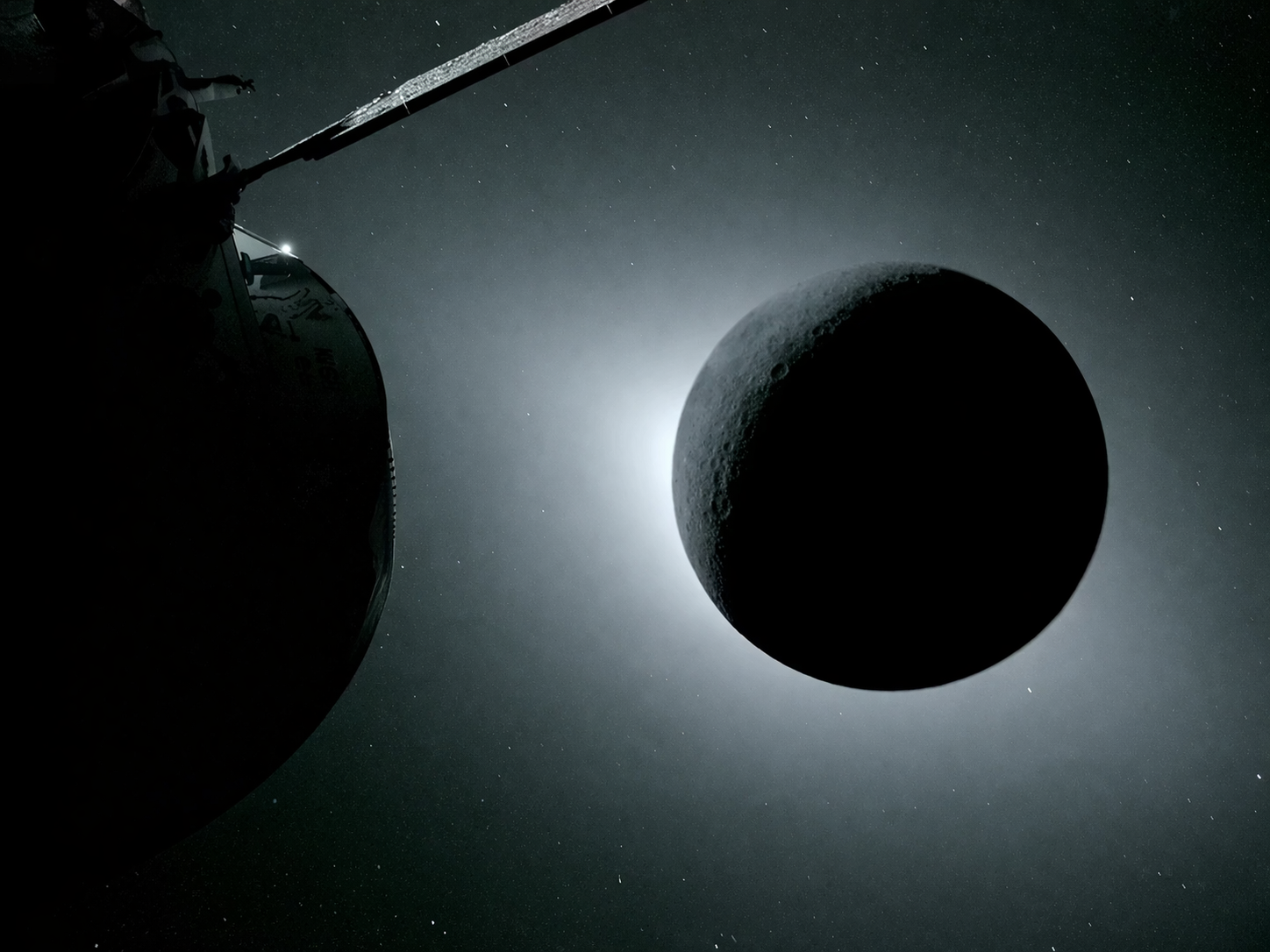
The Artemis II astronauts have already made history by traveling approximately 406,771 kilometers from Earth, pushing the boundaries of human exploration.
After completing their mission around the Moon, the crew will return to Earth, with splashdown expected in the Pacific Ocean. But before that, they must safely pass through one of the harshest environments imaginable.
The Extreme Speed of Re-Entry
As the spacecraft approaches Earth, the Orion capsule will be moving at speeds exceeding:
- 11 km per second (around 40,000 km/h)
- Roughly 40 times faster than a commercial airplane
At this velocity, the capsule carries enormous kinetic energy, which must be reduced safely before landing.
Why Slowing Down Is So Difficult
Unlike airplanes designed to minimize drag, spacecraft are engineered to maximize resistance during re-entry.
- The atmosphere acts as a natural brake
- Friction slows the spacecraft down
- Energy is dissipated through heat and air resistance
This process is intense, but it’s essential for a safe landing.
Understanding G-Forces During Re-Entry
As the capsule decelerates, astronauts experience powerful forces known as g-forces.
- A Formula 1 driver experiences about 5 g’s during turns
- Humans can only tolerate limited g-forces before losing consciousness
Uncrewed spacecraft can handle extreme forces (even up to 100 g’s), but human missions must be carefully controlled.
How Artemis II Keeps Astronauts Safe
The Orion capsule uses a controlled, lift-based re-entry:
- Extends the duration of re-entry
- Reduces sudden deceleration
- Keeps g-forces within human limits
This makes the descent safer and more manageable for the crew.
The Heat Challenge: Facing 10,000°C Plasma
As the spacecraft re-enters the atmosphere, it compresses air in front of it, creating a shock wave.
This leads to:
- Air temperatures exceeding 10,000°C
- Formation of plasma (superheated, electrically charged gas)
- Temporary communication blackout
Despite these extreme conditions, the spacecraft itself remains protected—thanks to advanced engineering.
Thermal Protection System: The Astronauts’ Shield
To survive re-entry, the Orion capsule relies on a highly specialized thermal protection system (TPS).
How It Works:
- Acts as an insulating barrier between the spacecraft and extreme heat
- Uses materials that can withstand and dissipate intense temperatures
- Radiates heat away from the vehicle
Even though external temperatures can exceed 10,000°C, the heat shield keeps its surface temperature around 3,000°C—a level it is designed to handle.
The Role of Ablative Heat Shields
The Orion capsule uses a proven material called AVCOAT, originally developed for the Apollo missions.
What Makes AVCOAT Effective?
- Made from carbon-based materials and special resins
- Absorbs heat and gradually erodes during re-entry
- Releases gases that cool the surrounding surface
This process is called ablation, and it’s key to protecting the spacecraft.
Lessons Learned from Artemis I
During the uncrewed Artemis I mission, engineers noticed that:
- Parts of the heat shield eroded more than expected
- Some material separated during re-entry
After careful analysis, experts identified the cause as pressure buildup during a “skip re-entry” maneuver.
Improvements for Artemis II
To enhance safety:
- Engineers adjusted the re-entry trajectory
- Reduced the intensity of the “skip” phase
- Maintained controlled descent while minimizing stress on the heat shield
These refinements ensure a more reliable return for the crew.
Final Thoughts: A Delicate Balance of Speed, Heat, and Precision
The Artemis II re-entry is a powerful reminder of the challenges of space travel. From extreme speeds and crushing g-forces to intense heat and plasma blackout, every second of the descent is carefully engineered.
Thanks to advanced materials, precise trajectory planning, and decades of aerospace innovation, astronauts can safely return from the edge of space.
As the world watches, one thing is certain:
The true success of Artemis II will be when its crew safely returns home to Earth.