
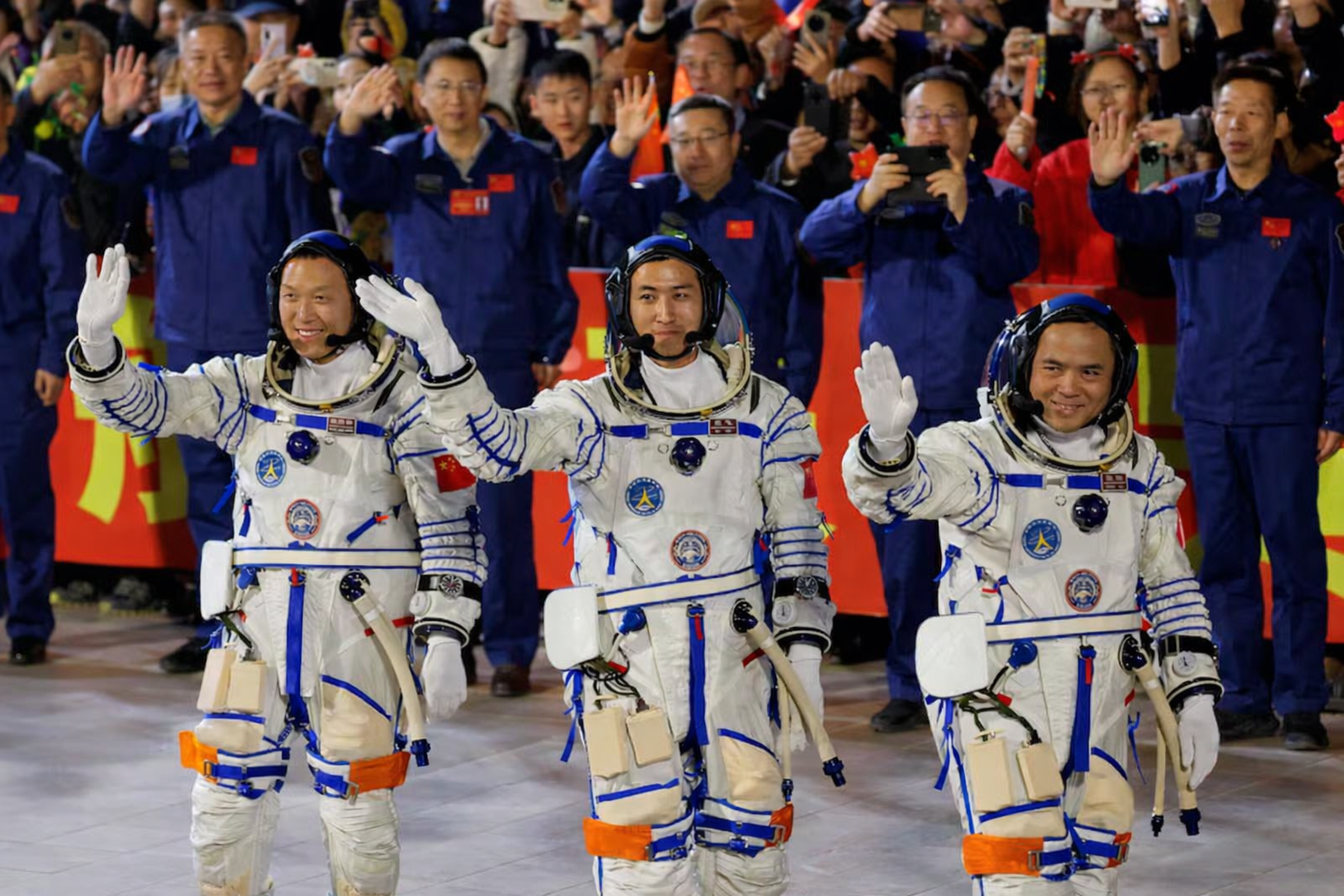
Astronaut Crew to Stay Longer in Space
As the crew of the Shenzhou-21 mission gets ready to spend longer time in orbit than anticipated, China’s ambitious space program continues to garner media attention. The astronauts on China’s space station will stay an additional month or so, according to a recent update from officials, underscoring the country’s increasing emphasis on long-duration human spaceflight.
Extended Stay Aboard China’s Space Station
The three astronauts launched aboard the Shenzhou-21 spacecraft on October 31 from the Jiuquan Satellite Launch Center. Initially scheduled for a six-month mission, their return to Earth was expected around April. However, China’s space authorities have now decided to prolong their mission to further test long-term living conditions in space.
This extension reflects a broader goal: to better understand how astronauts can safely live and work in orbit for extended periods—knowledge that will be critical for future deep-space missions.
Meet the Shenzhou-21 Astronaut Crew
The mission features a skilled trio of astronauts:
- Zhang Hongzhang
- Wu Fei
- Zhang Lu (Commander)
At the time of launch, the crew members were aged 39, 32, and 48 respectively. Commander Zhang Lu brings valuable experience from the earlier Shenzhou-15 mission, strengthening the team’s ability to handle complex operations in orbit.
Mission Progress and Achievements
Over the past five months, the astronauts have successfully carried out a wide range of tasks aboard the Tiangong space station. Their work includes:
- Installing space debris protection equipment
- Inspecting extravehicular systems and station facilities
- Conducting scientific experiments in microgravity
With support from the station’s advanced robotic arm and ground-based researchers, the crew has maintained excellent physical and mental condition throughout the mission.
Why the Mission Is Being Extended
According to China’s space authorities, the extension aims to further validate technologies related to long-duration human presence in space. This includes:
- Monitoring astronaut health over extended periods
- Testing life-support systems under prolonged use
- Evaluating station operations over longer cycles
These insights are essential as China continues to expand its capabilities in human spaceflight and prepares for more ambitious missions in the future.
What Comes Next for the Crew?
During this additional month in orbit, the Shenzhou-21 crew will continue performing scientific and technological experiments. While an exact return date has not yet been announced, the extended mission is expected to provide valuable data that will shape future space exploration strategies.
Final Thoughts
The decision to extend the Shenzhou-21 mission underscores China’s commitment to advancing its space program. As the crew continues their work aboard the Tiangong space station, the world watches closely—because every extra day in orbit brings humanity one step closer to mastering long-term space travel.