Russia Successfully Launches Soyuz Rocket from Repaired Baikonur Launch Pad
Baikonur Cosmodrome Restores Critical ISS Launch Capability
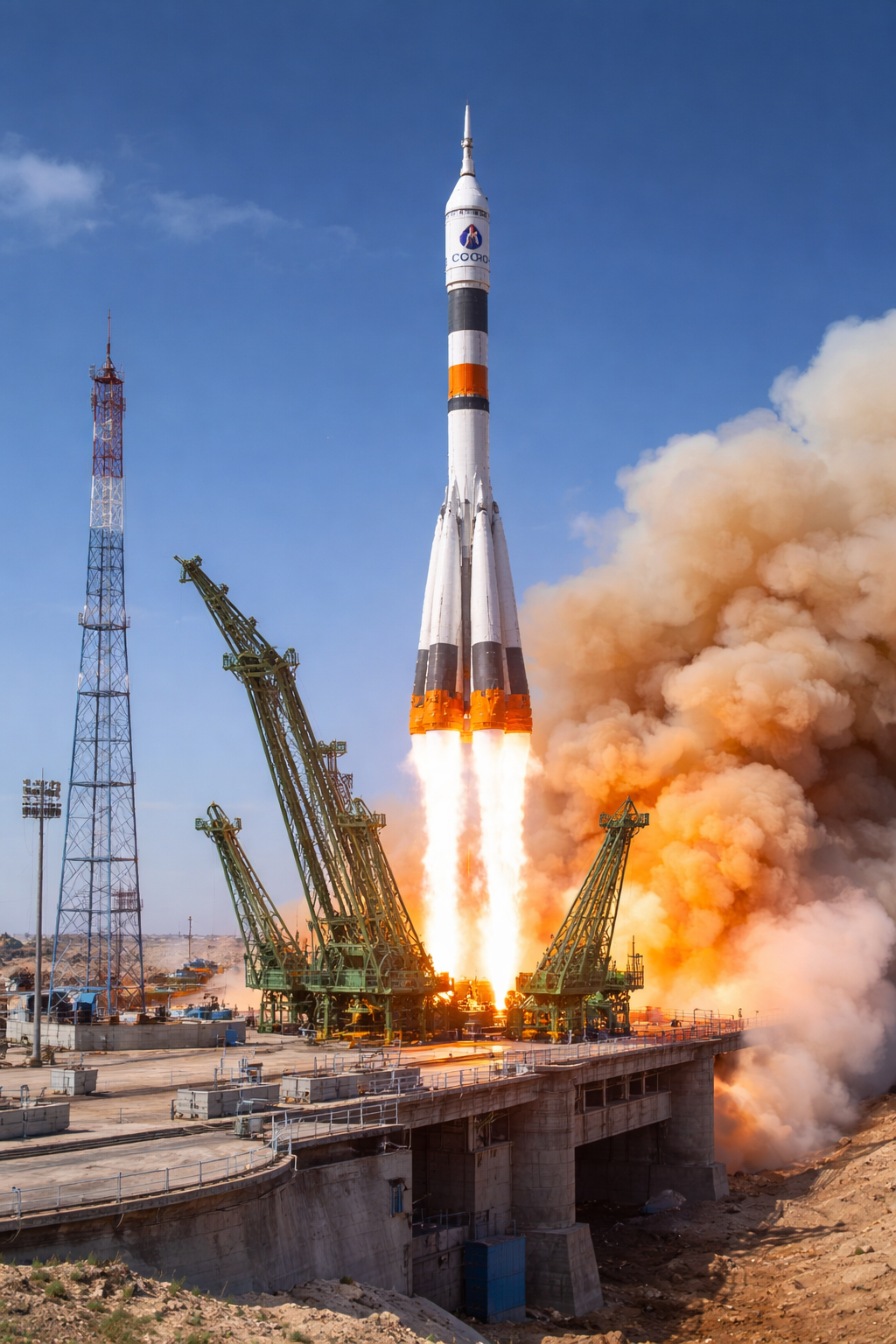
Russia successfully launched a Soyuz rocket from the recently renovated launch pad at the Baikonur Cosmodrome in Kazakhstan, marking an important milestone in its space operations. After months of disruption due to earlier damage, this event marks the return of an essential capability for missions to the International Space Station (ISS).
The Progress MS-33 cargo spaceship was launched into orbit by the Soyuz-2.1a rocket at precisely 1200 GMT. The mission is going according to plan, and the spacecraft is scheduled to dock with the International Space Station on March 24, according to Russia’s space agency. The reestablishment of a dependable supply channel for vital supplies and equipment to astronauts on the space station makes this launch particularly significant.
Background: Launch Pad Damage and Its Impact
The launch pad had been out of service since November last year after sustaining heavy damage during the launch of the Soyuz MS-28 spacecraft. That mission carried two Russian cosmonauts and one NASA astronaut to the ISS. Although the crew reached the station safely and no injuries were reported, the incident left Russia temporarily unable to use its primary launch facility for ISS missions.
This disruption had a notable impact on space logistics. The damaged pad was the only one at Baikonur capable of supporting Soyuz rockets used for both crewed missions and Progress cargo deliveries. As a result, Russia’s ability to send supplies and personnel to the ISS was significantly limited for several months.
Importance of the Soyuz-2.1a and Progress MS-33 Mission
The Soyuz-2.1a rocket is a reliable workhorse in Russia’s space program, widely used for transporting cargo and crew to low Earth orbit. The Progress MS-33 spacecraft aboard this mission plays a vital role in maintaining ISS operations by delivering food, fuel, scientific equipment, and other essentials.
With the successful launch, Russia has once again secured its position as a key partner in maintaining the ISS. The restoration of this launch capability ensures continuity in space missions and strengthens international cooperation in space exploration.
Why Baikonur Still Matters in Modern Spaceflight
Despite having other launch sites within its own territory, Russia continues to rely heavily on the Baikonur Cosmodrome. Located in Kazakhstan, Baikonur remains one of the world’s oldest and most historically significant spaceports.
While there are multiple launch pads at Baikonur, not all are equipped to handle Soyuz rockets used for ISS missions. This makes the repaired pad especially valuable. Its return to service eliminates a major bottleneck and provides greater flexibility for future launches.
Looking Ahead: Stability in ISS Missions
The successful repair and reuse of the launch pad represent a strong recovery for Russia’s space infrastructure. It also brings reassurance to the global space community, as uninterrupted ISS missions are critical for ongoing scientific research and international collaboration.
As the Progress MS-33 spacecraft approaches its docking date, attention will now shift to future launches and the continued reliability of the Soyuz program. With operations back on track, Russia is once again fully equipped to support both crewed and cargo missions to the ISS.