
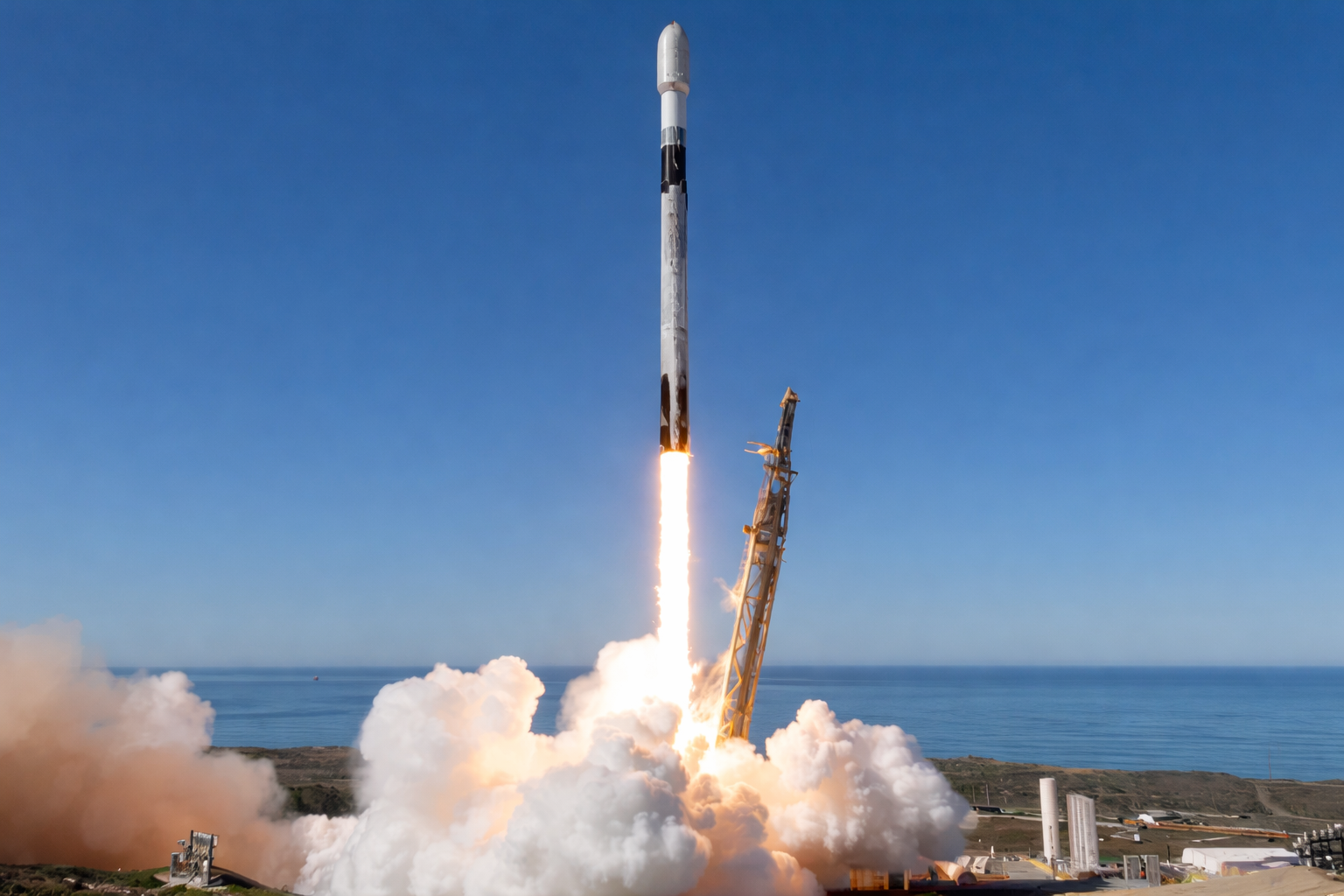
119 Satellites Set for Liftoff from California
SpaceX is getting ready to launch its Transporter-16 rideshare mission, which will transport 119 payloads into orbit, marking yet another significant milestone for the commercial space industry. This mission represents a major advancement in increasing access to space and maintains SpaceX’s leadership in economical satellite launches.
Launch Details: When and Where to Watch
The mission is scheduled to launch on March 30 from Vandenberg Space Force Base aboard a Falcon 9 rocket.
Key Timing:
- Launch Window Opens: 6:20 a.m. ET (1020 GMT)
- Local Time (California): 3:20 a.m.
- Live Stream: Begins ~15 minutes before liftoff via SpaceX
This early morning launch offers space enthusiasts a chance to witness another impressive deployment of satellites into orbit.
What is the Transporter-16 Mission?
Transporter-16 is the 16th mission in SpaceX’s dedicated rideshare program, designed to carry multiple small payloads on a single rocket.
Mission Highlights:
- Total Payloads: 119
- Includes:
- Cubesats
- Microsatellites
- Hosted payloads
- Orbital transfer vehicles (OTVs)
- A reentry vehicle
Some of these payloads will be deployed later by onboard transfer vehicles, showcasing the increasing complexity and flexibility of modern space missions.
SpaceX Rideshare Program: A Game Changer
SpaceX’s rideshare missions have transformed the satellite launch industry by making space more accessible and affordable.
Program Achievements:
- Over 1,600 payloads launched across missions
- Record-breaking 143 payloads on Transporter-1 (2021)
- Additional support from the Bandwagon rideshare program
These missions allow startups, research institutions, and governments to launch satellites without the cost of dedicated rockets.
Falcon 9 Reusability: A Key Advantage
One of the most impressive aspects of this mission is the reuse of the Falcon 9 rocket.
Booster Details:
- This will be the 12th flight of the first-stage booster
- Expected to land on the droneship
Of Course I Still Love You in the Pacific Ocean - Landing occurs approximately 8.5 minutes after liftoff
This reusability significantly reduces launch costs and increases mission frequency.
Deployment Sequence and Orbit
After launch, the rocket’s upper stage will carry the payloads into low Earth orbit (LEO).
Deployment Timeline:
- Payload deployment begins around 55 minutes after liftoff
- Satellites will be released in sequence to avoid collisions
- Some payloads will later be moved to specific orbits using OTVs
This carefully coordinated process ensures safe and efficient deployment of all 119 payloads.
Why This Mission Matters
Transporter-16 highlights several key trends shaping the future of space exploration:
- Growing demand for small satellite launches
- Cost-effective rideshare opportunities
- Increased reliance on reusable rockets
- Expansion of global satellite networks
SpaceX continues to lead the way in making space more accessible for a wide range of customers.
Final Thoughts
The SpaceX Transporter-16 mission is more than just another launch—it’s a reflection of how rapidly the space industry is evolving. With 119 payloads onboard and advanced deployment strategies, this mission showcases the power of innovation, efficiency, and collaboration in modern spaceflight.
As SpaceX continues to push boundaries, missions like Transporter-16 are paving the way for a future where access to space is faster, cheaper, and more reliable than ever before.
The SpaceX Transporter-16 mission is more than just another launch—it’s a reflection of how rapidly the space industry is evolving. With 119 payloads onboard and advanced deployment strategies, this mission showcases the power of innovation, efficiency, and collaboration in modern spaceflight.
As SpaceX continues to push boundaries, missions like Transporter-16 are paving the way for a future where access to space is faster, cheaper, and more reliable than ever before.