A Glimpse Into the Future of AI and Robotics
Introduction
In a stunning display of technological progress, humanoid robots have taken a giant leap forward—literally. At a recent half marathon in Beijing, dozens of Chinese-made robots didn’t just participate—they impressed the world by showcasing remarkable speed, endurance, and agility. What was once a futuristic dream is quickly becoming a reality, as these machines demonstrated capabilities that are evolving at an astonishing pace.
A Race Like No Other: Humans vs. Robots
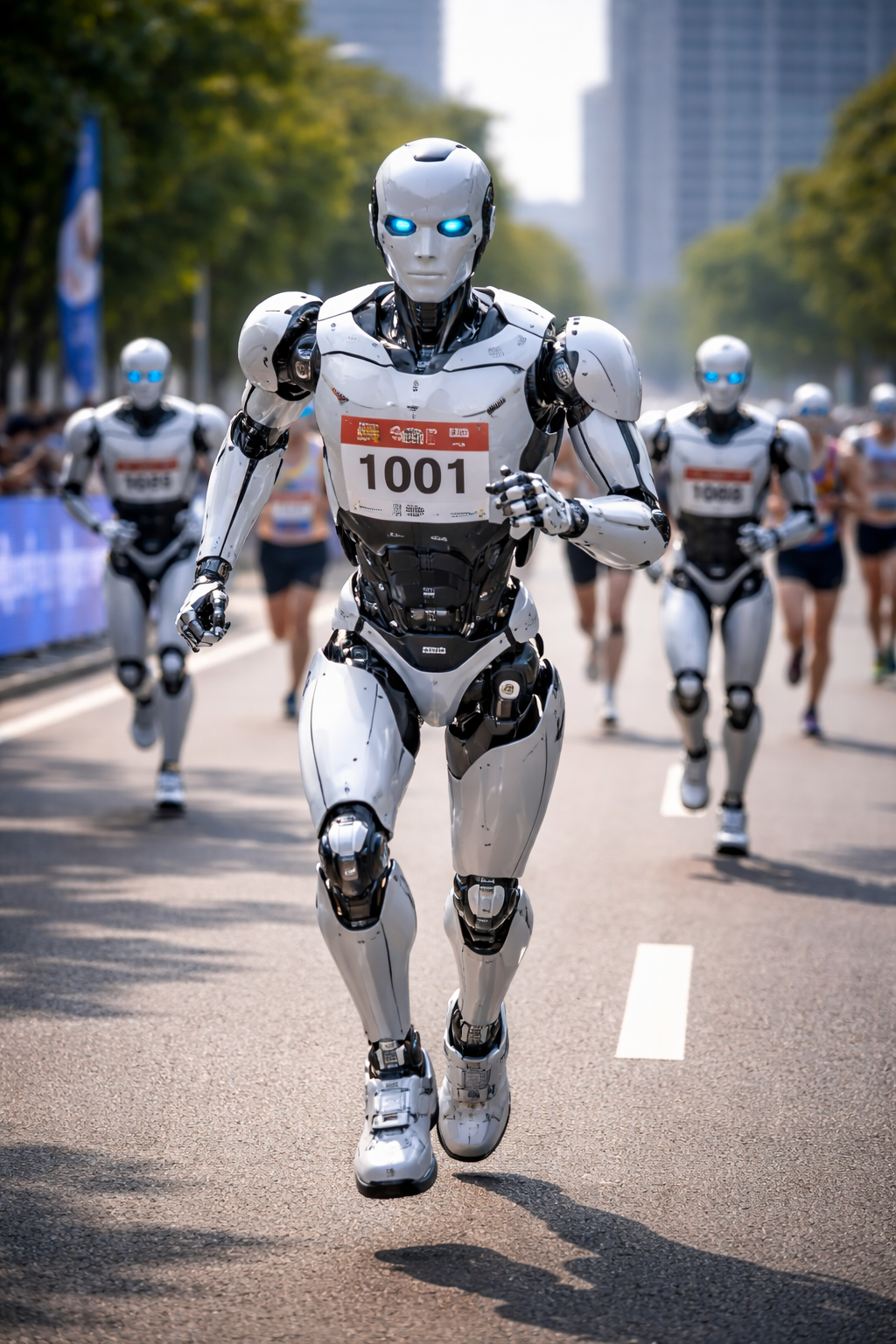
The Beijing half marathon wasn’t your typical race. This time, over 100 humanoid robots lined up alongside human runners, competing on parallel tracks to ensure safety. Just a year ago, only about 20 robots participated—and they lagged far behind humans. Fast forward to today, and the improvement is nothing short of extraordinary.
One standout robot, developed by a leading Chinese tech company, completed the race in an impressive 50 minutes and 26 seconds. Although it stumbled near the finish line and needed assistance, its performance still captured global attention.
Meanwhile, the fastest human runners maintained their dominance in traditional competition. However, the gap between human and machine is clearly shrinking—and fast.
Record-Breaking Performance and Rapid Progress
To put things into perspective, the fastest robot’s time rivals elite athletic performance levels. While it didn’t officially surpass human world records, the pace at which these robots are improving is remarkable.
Even more striking is the comparison to last year’s race:
- Participation increased from 20 to over 100 robots
- Performance improved dramatically, with multiple robots achieving competitive times
- Stability and movement showed significant advancements, despite occasional falls
This rapid development highlights how quickly robotics technology is evolving, especially in China.
China’s Push to Lead the Robotics Revolution
China is making aggressive moves to become a global leader in humanoid robotics. Through government support, subsidies, and infrastructure investments, the country is building a strong foundation for innovation in this field.
This ambition is also reflected in popular culture. During the widely watched Spring Festival Gala earlier this year, humanoid robots performed complex martial arts routines—handling swords, poles, and nunchucks with precision. These performances weren’t just entertainment—they were a statement of technological capability.
Beyond the Race: Real-World Applications
While racing robots may seem like a spectacle, the implications go far beyond sports. Experts believe humanoid robots could soon transform industries such as:
1. Dangerous Jobs
Robots can take on high-risk roles in mining, firefighting, and disaster response, reducing human exposure to danger.
2. Healthcare and Assistance
From elderly care to rehabilitation support, humanoid robots could provide much-needed assistance in aging societies.
3. Manufacturing and Logistics
Advanced robotics can boost efficiency, reduce costs, and improve precision in industrial operations.
4. Defense and Security
Although controversial, the potential use of humanoid robots in military applications is already being explored.
Challenges Still Remain
Despite the progress, humanoid robots are not yet perfect. Issues like balance, energy efficiency, and real-world adaptability still need improvement. The fall of the leading robot near the finish line is a reminder that there’s more work to be done.
Additionally, ethical concerns around automation and job displacement continue to spark debate worldwide.
Conclusion
The Beijing half marathon has become more than just a sporting event—it’s a powerful symbol of how far technology has come. Humanoid robots are no longer confined to labs or science fiction; they are stepping into the real world, running alongside humans, and steadily closing the gap.
As innovation accelerates, one thing is clear: the future of robotics is not just coming—it’s already here.