
Scientists Find Unexpected Activity in the Outer Solar System
A Groundbreaking Discovery in the Distant Solar System
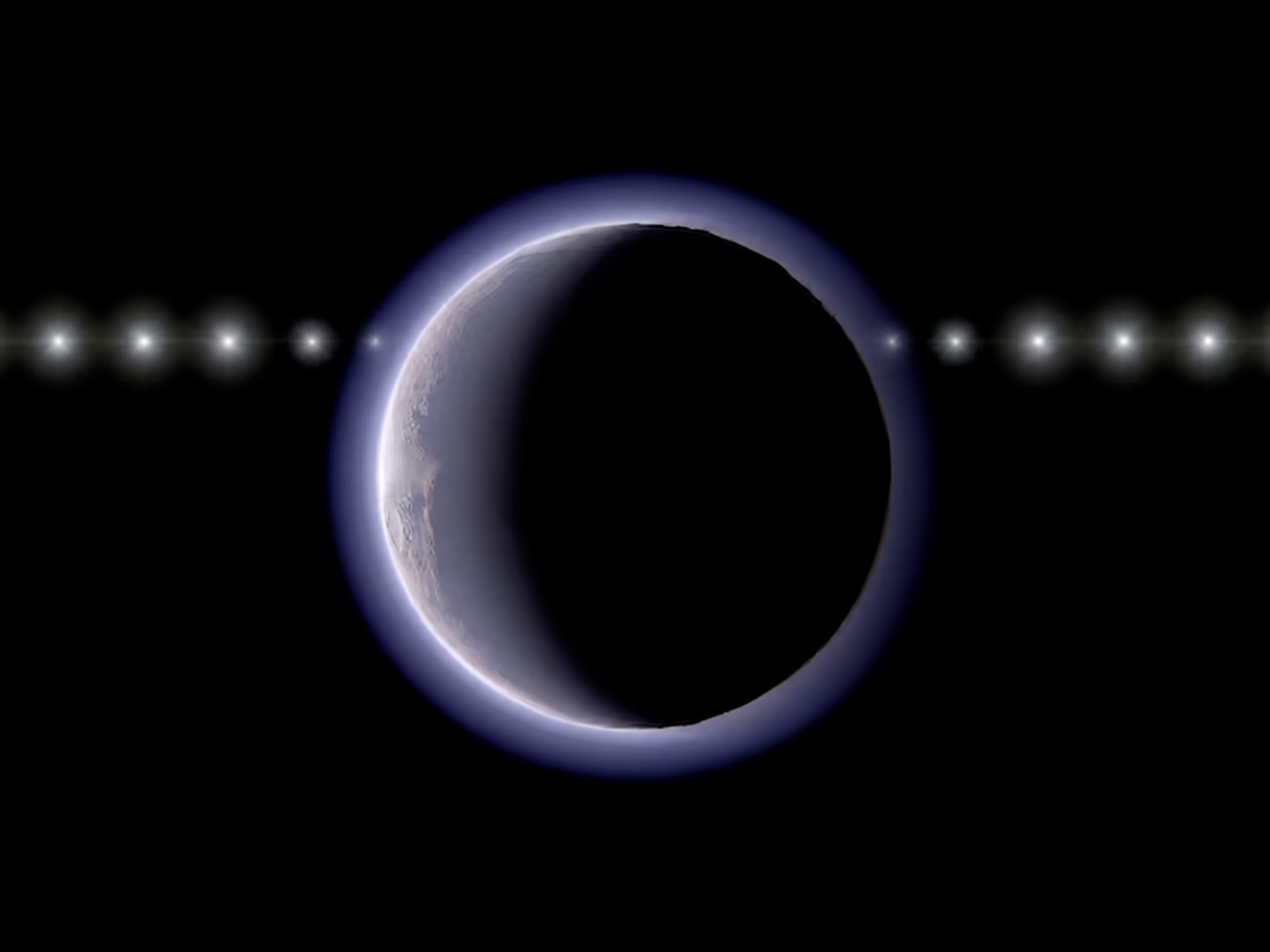
In a remarkable breakthrough, astronomers have detected an atmosphere on a small icy object located far beyond Neptune, reshaping our understanding of the outer solar system. Until now, only Pluto was known to possess an atmosphere among these distant celestial bodies. This new finding challenges long-held beliefs and suggests that even the coldest, most remote regions of our solar system may be more active than previously imagined.
What Are Trans-Neptunian Objects?
Beyond Neptune lies a vast region filled with icy remnants from the early solar system, known as trans-Neptunian objects (TNOs). These objects orbit the Sun at extreme distances and are typically small, cold, and thought to be geologically inactive. Famous members of this group include Pluto and Eris, both classified as dwarf planets.
The newly studied object, named (612533) 2002 XV93, belongs to this mysterious group. Despite its relatively small size, it has now become the center of attention due to the unexpected presence of an atmosphere.
Meet (612533) 2002 XV93: A Small Yet Fascinating World
(612533) 2002 XV93 is a relatively small celestial body, measuring approximately 310 miles (500 kilometers) in diameter. To put that into perspective, it is significantly smaller than Pluto and Eris, which are among the largest known trans-Neptunian objects.
Despite its modest size, this object orbits the Sun at a distance similar to Pluto, placing it in one of the coldest and darkest regions of our solar system. The discovery of an atmosphere on such a small body is both surprising and scientifically significant.
A Thin but Important Atmosphere
The atmosphere detected around (612533) 2002 XV93 is extremely thin—millions of times less dense than Earth’s atmosphere. In fact, it is estimated to be about 5 million to 10 million times thinner than Earth’s and 50 to 100 times thinner than Pluto’s already tenuous atmosphere.
Scientists believe this faint atmosphere could be composed of gases such as methane, nitrogen, or carbon monoxide. Even though it is incredibly thin, its mere existence raises important questions about how such atmospheres form and persist in the harsh conditions of deep space.
Why This Discovery Matters
For decades, scientists assumed that objects as small as (612533) 2002 XV93 could not sustain an atmosphere due to their weak gravity and extremely low temperatures. This discovery overturns that assumption and opens up new possibilities for understanding planetary evolution.
Astronomers now believe that some distant icy bodies may not be as inactive as once thought. Instead, they could be undergoing subtle processes that allow them to retain or generate atmospheres, even in the cold vacuum of space.
Possible Explanations for the Atmosphere
Researchers have proposed two main theories to explain the presence of this unexpected atmosphere.
1. Cryovolcanism: Ice Volcanoes in Space
One possibility is that the atmosphere is being continuously replenished through a process known as cryovolcanism. Unlike volcanoes on Earth that erupt molten rock, cryovolcanoes release gases and icy materials from beneath the surface.
In this scenario, gases trapped inside the object slowly seep out through cracks, forming a thin but persistent atmosphere. This would mean that (612533) 2002 XV93 is more geologically active than previously believed.
2. Impact-Generated Atmosphere
Another theory suggests that the atmosphere could be temporary, created by a recent collision with a smaller object. Such an impact could release gases trapped beneath the surface, forming a short-lived atmosphere.
If this is the case, the atmosphere may gradually disappear over time. However, if scientists observe that it remains stable or changes with seasons, it would support the idea of an ongoing internal process like cryovolcanism.
How Scientists Detected the Atmosphere
Detecting an atmosphere around such a distant and small object is no easy task. Researchers used a technique called stellar occultation, which involves observing what happens when the object passes in front of a distant star.
As the object moves across the star, it briefly blocks its light. By analyzing how the starlight dims and changes, scientists can infer the presence of an atmosphere and even estimate its composition and density.
This observation was carried out using ground-based telescopes located in Japan, including facilities in Kyoto, Nagano, and Fukushima. The precision of these observations allowed researchers to detect subtle changes in light, leading to this groundbreaking discovery.
A New Perspective on the Outer Solar System
This discovery is more than just a single finding—it represents a shift in how scientists view the outer solar system. Instead of being a region filled with frozen, inactive objects, it may actually be home to dynamic worlds with ongoing physical processes.
If one small object like (612533) 2002 XV93 can have an atmosphere, it raises the possibility that many more such objects could exist. Future observations may reveal a whole class of active icy bodies previously overlooked.
Implications for Future Space Research
The discovery could have major implications for future space missions and research. Understanding how atmospheres form and behave on small icy bodies could provide valuable insights into the early solar system.
It may also help scientists better understand the conditions that lead to the formation of planets and the evolution of their atmospheres. In the long term, these findings could even contribute to the search for habitable environments beyond Earth.
The Mystery Continues
While this discovery answers some questions, it also raises many new ones. Is the atmosphere permanent or temporary? What exactly is it made of? Are there more objects like this waiting to be discovered?
Astronomers will continue to study (612533) 2002 XV93 in the coming years, monitoring its atmosphere for changes. These observations will help determine whether the atmosphere is sustained by internal activity or was created by a recent impact.
Conclusion: A Small Object with Big Significance
The detection of an atmosphere on (612533) 2002 XV93 is a powerful reminder that the universe is full of surprises. Even in the cold, distant edges of our solar system, there is still much to learn.
This discovery not only challenges existing theories but also opens up exciting new directions for research. As technology improves and more observations are made, we may soon uncover even more secrets hidden in the far reaches of space.