NASA and Blue Origin Prepare for Historic Moon Landing Mission With Artemis Program
NASA Begins Astronaut Training With Blue Origin’s Moon Lander Prototype
NASA’s ambitious Artemis Program is a significant step toward bringing humans back to the Moon. NASA has formally begun training operations utilizing a full-scale prototype of Blue Origin’s next crew moon lander in response to the increasing success and momentum of the Artemis missions. In the worldwide competition to establish a permanent human presence on the lunar surface, the development represents a significant turning point.
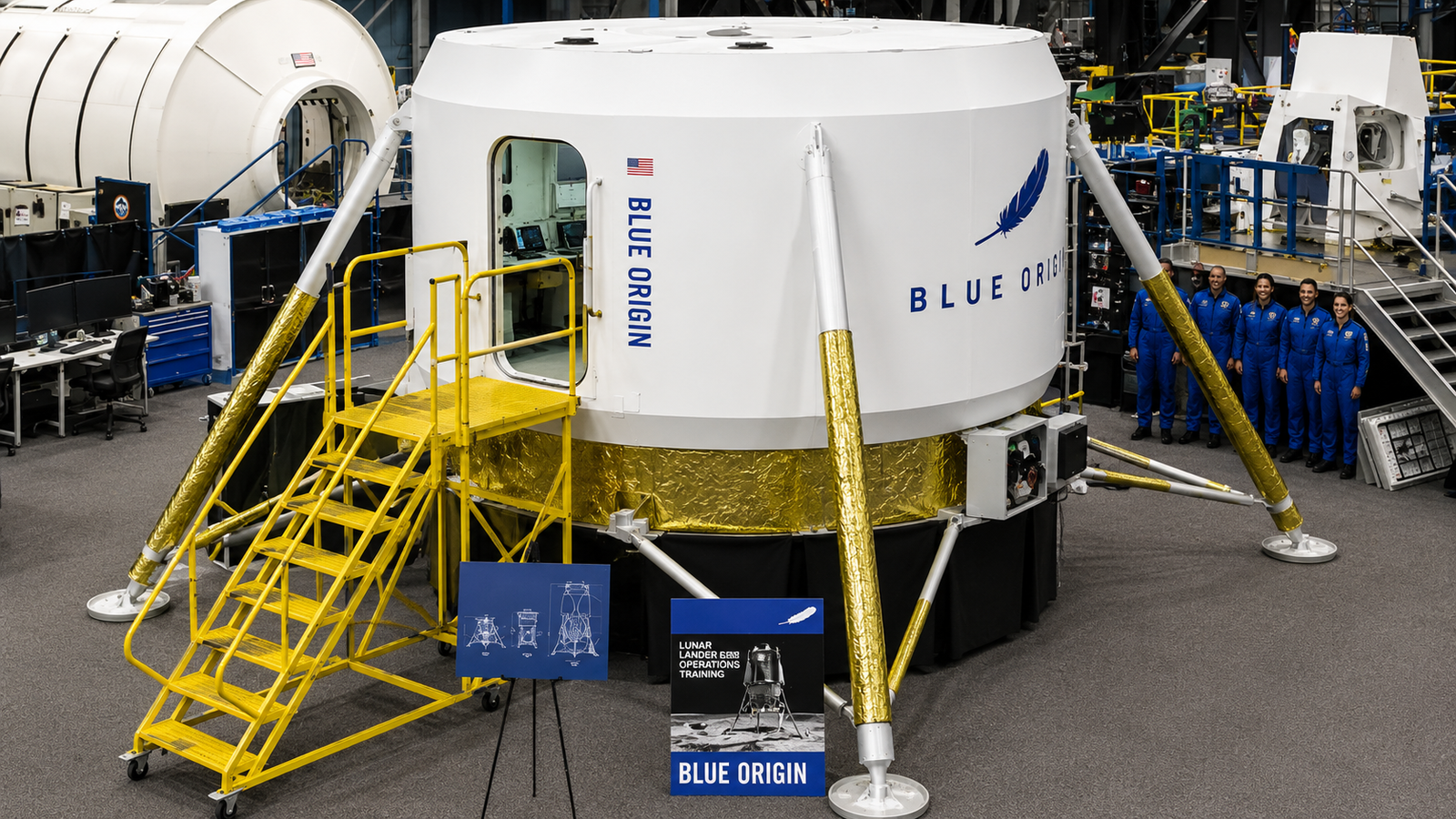
The prototype, known as the Mark 2 lunar lander crew cabin, has arrived at NASA’s Johnson Space Center in Houston, Texas. The giant training module will help astronauts and mission teams prepare for future moon landing operations that could happen later this decade. NASA is targeting the Artemis III mission for 2027, while a human moon landing could follow in 2028 if testing and development remain on schedule.
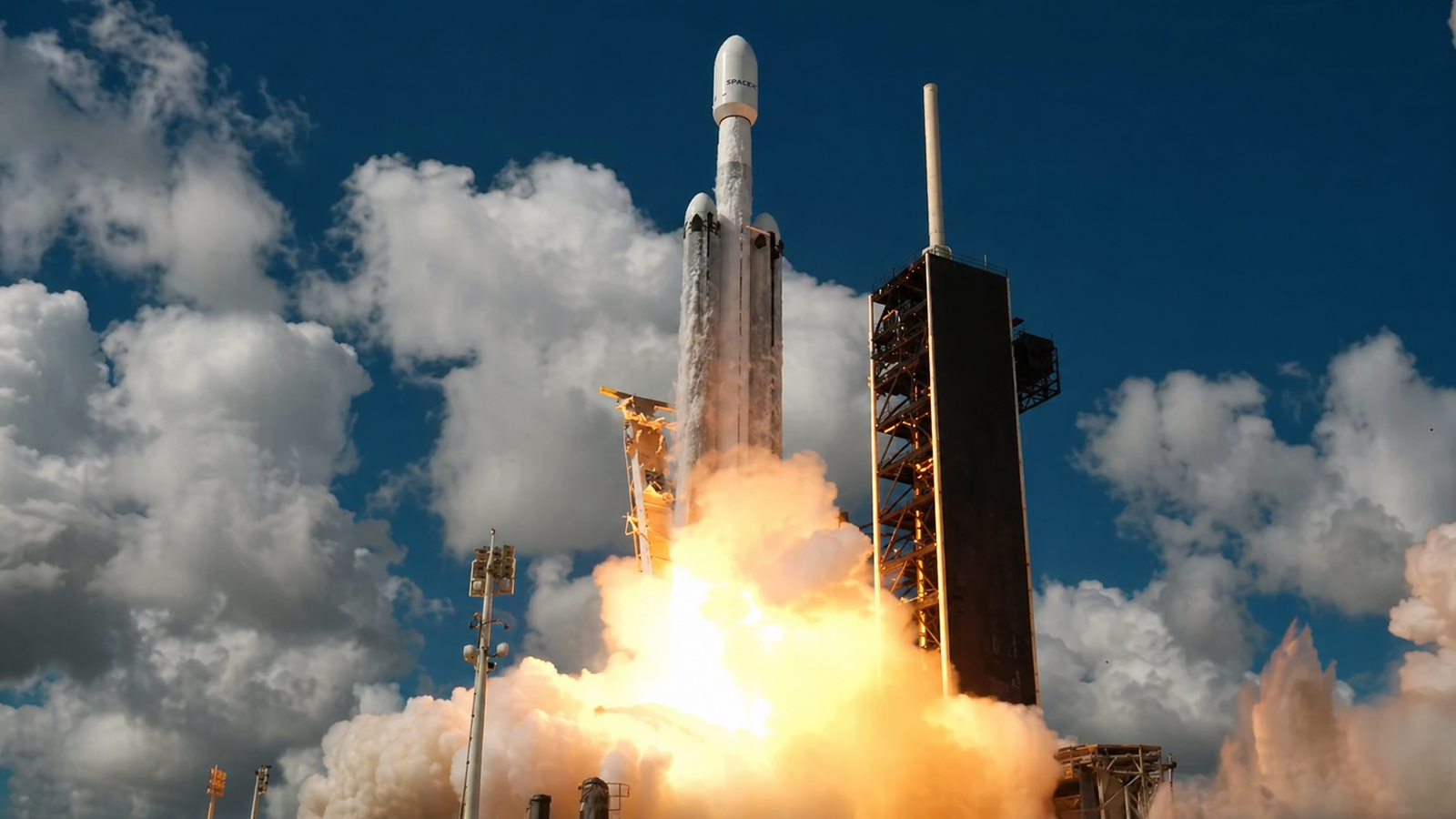
With increasing competition in the commercial space industry, both Blue Origin and SpaceX are working closely with NASA to build the next generation of lunar landers capable of transporting astronauts safely to the Moon and back.
Blue Origin’s Mark 2 Moon Lander Could Change Lunar Exploration
Full-Scale Lunar Lander Prototype Arrives at Johnson Space Center
The newly delivered prototype stands approximately 15 feet tall and represents the crew cabin section of Blue Origin’s Mark 2 lunar lander. While it is only a portion of the complete spacecraft, the final version that travels to the Moon is expected to stand around 52 feet tall once all systems are integrated.
NASA explained that the prototype will be used for “human-in-the-loop” testing. These advanced simulations allow astronauts, engineers, and mission controllers to practice real mission situations before an actual lunar flight takes place.
The training activities will include:
- Simulated moonwalk preparations
- Mission control communication exercises
- Spacesuit testing and checkouts
- Lunar landing mission scenarios
- Crew safety evaluations
- Docking and surface operation procedures
These tests are extremely important because future Artemis astronauts will rely heavily on the lander during lunar missions. NASA wants to ensure that every detail, from astronaut movement inside the cabin to communication systems, functions perfectly before sending humans back to the Moon.
The development of this lunar lander is also a major moment for Blue Origin, which has been competing with SpaceX in the rapidly expanding space exploration industry.
Artemis Program Moves Closer to Returning Humans to the Moon
NASA’s Moon Mission Timeline Continues to Advance
NASA’s Artemis program is designed to return astronauts to the Moon for the first time since the Apollo era. Unlike previous missions, Artemis aims to establish a sustainable human presence on the lunar surface while preparing for future missions to Mars.
The Artemis missions are divided into multiple phases:
Artemis I
An uncrewed test mission that successfully sent the Orion spacecraft around the Moon and back to Earth.
Artemis II
The first crewed Artemis mission that will carry astronauts around the Moon without landing.
Artemis III
The highly anticipated mission expected to land astronauts near the lunar south pole using a commercial lunar lander developed by Blue Origin or SpaceX.
NASA officials believe the Moon’s south pole contains valuable water ice deposits that could support long-term human exploration and future deep-space missions.
The agency’s partnership with private aerospace companies highlights a new era in commercial spaceflight. Instead of building every spacecraft internally, NASA is now collaborating with companies like Blue Origin and SpaceX to reduce costs and accelerate innovation.
Blue Origin’s Endurance Lander Undergoes Critical Testing
Lunar Lander Faces Major Challenges Before Moon Mission
Before astronauts can step onto the Moon using Blue Origin’s lander, the spacecraft must survive a series of difficult engineering and environmental tests.
Blue Origin’s uncrewed lunar lander version, known as “Endurance” or MK1, is currently being tested inside NASA’s thermal vacuum chambers. These specialized facilities recreate the harsh conditions of outer space, including extreme temperatures and vacuum environments.
The upcoming uncrewed mission will attempt to deliver scientific payloads and equipment to the lunar surface later this year. If successful, it will serve as a crucial demonstration of the lander’s capabilities before human missions begin.
Landing on the Moon remains one of the most difficult tasks in space exploration. Recent lunar missions from several countries and private companies have experienced hard landings, communication failures, or mission-ending technical problems.
Because of these risks, NASA is carefully evaluating both Blue Origin and SpaceX systems before selecting which lunar lander will ultimately support astronauts during Artemis missions.
SpaceX and Blue Origin Compete in NASA’s Lunar Future
Commercial Space Companies Play a Key Role in Moon Exploration
The modern space race is no longer limited to governments alone. Private aerospace companies are now central players in lunar exploration and future Mars missions.
SpaceX has already made headlines with its massive Starship rocket system, which NASA selected as one of the human landing systems for Artemis missions. Meanwhile, Blue Origin continues developing its own advanced lunar transportation technology through the Mark 2 lander project.
Both companies face enormous technical challenges, including:
- Safe lunar landings
- Deep-space communication systems
- Human life-support technology
- Fuel management in space
- Surface mobility and astronaut safety
NASA’s dual-provider strategy helps reduce mission risks while encouraging innovation between competing aerospace companies.
Industry experts believe this competition could significantly accelerate advancements in human spaceflight technology over the next decade.
Why NASA’s Moon Missions Matter for the Future of Space Exploration
Artemis Missions Could Prepare Humans for Mars
NASA’s return to the Moon is about much more than planting flags or repeating history. The Artemis program is considered a critical stepping stone toward future human missions to Mars and beyond.
Scientists believe the Moon can act as a testing ground for technologies needed for deep-space exploration, including:
- Long-duration astronaut habitats
- Space resource mining
- Advanced robotics
- Sustainable energy systems
- Deep-space transportation networks
The Moon’s lower gravity environment also makes it easier to launch spacecraft toward Mars compared to Earth.
By working with Blue Origin and SpaceX, NASA hopes to create a sustainable lunar economy where government agencies and private companies can work together on scientific research, resource extraction, and future interplanetary travel.
NASA’s Lunar Ambitions Enter a New Era
Human Moon Landings Could Return Before 2030
NASA’s decision to begin astronaut training using Blue Origin’s lunar lander prototype represents a major turning point in the Artemis program. The arrival of the full-scale cabin mock-up at Johnson Space Center signals that preparations for future moon landings are becoming increasingly real.
Although significant technical hurdles remain, the collaboration between NASA, Blue Origin, and SpaceX is pushing humanity closer to returning astronauts to the lunar surface for the first time in more than 50 years.
If all goes according to plan, Artemis III could become one of the most historic space missions of the modern era — paving the way for permanent lunar exploration and eventually the first human journey to Mars.
As NASA continues testing advanced spacecraft, training astronauts, and refining lunar landing systems, the dream of humans living and working on the Moon is no longer science fiction. It is rapidly becoming reality.