A Historic Milestone in Space Technology
SpaceX Achieves a New Record in Low Earth Orbit
SpaceX has formally reached 10,000 Starlink satellites in low Earth orbit (LEO) at the same time, a historic accomplishment. This milestone demonstrates the company’s leadership in the quickly changing space business and represents a significant advancement in the deployment of satellites worldwide.
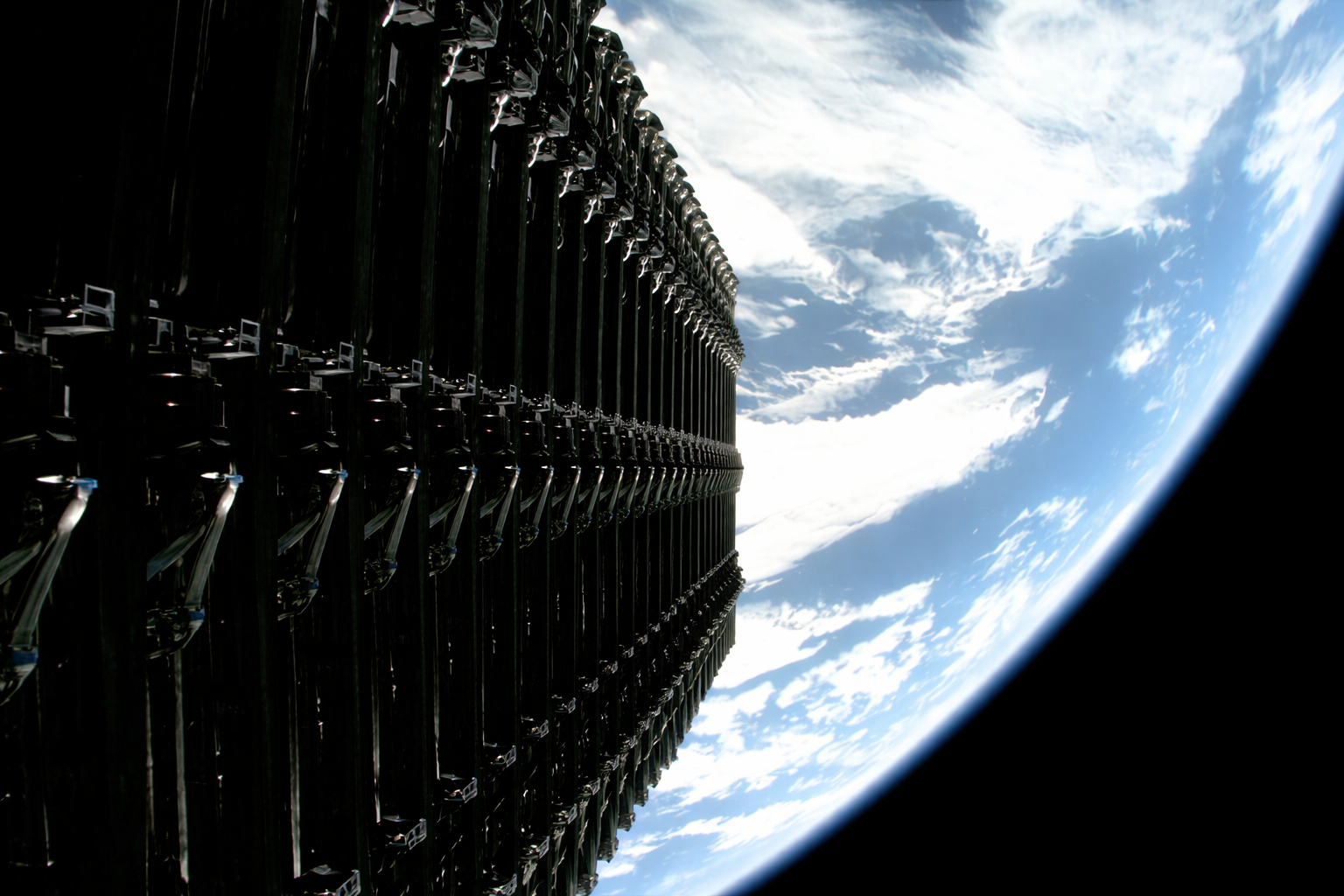
After the Falcon 9 rocket was successfully launched from California with 25 additional satellites as part of the Starlink Group 17-24 mission, the record was set. The launch, which came from Vandenberg Space Force Base, added to SpaceX’s already vast constellation of satellites.
A Historic Coincidence in Rocket Science
Interestingly, this milestone aligns with the 100th anniversary of Robert H. Goddard’s first liquid-fueled rocket launch. From a small gasoline-powered rocket in 1926 to today’s advanced reusable rockets, space technology has come a long way.
The recent Falcon 9 mission was also the 615th flight of this reliable rocket, showcasing its proven performance and reusability.
Falcon 9 Launch and Booster Landing Success
The mission demonstrated SpaceX’s operational excellence once again:
- The Falcon 9 booster (B1088) completed its 14th flight
- Successfully landed on the drone ship “Of Course I Still Love You” in the Pacific Ocean
- Marked the 586th successful booster landing by SpaceX
This level of reusability continues to reduce costs and increase launch frequency, enabling SpaceX to maintain its aggressive deployment schedule.
Starlink Growth: 10,000 and Counting
The Starlink project is now in a league of its own. With over 10,000 satellites in orbit, SpaceX is reshaping global internet connectivity.
Key highlights include:
- Over 10 million active users worldwide
- Service availability across 160+ countries and territories
- Recent expansions into regions like Niue, Kuwait, and the Central African Republic
- An average launch cadence of every 2.3 days in 2026
This rapid expansion underscores the company’s commitment to providing high-speed internet to even the most remote areas of the world.
Managing Space Traffic: A Technological Challenge
With thousands of satellites in orbit, collision avoidance has become a critical challenge. According to space experts like Jonathan McDowell, SpaceX performs tens of thousands of avoidance maneuvers annually to prevent collisions within its own constellation and with other objects.
To tackle this, SpaceX introduced its Space Situational Awareness (SSA) system, known as Stargaze. This system uses onboard star trackers to map objects in orbit and ensure safe navigation.
The Secret Behind SpaceX’s Dominance
Industry expert Caleb Henry highlights five key factors behind SpaceX’s success:
1. Strong Financial Backing
SpaceX has raised billions in funding, giving it a major advantage over competitors.
2. Vertical Integration
Unlike many competitors, SpaceX controls every aspect of its ecosystem:
- Rocket launches
- Satellite manufacturing
- Ground stations
- User terminals
3. Affordable User Equipment
Mass production of Starlink terminals has drastically reduced costs, making the service accessible to millions.
4. High Launch Frequency
Frequent launches allow rapid scaling and continuous upgrades to the constellation.
5. Advanced Technology
Continuous innovation in satellite design and launch systems keeps SpaceX ahead.
What’s Next: Starlink V3 and Starship
Looking ahead, SpaceX plans to deploy Starlink Version 3 satellites, which will be significantly more powerful. These satellites are expected to:
- Deliver terabit-level data capacity
- Be larger and heavier than current models
- Launch aboard the next-generation Starship rocket
Starship’s massive payload capacity—up to 100 metric tons—could revolutionize satellite deployment and further expand Starlink’s capabilities.
Final Thoughts
Crossing the 10,000-satellite mark is not just a milestone—it’s a defining moment in the history of space technology. SpaceX has not only redefined satellite internet but also set new standards for innovation, scalability, and ambition.
As the Starlink constellation continues to grow, the dream of global, high-speed internet coverage is rapidly becoming a reality.