A New Mission to Uncover the Universe’s Origins
SPHEREx Space Telescope First Images Reveal New Hope for Understanding the Universe
The universe has always held secrets beyond our imagination—but now, a new space telescope is stepping in to change that.
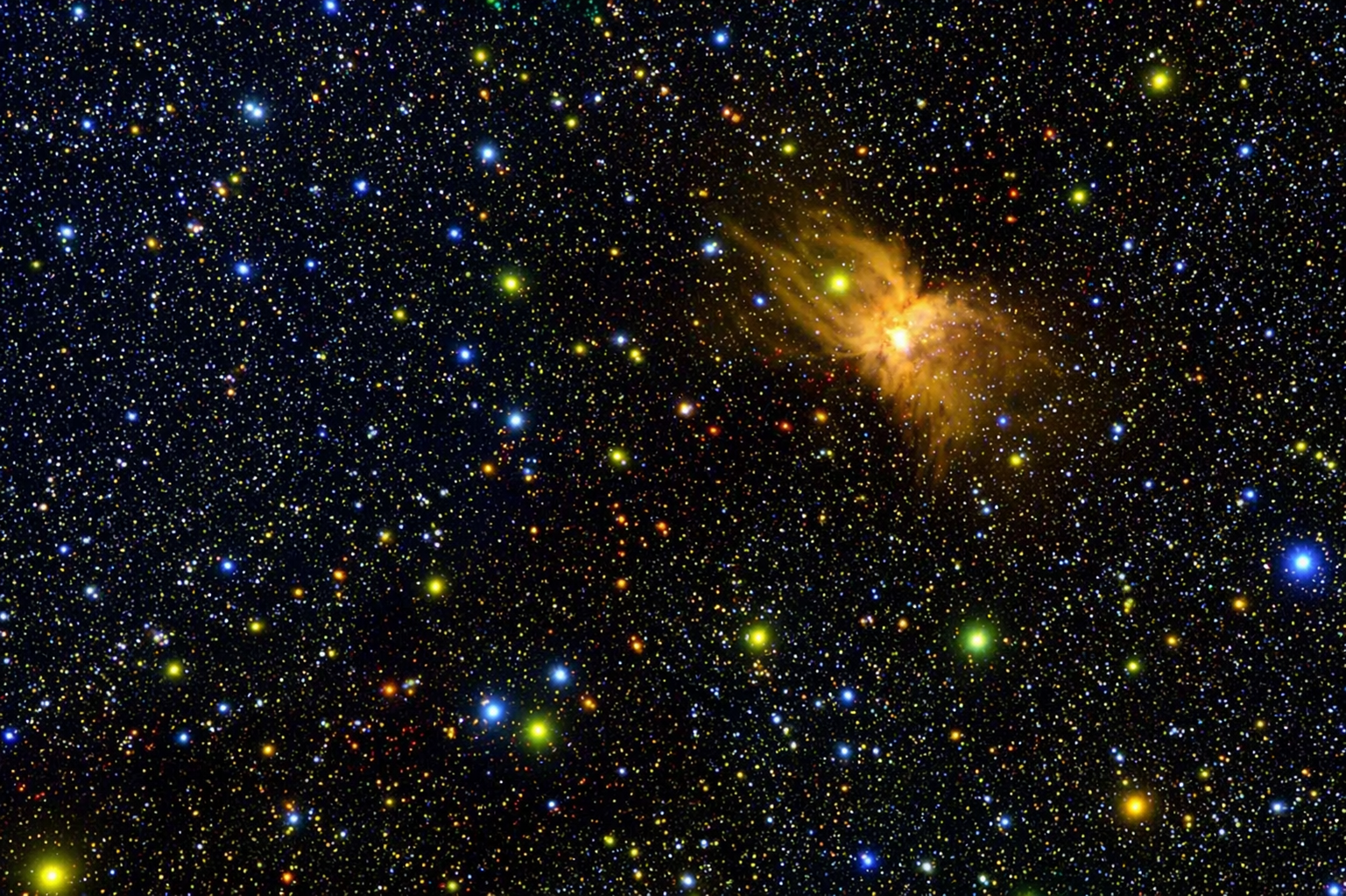
Meet SPHEREx, NASA’s latest cosmic explorer that has already begun capturing breathtaking images of deep space. With a bold mission to map the entire sky and uncover the origins of the universe, SPHEREx could reshape our understanding of everything—from galaxies to the birth of stars.
SPHEREx Launch – A New Chapter in Space Exploration
The journey began on March 11, when a Falcon 9 rocket lifted off from Vandenberg Space Force Base, carrying SPHEREx into orbit.
Now positioned about 435 miles (700 kilometers) above Earth in a near-polar orbit, the telescope has spent weeks undergoing calibration and testing. Early signs are promising—NASA has already confirmed that hundreds of high-quality images have been successfully captured.
This marks the beginning of a mission that could redefine modern astronomy.
A Telescope Designed to Map the Entire Sky
Unlike traditional telescopes that focus on specific regions, SPHEREx has a much bigger goal: scanning the entire sky.
Over its two-year mission (25 months), SPHEREx will:
- Capture 3,600 images every single day
- Complete over 11,000 orbits around Earth
- Create one of the most detailed cosmic maps ever attempted
Its advanced triple-mirror system and 8-inch aperture allow it to observe the universe in the near-infrared spectrum, revealing details invisible to the human eye.
What Makes SPHEREx Unique?
SPHEREx isn’t just another space telescope—it’s a data powerhouse.
Developed with contributions from California Institute of Technology, it features sensors capable of analyzing 102 different wavelengths of light.
This allows scientists to:
- Detect hidden cosmic structures
- Analyze chemical compositions of galaxies
- Capture multi-colored images revealing unseen details
Using spectroscopy, SPHEREx can even break down light into its components—helping scientists build 3D models of galaxies, instead of flat images.
Supporting Future Missions – The Roman Space Telescope
SPHEREx isn’t working alone. Its mission plays a crucial role in preparing for the upcoming Nancy Grace Roman Space Telescope.
Often compared to the legendary Hubble Space Telescope, the Roman telescope is expected to launch in 2027.
Before that happens, SPHEREx will:
- Scan every region of the sky
- Identify key targets for deeper study
- Provide foundational data for future discoveries
In many ways, SPHEREx is laying the groundwork for the next generation of space exploration.
Unlocking the Mysteries of the Early Universe
One of SPHEREx’s most exciting goals is to study the early universe.
Scientists believe that around 400 million years after the Big Bang, the first stars began forming and emitted intense radiation that transformed the universe—a process known as reionization.
SPHEREx aims to:
- Track the most distant galaxies
- Study how the first stars influenced cosmic evolution
- Reveal how the universe transitioned into its current state
This could provide answers to some of the biggest questions in science.
Exploring Our Own Galaxy – The Milky Way
SPHEREx won’t just look deep into the past—it will also study our cosmic neighborhood.
By analyzing molecular clouds and cosmic dust in the Milky Way, it could:
- Reveal how stars and planets form
- Identify key chemical ingredients of life
- Map the structure of our galaxy in new detail
This dual focus—both distant and local—makes SPHEREx a truly versatile mission.
Conclusion: A Mission That Could Change Everything
SPHEREx may still be in its early stages, but its potential is enormous.
From capturing stunning images to unraveling the origins of the universe, this telescope represents a major leap forward in space science.
As it continues scanning the cosmos, one thing is clear:
We are closer than ever to understanding where we came from—and what lies beyond.