New Study Reveals a Meteorite Struck Our Planet Over 3 Billion Years Ago
Scientists Confirm Earth’s Oldest Known Impact Crater Is 3.024 Billion Years Old: A Rare Window into Our Planet’s Violent Past
Earth’s Ancient Scar: Scientists Confirm the Oldest Known Impact Crater on the Planet
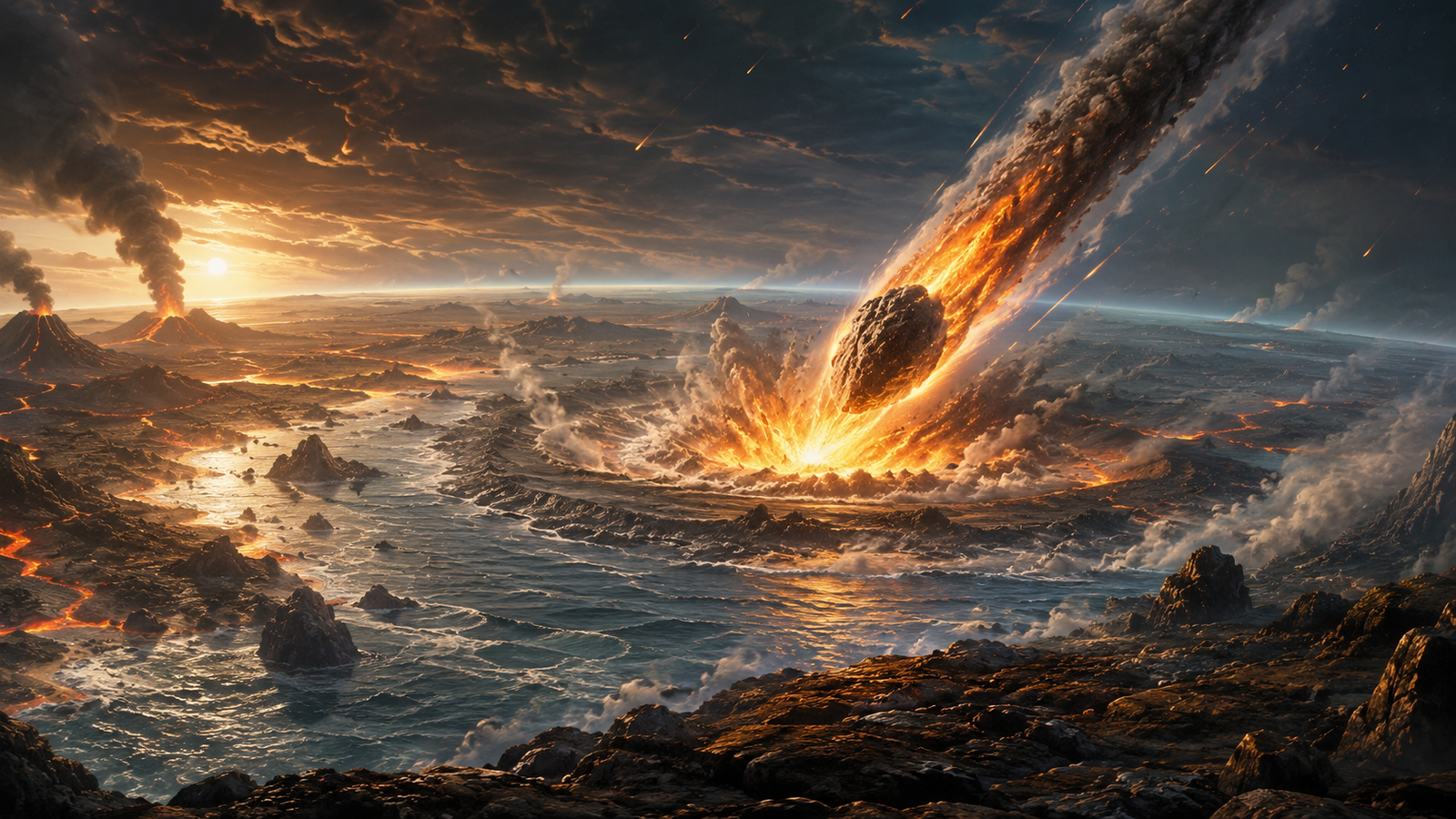
Deep within the rugged landscapes of Western Australia lies one of the most extraordinary geological discoveries ever made. A new scientific study has confirmed that Earth’s oldest known impact crater formed approximately 3.024 billion years ago, making it the only recognized meteorite impact structure from the Archean Eon—a period that spans from roughly 4 billion to 2.5 billion years ago.
The discovery provides an unprecedented glimpse into the chaotic early history of our planet, a time when Earth was still developing its continents, oceans, and perhaps even its earliest forms of life.
Located in the Pilbara region of Western Australia, the ancient structure known as North Pole Dome has fascinated geologists for decades. The latest research, published in the journal Geology, now provides the strongest evidence yet that a massive meteorite struck this region more than three billion years ago.
More importantly, it demonstrates how modern geological techniques can unlock stories hidden in rocks that have survived nearly the entire history of our planet.
Why This Discovery Matters
Meteorite impacts have played a major role throughout Earth’s history.
Scientists widely believe that asteroid collisions influenced:
- The formation of Earth’s crust
- Changes in climate
- Biological evolution
- Mass extinction events
- The delivery of key chemical ingredients necessary for life
However, finding evidence of impacts from Earth’s earliest history is extremely difficult.
Unlike the Moon, which preserves ancient impact scars for billions of years, Earth constantly reshapes its surface through:
- Plate tectonics
- Volcanic activity
- Erosion
- Mountain building
- Ocean formation
As a result, most impact craters from Earth’s youth have disappeared entirely.
The North Pole Dome crater is therefore a geological treasure—a rare surviving record from a period that scientists know relatively little about.
The Pilbara Region: A Geological Time Capsule
The Pilbara Craton in Western Australia contains some of the oldest rocks found anywhere on Earth.
Many of these volcanic rocks are nearly 3.5 billion years old, dating back to a time when our planet looked dramatically different from today.
What Makes These Rocks Special?
Remarkably, these ancient rocks still preserve evidence of:
- Underwater volcanic eruptions
- Early ocean environments
- Primitive microbial life
- Ancient tectonic activity
- Meteorite impacts
Among the most fascinating features are structures known as pillow basalts—rounded rock formations created when lava erupts beneath water and cools rapidly.
These formations help scientists reconstruct what Earth’s earliest oceans may have looked like billions of years ago.
The Mystery of the Shatter Cones
One of the strongest clues that a meteorite struck North Pole Dome comes from unusual rock formations called shatter cones.
These distinctive patterns resemble fine radiating lines spreading through rock.
What Are Shatter Cones?
Shatter cones form only under the immense pressure generated by meteorite impacts or nuclear explosions.
When a massive object strikes Earth, shock waves travel through surrounding rocks at incredible speeds.
These shock waves leave behind cone-shaped fracture patterns that remain preserved for billions of years.
Because shatter cones are considered one of geology’s most reliable indicators of impact events, their discovery at North Pole Dome immediately attracted scientific attention.
Yet one critical question remained unanswered:
Exactly when did the impact occur?
Solving a 3-Billion-Year-Old Mystery
Previous studies produced conflicting estimates.
Some researchers suggested the impact happened during Earth’s earliest history, while others argued it may have occurred much later.
The uncertainty stemmed from the complexity of the region’s geology.
Over billions of years, rock layers become:
- Folded
- Tilted
- Buried
- Eroded
- Reheated
This makes traditional dating methods difficult.
To solve the mystery, scientists turned to microscopic mineral “time capsules” hidden within the rocks.
Zircon: Nature’s Tiny Geological Clock
The key to dating the impact came from one of geology’s most valuable minerals: zircon.
Although tiny in size, zircon crystals can survive for billions of years while preserving a remarkably accurate record of geological events.
How Zircon Dating Works
Zircon contains trace amounts of uranium.
Over time, uranium slowly decays into lead at a predictable rate.
By measuring the ratio of uranium to lead, scientists can calculate the age of a crystal with extraordinary precision.
Researchers discovered several types of zircon inside the damaged rocks.
Some crystals were older than 3.4 billion years, representing the ancient volcanic rocks that existed before the impact.
Others displayed unusual skeletal structures resembling frozen lightning bolts.
These rare formations are often associated with intense shock events, including meteorite impacts.
The best-preserved crystals pointed to an age of approximately 3.024 billion years.
A Second Mineral Confirms the Date
Scientists wanted additional evidence before reaching a conclusion.
They found it in another mineral called apatite.
Apatite often forms when hot fluids move through fractured rock systems.
Meteorite impacts create ideal conditions for this process by generating heat and extensive cracking throughout the surrounding area.
When researchers analyzed the apatite samples, they found the same age:
Approximately 3.024 Billion Years
The agreement between two independent mineral dating systems significantly strengthens the reliability of the findings.
In science, independent confirmation is often the key to transforming a hypothesis into a widely accepted conclusion.
What Earth Was Like 3 Billion Years Ago
To appreciate the significance of this discovery, it’s worth imagining Earth at the time of the impact.
Around 3 billion years ago:
- Oxygen levels were extremely low
- Complex life did not yet exist
- Continents were much smaller
- Oceans covered much of the planet
- Microbial organisms dominated ecosystems
The Sun was also slightly dimmer than it is today.
Earth was a world in transition, gradually evolving into the habitable planet we know.
The newly dated impact occurred during one of the most important periods in Earth’s geological and biological development.
Could Meteorite Impacts Have Helped Life Emerge?
One intriguing question raised by discoveries like North Pole Dome is whether meteorite impacts contributed to the emergence of life.
Some scientists suggest impacts may have:
- Delivered water-rich minerals
- Supplied organic molecules
- Created hydrothermal systems
- Generated chemical environments favorable for life
Because North Pole Dome lies within a region containing some of Earth’s earliest evidence of microbial life, future studies may explore potential connections between ancient impacts and biological evolution.
While no direct link has yet been established, the possibility remains one of the most exciting areas of ongoing research.
Why This Discovery Matters for Planetary Science
The implications extend far beyond Australia.
Understanding ancient impacts helps scientists reconstruct:
- Early Earth conditions
- Solar System evolution
- Planet formation processes
- Impact frequencies in the distant past
It also provides valuable comparisons for studying impact structures on:
- Mars
- Mercury
- The Moon
- Other rocky planets
Every ancient crater preserved on Earth acts as a geological archive, helping scientists understand not only our planet but also the broader history of the Solar System.
Suggested Visuals for This Article
Infographic 1: Timeline of Earth’s History
Display:
- Earth forms (4.5 billion years ago)
- Archean Eon begins
- North Pole Dome impact (3.024 billion years ago)
- Earliest life evidence
- Modern humans appear
Infographic 2: How Scientists Date Ancient Rocks
Illustrate:
Uranium → Lead Decay Process → Age Calculation
Infographic 3: Meteorite Impact Formation
Show:
Meteorite → Shock Wave → Shatter Cones → Crater Formation
Map Graphic
Highlight the Pilbara region of Western Australia and the location of North Pole Dome.
Final Thoughts
The confirmation that North Pole Dome formed approximately 3.024 billion years ago represents one of the most significant geological discoveries of recent years.
Not only does it establish the site as Earth’s oldest known impact crater, but it also offers a rare glimpse into a chapter of planetary history that has largely been erased by time.
In a world where most traces of Earth’s earliest years have vanished, these ancient rocks remain as silent witnesses to a violent cosmic collision that occurred long before complex life emerged.
As scientific techniques continue to improve, discoveries like this remind us that Earth’s oldest stories are still waiting to be uncovered—written not in books, but in stone.
What Do You Think?
Do you believe meteorite impacts may have played a role in the origin of life on Earth?
Could other even older impact craters still be waiting to be discovered beneath Earth’s ancient rocks?
Share your thoughts in the comments below and join the discussion.