A Stunning Discovery That Could Revolutionize Exoplanet Hunting
How a Mission Designed to Study Dark Energy Is Unlocking New Secrets of Our Galaxy
The European Space Agency’s (ESA) Euclid Space Telescope was launched with one ambitious objective: to unravel the mysteries of dark matter, dark energy, and the accelerating expansion of the Universe. Equipped with one of the most powerful wide-field cameras ever sent into space, Euclid is expected to map billions of galaxies over six years, helping astronomers create the largest and most detailed three-dimensional map of the cosmos.
However, while pursuing its primary mission, Euclid has delivered an unexpected scientific treasure much closer to home.
In a remarkable observation conducted in March 2025, the telescope captured one of the most detailed images ever taken of the Milky Way’s galactic bulge, revealing an astonishing 60 million stars, along with glowing nebulae, dense star clusters, and countless celestial objects packed into our galaxy’s crowded central region.
The breathtaking image is more than just visually spectacular—it could fundamentally change how scientists discover and study distant exoplanets. According to the European Space Agency, this dataset will serve as a valuable reference for future missions, particularly NASA’s Nancy Grace Roman Space Telescope, enabling astronomers to determine the masses of distant planets with unprecedented accuracy.
What Is the Milky Way’s Galactic Bulge?
At the heart of our Milky Way lies the galactic bulge, a densely populated region containing roughly 10 billion stars.
Unlike the younger stars found in the galaxy’s spiral arms, the bulge is dominated by ancient, reddish stars that formed approximately 10 to 11 billion years ago, shortly after the Milky Way itself came into existence.
Because of its incredible stellar density, the galactic bulge has always been one of the most scientifically valuable—and observationally challenging—regions of the sky.
Euclid’s latest image provides astronomers with an extraordinary opportunity to study this ancient stellar population in remarkable detail.
A 600-Megabyte Camera That Sees the Universe Like Never Before
One of Euclid’s greatest strengths is its 600-megapixel visible-light camera, combined with a near-infrared instrument capable of capturing exceptionally sharp, wide-field images.
To create this remarkable portrait of the Milky Way’s center, Euclid spent approximately 26 hours observing the region across 10 separate pointings.
Each pointing covered an area larger than the apparent size of the full Moon.
Although 26 hours may sound lengthy, Euclid completed this enormous survey significantly faster than previous space observatories capable of producing comparable image quality.
The resulting mosaic contains:
- Nearly 60 million individually resolved stars
- Bright and dark nebulae
- Open and globular star clusters
- Dense interstellar dust clouds
- Numerous previously cataloged planetary systems
This dataset represents one of the richest observations ever collected of our galaxy’s central region.
Why This Image Matters Beyond Its Beauty
While the image itself is breathtaking, its greatest value lies in its scientific potential.
The crowded environment of the galactic bulge makes it an ideal location for observing a fascinating phenomenon known as gravitational microlensing.
This technique allows astronomers to discover planets that would otherwise remain completely invisible.
Unlike traditional methods that search for dips in starlight or stellar wobble, gravitational microlensing relies on Einstein’s theory of general relativity.
When one star passes directly in front of another from Earth’s perspective, the foreground star bends spacetime and acts as a natural magnifying lens.
If that foreground star hosts a planet, the planet produces a tiny additional distortion in the magnified light.
Sensitive telescopes can detect this subtle signal, revealing the existence of the hidden world.
Why Euclid Could Become an Exoplanet Discovery Powerhouse
Interestingly, exoplanet hunting was never Euclid’s primary mission.
Nevertheless, its extraordinary image quality makes it exceptionally valuable for microlensing science.
Ground-based observatories have discovered nearly 300 exoplanets using gravitational microlensing over the past two decades.
However, Earth’s atmosphere limits image resolution, making it difficult to separate stars packed closely together.
Euclid eliminates that problem.
Its position in space allows it to distinguish individual stars that appear blended together in ground-based observations.
Among the 60 million stars in the new image are 51 already known planetary systems.
Scientists expect many additional planetary systems to be identified as researchers continue analyzing the data.
Working Together with NASA’s Roman Space Telescope
One of the most exciting aspects of Euclid’s survey is its future collaboration with NASA’s upcoming Nancy Grace Roman Space Telescope.
Roman’s Galactic Bulge Time-Domain Survey (GBTDS) will continuously monitor the same crowded region for approximately 15 months, searching for gravitational microlensing events.
Scientists expect Roman to discover approximately:
- 1,400 cold exoplanets
- Around 300 planets smaller than three Earth masses
- Numerous free-floating rogue planets
- Brown dwarfs and binary star systems
Euclid’s earlier observations provide an invaluable “before” image of these stars.
When Roman later detects microlensing events, astronomers will compare the new observations with Euclid’s archival data.
This comparison allows researchers to measure stellar motion over time and calculate planetary masses much more accurately than ever before.
Solving One of Exoplanet Science’s Biggest Challenges
Every planet-hunting technique has limitations.
The Transit Method, used by missions like Kepler and TESS, favors large planets orbiting close to their stars.
The Radial Velocity Method works best for massive planets producing measurable gravitational tugs.
Gravitational microlensing is different.
It is uniquely capable of discovering:
- Cold planets far from their stars
- Low-mass rocky planets
- Planetary systems similar to our own Solar System
- Free-floating planets without host stars
Because the method depends only on gravity—not planetary brightness—it is far less biased toward certain planetary types.
As scientist Natalia Rektsini explains, this makes gravitational microlensing one of the few techniques capable of providing a more complete census of planetary systems throughout the Milky Way.
A Second Life for Euclid Beyond Cosmology
Euclid was designed primarily to investigate the invisible components of the Universe.
Its main mission focuses on understanding why cosmic expansion continues to accelerate—a mystery attributed to dark energy.
Yet this unexpected galactic survey demonstrates how versatile modern space telescopes have become.
Beyond cosmology, Euclid’s observations can support research into:
- Brown dwarfs
- Binary star evolution
- Stellar motions
- Galactic dust distribution
- Star formation history
- Exoplanet mass measurements
- Galactic structure
This versatility significantly increases the scientific return of the mission.
Unique Insight: A New Era of Cooperative Space Astronomy
Perhaps the most important takeaway from Euclid’s latest achievement is not simply the image itself but what it represents for the future of astronomy.
Historically, major telescopes operated largely as independent observatories.
Today’s space missions increasingly function as interconnected scientific networks.
Euclid provides ultra-precise reference images.
Roman will monitor changing events.
The James Webb Space Telescope can later analyze newly discovered planets in detail.
Ground-based observatories will contribute spectroscopic measurements.
Together, these facilities create a powerful ecosystem where each mission enhances the others rather than working in isolation.
This collaborative model is likely to define astronomy throughout the coming decades.
Suggested Visuals for Your Blog
Adding visual content will improve reader engagement and SEO performance. Consider including:
Infographic 1: Inside the Milky Way
- Position of the galactic bulge
- Spiral arms
- Sun’s location
Infographic 2: How Gravitational Microlensing Works
- Foreground star
- Background star
- Planet-induced light distortion
Comparison Chart
| Feature | Euclid | Roman Space Telescope |
|---|---|---|
| Primary Mission | Dark Matter & Dark Energy | Exoplanet Survey & Dark Energy |
| Observation Method | Wide-field imaging | Time-domain monitoring |
| Exoplanet Role | Reference imaging | Planet discovery |
Image Gallery
- Euclid’s galactic bulge mosaic
- Zoomed star field showing stellar density
- Artist’s illustration of gravitational microlensing
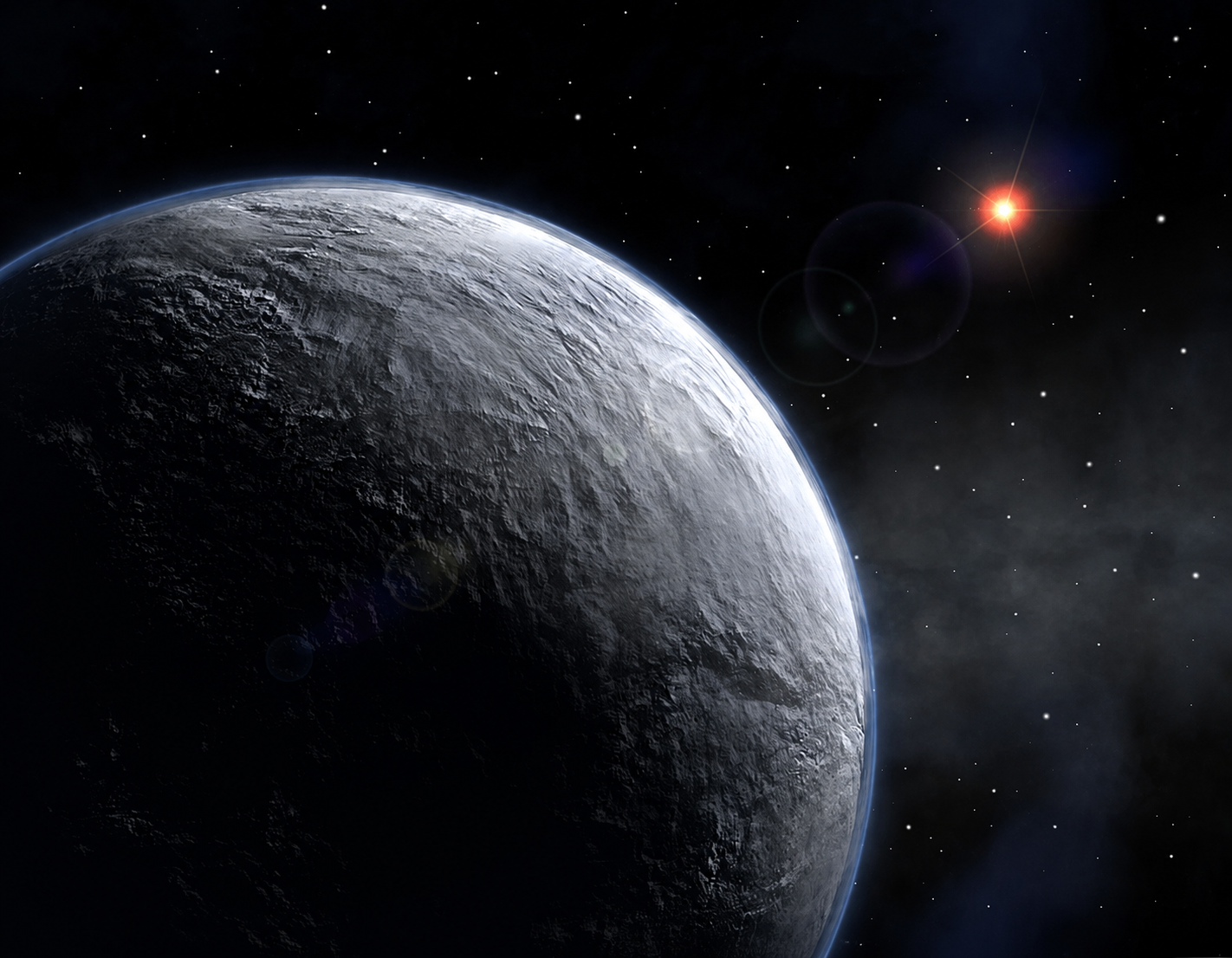
- Illustration of the icy exoplanet OGLE-2005-BLG-390Lb (“Hoth”)
Looking Ahead
Euclid has already proven that even missions designed for one scientific purpose can produce groundbreaking discoveries in entirely different fields.
Its detailed survey of the Milky Way’s center not only offers a spectacular glimpse into one of the galaxy’s oldest regions but also lays the foundation for the next generation of exoplanet exploration. As NASA’s Roman Space Telescope and other future observatories build upon Euclid’s data, astronomers may soon uncover thousands of previously hidden worlds, bringing us closer to answering one of humanity’s oldest questions: How common are planets like our own in the Universe?
By combining precision imaging, long-term observations, and international collaboration, Euclid is helping transform our understanding of both the cosmos at large and our own galactic neighborhood.
Join the Conversation
What excites you most about Euclid’s latest discovery? Do you think gravitational microlensing will uncover Earth-like worlds that other methods have missed? Share your thoughts in the comments below, and let us know which upcoming space mission you’re most looking forward to following.