A tiny secondary monitor chasing Elgato’s gamer lunch
The secondary display category has been waiting for a product that combines a proper screen, real color accuracy, and gaming ecosystem integration in one tidy package.
Asus has heard your complaints if you’ve ever desired your workstation had a separate screen for monitoring system performance, chat windows, or streaming settings so you wouldn’t have to bother your primary monitor.
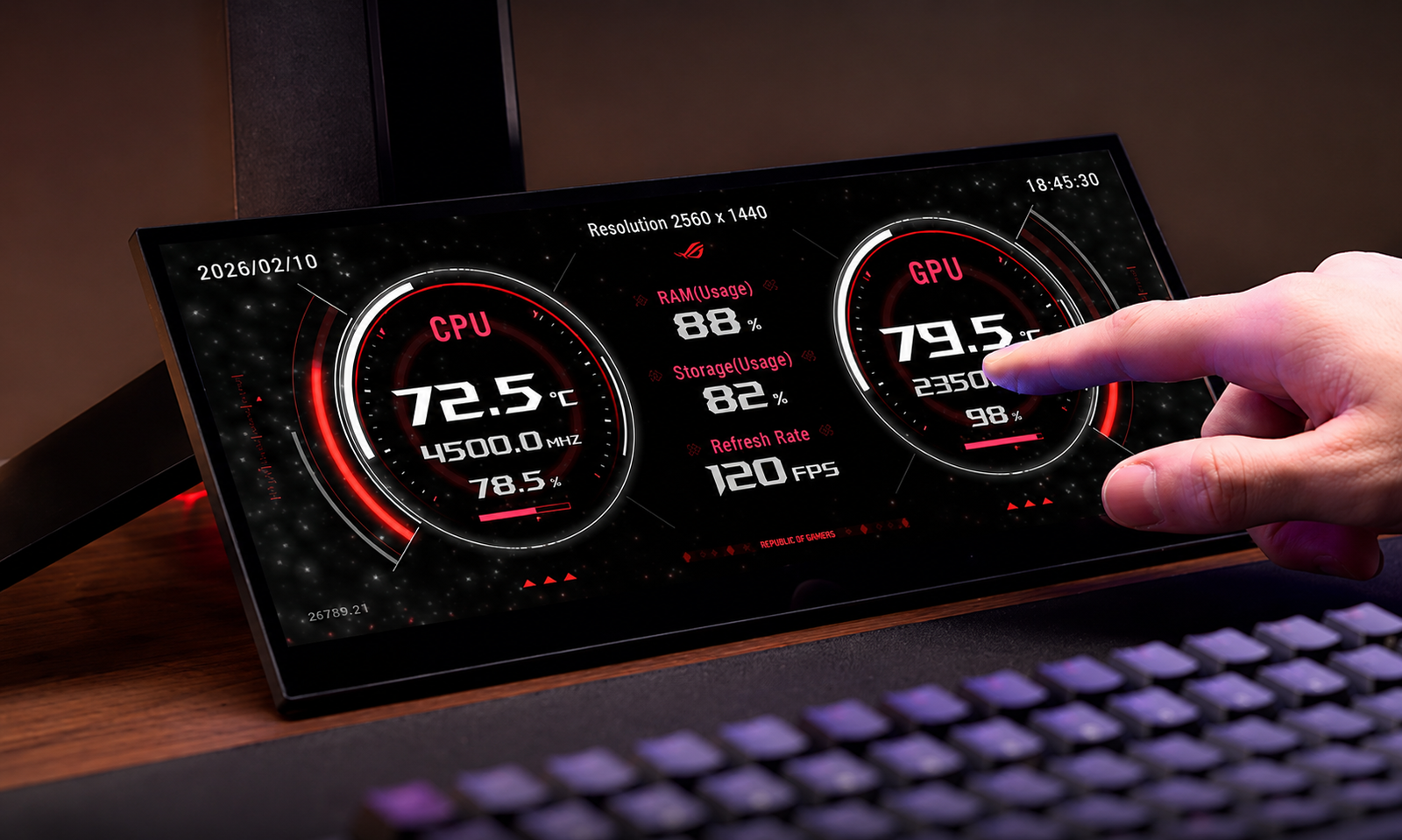
The $199 ROG Strix XG129C is a 12.3-inch touchscreen secondary display that sits underneath your primary monitor and can handle anything that would be a distraction on your main screen.
What is the purpose of the Strix XG129C?
The Strix XG129C is a 1920 x 720 IPS panel with a 24:9 aspect ratio, which makes it small in height but wide enough to fit under a normal monitor without taking up vertical desk space.
The 10-point capacitive touchscreen can handle multi-finger gestures, app shortcuts, hotkey execution, and streaming overlays. For a secondary screen, the Strix XG129C’s color performance is surprisingly strong. It covers 125% of the sRGB and 90% of the DCI-P3color space.
Asus is also bundling a one-year AIDA64 Extreme subscription, which turns the display into a real-time hardware dashboard tracking GPU load, CPU temperature, and fan speeds, via exclusive ROG SensorPanel themes.
A single USB-C cable handles power, video, and touch simultaneously, which keeps the setup clean. You also get another USB-C (20W PD) and HDMI 1.2 ports for broader compatibility.
How does it stack against the competition?
Where Elgato’s Stream Deck offers physical buttons without a true display, the Strix XG129C delivers a full touchscreen, which not only looks elegant and modern but also provides more control.
Its most direct rival is the Corsair’s Xeneon Edge at 14.5 inches, and a similar price, but the XG129C’s tighter aspect ratio and ROG ecosystem integration make it a more compelling pick for people who’re already in the ROG setup.
To me, the concept sounds similar to the secondary screen on the Zephyrus Duo laptops. Asus has essentially brought the ScreenPad experience to the desktop, but with a more refined and intentional approach. “