
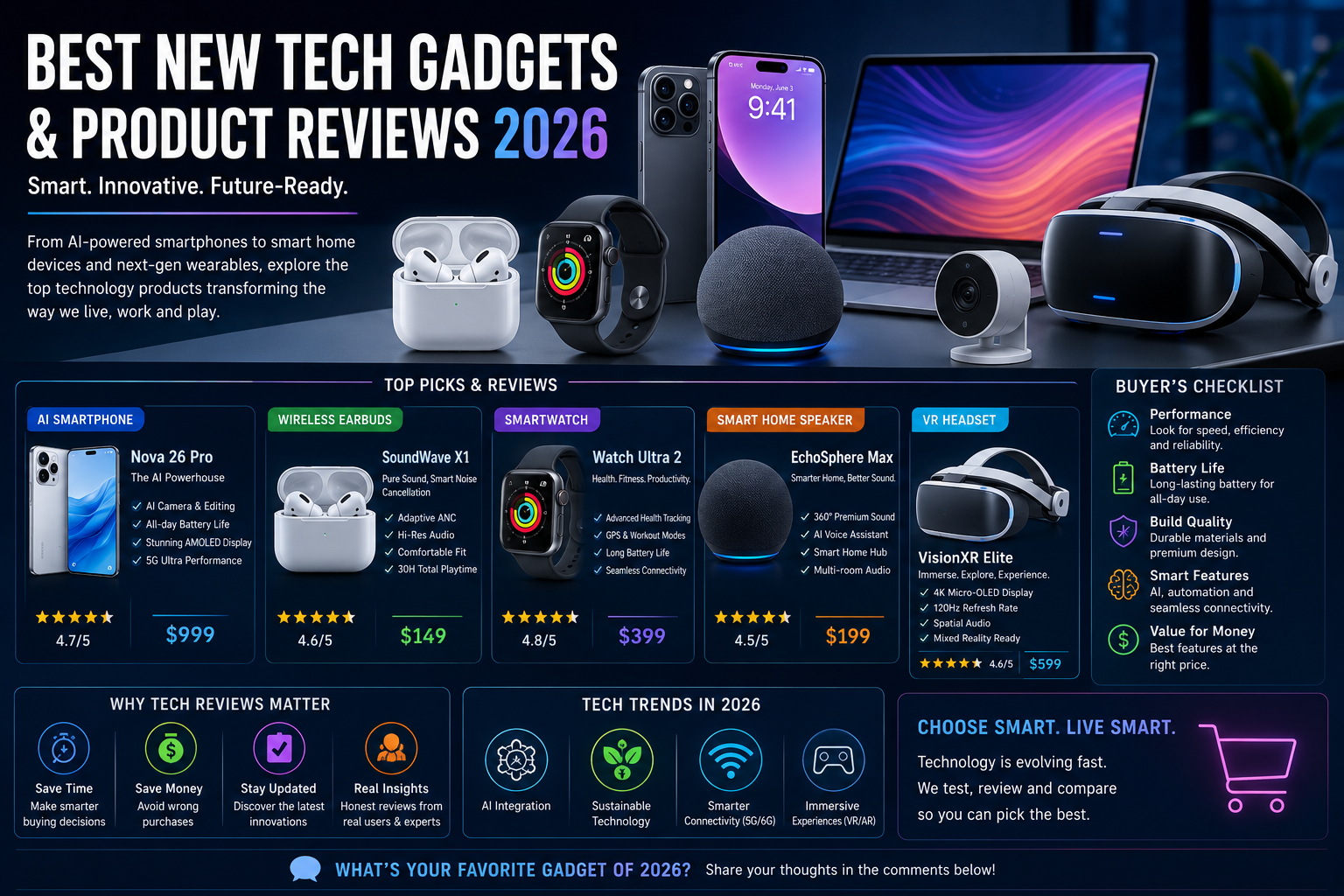
The Smart Devices Transforming Everyday Life
Why Technology Product Reviews Continue to Dominate Online Searches
Technology product reviews remain one of the most searched and engaging categories on the internet. Every year, millions of consumers search for expert opinions on the latest smartphones, smart home devices, AI-powered gadgets, laptops, wearables, and next-generation consumer electronics before making purchasing decisions.
In 2026, the demand for detailed tech reviews is growing faster than ever as companies release increasingly intelligent, AI-driven, and interconnected devices. Consumers no longer buy gadgets based only on brand names or marketing campaigns. Instead, they want real-world performance insights, honest comparisons, long-term value analysis, and practical recommendations.
Modern readers expect product reviews that go beyond specifications. They want to know:
- Is the device worth the price?
- How does it perform in everyday life?
- What are the hidden pros and cons?
- How does it compare to competitors?
- Will the product remain relevant in the future?
As the technology market becomes more competitive, high-quality product review content has become essential for both consumers and tech bloggers.
The Biggest Technology Trends Driving Gadget Innovation in 2026
The consumer technology industry is undergoing massive transformation due to advancements in Artificial Intelligence, sustainability, connectivity, and immersive computing.
Some of the biggest trends influencing modern gadgets include:
- AI-powered personalization
- Foldable and flexible displays
- Spatial computing and mixed reality
- Smart home automation
- Energy-efficient hardware
- Health-focused wearable devices
- Voice-controlled ecosystems
- Cross-device integration
These trends are shaping the next generation of smartphones, laptops, smartwatches, earbuds, VR headsets, and connected home devices.
The competition between major technology companies is also accelerating innovation at an unprecedented pace.
Smartphones Are Becoming AI Companions
Smartphones remain the most important consumer technology category, but modern flagship devices are evolving into AI-powered personal assistants rather than simple communication tools.
The newest smartphones now include:
- On-device AI processing
- Advanced computational photography
- Real-time language translation
- AI-generated summaries
- Smart voice assistants
- Predictive automation features
- Enhanced battery optimization
Manufacturers are increasingly focusing on “personal AI ecosystems” that integrate seamlessly with wearables, smart homes, vehicles, and cloud services.
What Consumers Should Look for in New Smartphones
When reviewing or purchasing a smartphone in 2026, consumers should focus on more than camera megapixels or processor speed.
Important factors now include:
AI Capabilities
AI features are becoming a major differentiator between flagship devices. Phones with stronger AI integration offer smarter productivity tools, improved photography, and better multitasking.
Software Longevity
Consumers should prioritize brands offering longer software and security update support.
Battery Efficiency
AI-powered battery optimization is improving device longevity significantly.
Ecosystem Compatibility
Smartphones now function as central hubs connecting multiple devices within broader ecosystems.
Technology experts predict that AI-driven smartphones could soon replace many traditional apps with intelligent assistants capable of completing tasks autonomously.
Smart Home Devices Are Becoming Truly Intelligent
The smart home industry is experiencing explosive growth as AI and IoT technologies become more advanced and affordable.
Modern smart home devices now include:
- AI-powered security systems
- Intelligent thermostats
- Smart lighting
- Voice-controlled appliances
- Automated cleaning robots
- Smart kitchen systems
- Connected entertainment devices
Unlike earlier generations of smart devices, newer systems are becoming more proactive rather than reactive.
For example, advanced smart homes can now:
- Learn user behavior patterns
- Optimize energy usage automatically
- Predict maintenance needs
- Improve home security through AI detection
- Coordinate multiple devices simultaneously
Practical Advice Before Buying Smart Home Gadgets
Consumers should evaluate several key factors before investing in smart home technology:
Privacy and Security
Many smart devices collect large amounts of personal data. Buyers should prioritize brands with strong cybersecurity practices and transparent privacy policies.
Compatibility
One of the biggest frustrations in smart homes is device incompatibility. Consumers should choose products that support major ecosystems like:
- Google Home
- Apple HomeKit
- Amazon Alexa
- Matter smart home standards
Long-Term Software Support
Cheap smart devices often lose support quickly, making long-term reliability an important consideration.
Wearable Technology Is Expanding Beyond Fitness
Wearable technology has evolved far beyond simple step counters and fitness trackers.
Modern wearables now focus heavily on:
- Health monitoring
- Sleep tracking
- Stress analysis
- AI coaching
- Heart health detection
- Productivity assistance
Smartwatches and AI-powered wearables are increasingly functioning as digital health assistants.
Some advanced wearable devices can now:
- Detect irregular heart rhythms
- Monitor blood oxygen levels
- Analyze sleep quality
- Provide stress management recommendations
- Track recovery and athletic performance
The healthcare sector is also beginning to integrate wearable data into medical monitoring systems.
Industry analysts believe wearable technology could become one of the most important preventive healthcare tools of the future.
Foldable Devices and Flexible Screens Are Improving
Foldable smartphones and flexible display technology have matured significantly in recent years.
Earlier concerns about:
- Screen durability
- Hinge quality
- Battery performance
- Software optimization
are gradually being resolved.
Modern foldable devices now offer practical multitasking experiences that appeal to professionals, gamers, and content creators.
However, consumers should still evaluate:
- Long-term durability
- Repair costs
- Software optimization
- Productivity value
before investing in premium foldable technology.
Virtual Reality and Spatial Computing Gadgets Are Rising
VR headsets and spatial computing devices are becoming increasingly important in consumer technology.
Modern immersive devices are now being used for:
- Gaming
- Virtual workspaces
- Education
- Fitness
- Entertainment
- Training simulations
Mixed reality headsets are particularly attracting attention because they blend digital content with real-world environments.
Experts predict that lightweight AR glasses may eventually become mainstream alternatives to smartphones.
The next few years could determine whether spatial computing becomes the next major computing platform.
How AI Is Changing Product Reviews
Artificial Intelligence is not only transforming gadgets themselves but also changing how consumers research products.
AI-powered recommendation systems now influence:
- Online shopping results
- Personalized product suggestions
- Review summaries
- Video recommendations
- Price tracking
Consumers must become more careful about distinguishing authentic reviews from AI-generated promotional content.
Tips for Reading Reliable Product Reviews
When researching gadgets online, readers should:
- Compare multiple trusted review sources
- Watch real-world usage demonstrations
- Check long-term durability feedback
- Read user experiences in forums and communities
- Avoid relying solely on sponsored influencer content
Cross-referencing information helps consumers make more informed purchasing decisions.
Sustainability Is Becoming a Major Selling Point
Environmental concerns are increasingly influencing consumer technology purchases.
Many buyers now prioritize:
- Recyclable materials
- Repairability
- Energy efficiency
- Longer device lifespan
- Reduced electronic waste
Technology companies are responding by introducing more sustainable manufacturing practices and repair-friendly designs.
Consumers are also beginning to move away from yearly upgrade cycles in favor of longer-lasting devices.
This shift may significantly change the future business models of the consumer electronics industry.
Why Visual Content Improves Technology Reviews
Visual storytelling plays a critical role in successful tech blogging.
Technology readers are more engaged when reviews include:
- Product comparison charts
- Performance benchmarks
- Infographics
- Real-world photography
- Feature breakdown diagrams
- Video demonstrations
Visual content helps simplify technical information while improving reader retention and SEO performance.
For example, comparison tables showing battery life, camera quality, pricing, and AI capabilities can significantly improve audience engagement.
Interactive visuals and short-form review videos are also becoming increasingly important for ranking in search engines and social media algorithms.
Predictions for the Future of Consumer Technology
The next wave of consumer gadgets will likely focus heavily on:
- AI-driven automation
- Personalized computing
- Ambient intelligence
- Health-focused ecosystems
- Spatial computing
- Sustainable hardware
Technology may gradually become less visible and more integrated into everyday environments.
Instead of interacting with separate devices, users may rely on interconnected AI ecosystems operating seamlessly in the background.
The future of consumer electronics is moving toward smarter, more adaptive, and more human-centered experiences.
Final Thoughts
Technology product reviews continue to attract massive online audiences because consumers depend on trusted insights before purchasing increasingly sophisticated gadgets.
In 2026, successful tech reviews must go beyond listing specifications. Readers want honest analysis, practical advice, future predictions, and real-world performance insights.
As AI, smart homes, wearables, foldable devices, and spatial computing continue evolving, the consumer technology landscape will become even more competitive and innovative.
For bloggers and content creators, producing detailed, visually engaging, and humanized product reviews represents one of the strongest opportunities for long-term audience growth and SEO success.
What upcoming gadget or technology are you most excited about in 2026? Do you think AI-powered devices will improve daily life or create new privacy concerns? Share your thoughts in the comments and join the conversation about the future of technology.