ESA and China Launch SMILE Space Weather Mission to Study Solar Storms and Earth’s Magnetosphere
SMILE Mission Launches Tonight on Vega C Rocket to Unlock Secrets of Space Weather
A groundbreaking international space mission is preparing to lift off as Europe and China join forces to study one of the most important phenomena affecting Earth and modern technology — space weather. The highly anticipated SMILE spacecraft mission is scheduled to launch tonight aboard a Vega C rocket from Europe’s Spaceport in Kourou, French Guiana.
The mission, officially called the Solar wind Magnetosphere Ionosphere Link Explorer (SMILE), represents a major scientific collaboration between the European Space Agency and the Chinese Academy of Sciences. Scientists believe the mission could dramatically improve our understanding of solar storms, geomagnetic disturbances, and how the sun impacts Earth’s magnetic environment.
The SMILE mission is already generating significant attention among astronomers, space researchers, and technology experts because space weather plays a critical role in satellite communication, GPS systems, power grids, and even astronaut safety.
SMILE Spacecraft Launch Details
The SMILE spacecraft is scheduled to launch atop the powerful Vega C rocket at 11:52 p.m. EDT on May 18 (0352 GMT on May 19). The launch will take place from the Guiana Space Centre in Kourou, French Guiana, one of the world’s most important launch facilities for European space missions.
The launch marks another important milestone for Europe’s growing space exploration capabilities and China’s expanding role in international scientific cooperation.
According to mission officials, live coverage of the launch will begin approximately 20 minutes before liftoff, allowing space enthusiasts around the world to witness this historic event in real time.
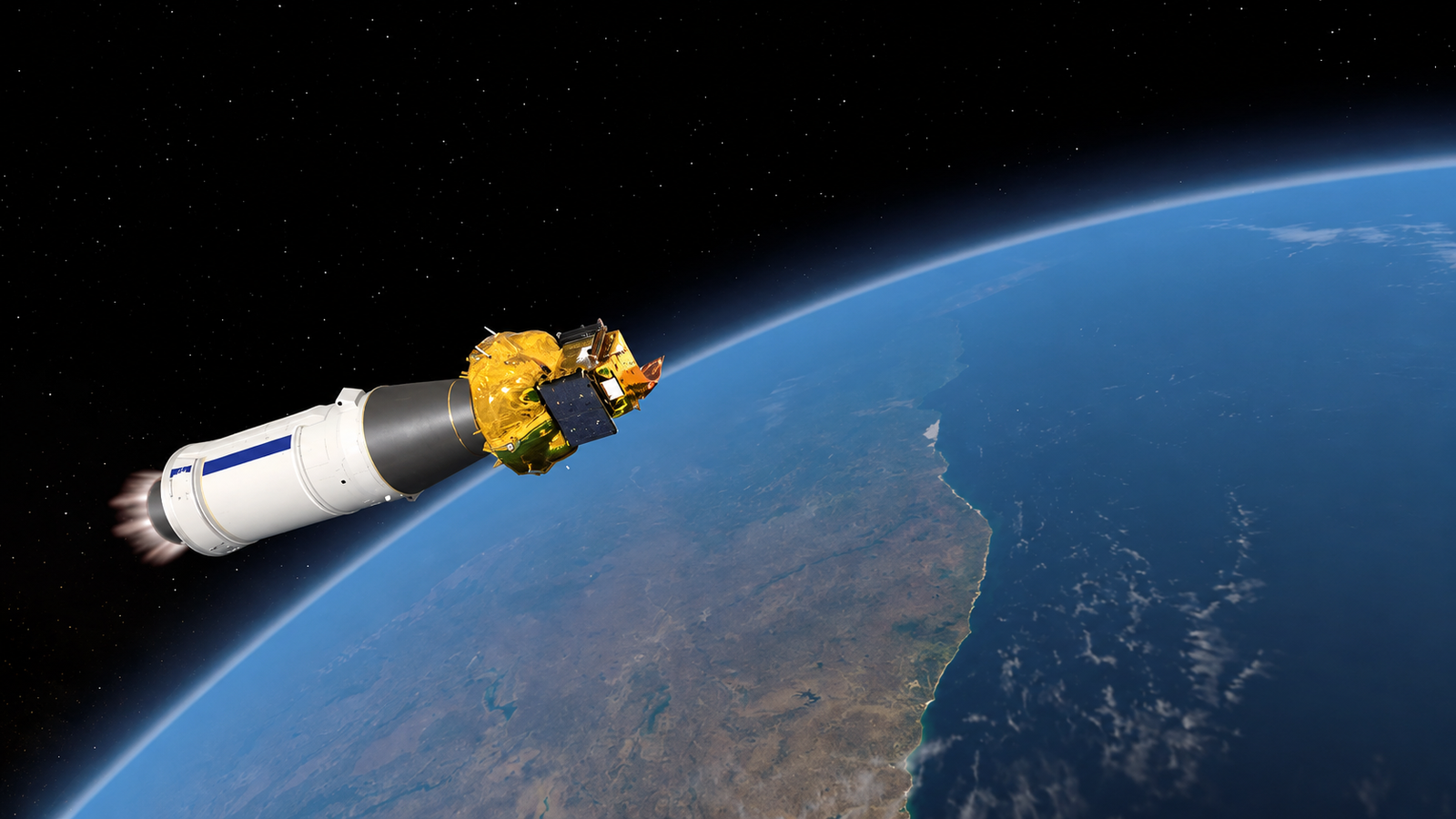
If the launch proceeds successfully, the three-stage Vega C rocket will deploy the SMILE spacecraft into a circular orbit approximately 435 miles (700 kilometers) above Earth less than one hour after launch.
What Is the SMILE Mission?
The SMILE mission is designed to study the complex interaction between Earth’s magnetosphere and the solar wind — a continuous stream of electrically charged particles flowing outward from the sun.
Although invisible to the human eye, solar wind can have a massive impact on Earth’s technological systems. Strong solar storms can interfere with:
- Satellite communications
- GPS navigation systems
- Internet infrastructure
- Power grids
- Radio transmissions
- Spacecraft operations
By studying these interactions more closely, scientists hope to improve space weather forecasting and better protect critical infrastructure on Earth.
The SMILE mission aims to answer key scientific questions about how energy from the sun enters Earth’s magnetic field and triggers geomagnetic storms.
Why Space Weather Matters More Than Ever
In today’s digital world, humanity depends heavily on satellites and interconnected communication systems. As a result, understanding space weather has become increasingly important.
Major solar storms have the potential to disrupt global technologies and even damage electrical systems on Earth. Some experts warn that a powerful solar event could temporarily affect banking systems, aviation, telecommunications, and military infrastructure.
The SMILE spacecraft will help scientists better predict these events by observing how solar wind interacts with Earth’s protective magnetic shield.
ESA officials say the mission will improve scientific understanding of:
- Solar storms
- Geomagnetic storms
- Earth’s magnetosphere
- Space plasma physics
- Space weather forecasting
This research could eventually lead to more accurate early warning systems for dangerous solar activity.
Advanced Science Instruments on Board SMILE
The SMILE spacecraft carries four sophisticated scientific instruments designed to observe Earth’s magnetic environment in unprecedented detail.
The Chinese Academy of Sciences developed three of the mission’s four primary instruments:
- Ultraviolet Imager (UVI)
- Light Ion Analyzer (LIA)
- Magnetometer (MAG)
Meanwhile, the European Space Agency provided the mission’s Soft X-ray Imager (SXI), one of the spacecraft’s most important observation tools.
These instruments will work together to capture X-ray and ultraviolet images of the region where solar wind collides with Earth’s magnetosphere.
The mission’s advanced imaging technology could provide scientists with entirely new insights into how solar energy flows around our planet.
SMILE’s Unique Orbit Will Enable Better Observations
One of the most fascinating aspects of the SMILE mission is its planned orbital path.
After reaching initial orbit, the spacecraft will perform 11 separate engine burns over a 25-day period. These maneuvers will gradually place SMILE into a highly elliptical orbit around Earth.
At its farthest point, the spacecraft will travel approximately 75,185 miles (121,000 kilometers) above Earth’s North Pole. At its closest approach, it will pass about 3,107 miles (5,000 kilometers) above the South Pole.
This unusual orbit was specifically designed to give SMILE an ideal vantage point for observing large-scale interactions between the solar wind and Earth’s magnetic field.
The spacecraft’s orbit will allow scientists to monitor changes in the magnetosphere over extended periods, helping researchers better understand how solar activity evolves.
First Scientific Images Expected Three Months After Launch
Once the spacecraft reaches its operational orbit, mission teams will begin an extensive checkout process to ensure all systems and instruments are functioning correctly.
According to ESA officials, the first X-ray and ultraviolet images from the mission are expected approximately three months after launch.
These early images will mark the beginning of the mission’s primary scientific operations.
Scientists around the world are eagerly awaiting the data because SMILE could reveal previously unseen details about the invisible forces shaping Earth’s near-space environment.
The mission is expected to operate for at least three years, continuously gathering valuable information about space weather and solar activity.
Vega C Rocket Continues Europe’s Space Ambitions
The launch will also be another important test for the Vega C rocket, Europe’s next-generation launch vehicle developed by ESA.
Standing 115 feet (35 meters) tall, Vega C first debuted in July 2022 and has quickly become a critical part of Europe’s space transportation program.
The rocket has completed six missions so far, with five successful launches.
Tonight’s launch will also make history as the first Vega C mission operated by the Italian aerospace company Avio. Previous Vega C launches were managed by Arianespace.
The successful deployment of SMILE would further strengthen confidence in Europe’s independent launch capabilities.
International Cooperation in Space Exploration
The SMILE mission highlights the growing importance of international collaboration in modern space science.
By combining European engineering expertise with Chinese scientific capabilities, the project demonstrates how countries can work together to tackle complex scientific challenges.
Large-scale missions like SMILE often require global cooperation because of the immense technological, financial, and scientific resources involved.
The partnership between ESA and the Chinese Academy of Sciences could pave the way for future joint space exploration projects in the coming years.
Final Thoughts on the SMILE Space Weather Mission
The launch of the SMILE spacecraft represents a major step forward in humanity’s effort to understand the powerful forces connecting the sun and Earth.
With advanced scientific instruments, a carefully designed orbit, and international collaboration at its core, the mission could transform how scientists study solar storms and space weather.
As dependence on satellites and digital infrastructure continues to grow worldwide, improving space weather forecasting has become more important than ever before.
If successful, the SMILE mission may not only deepen our understanding of Earth’s magnetic environment but also help protect modern technology from the growing risks posed by solar activity and geomagnetic storms.