
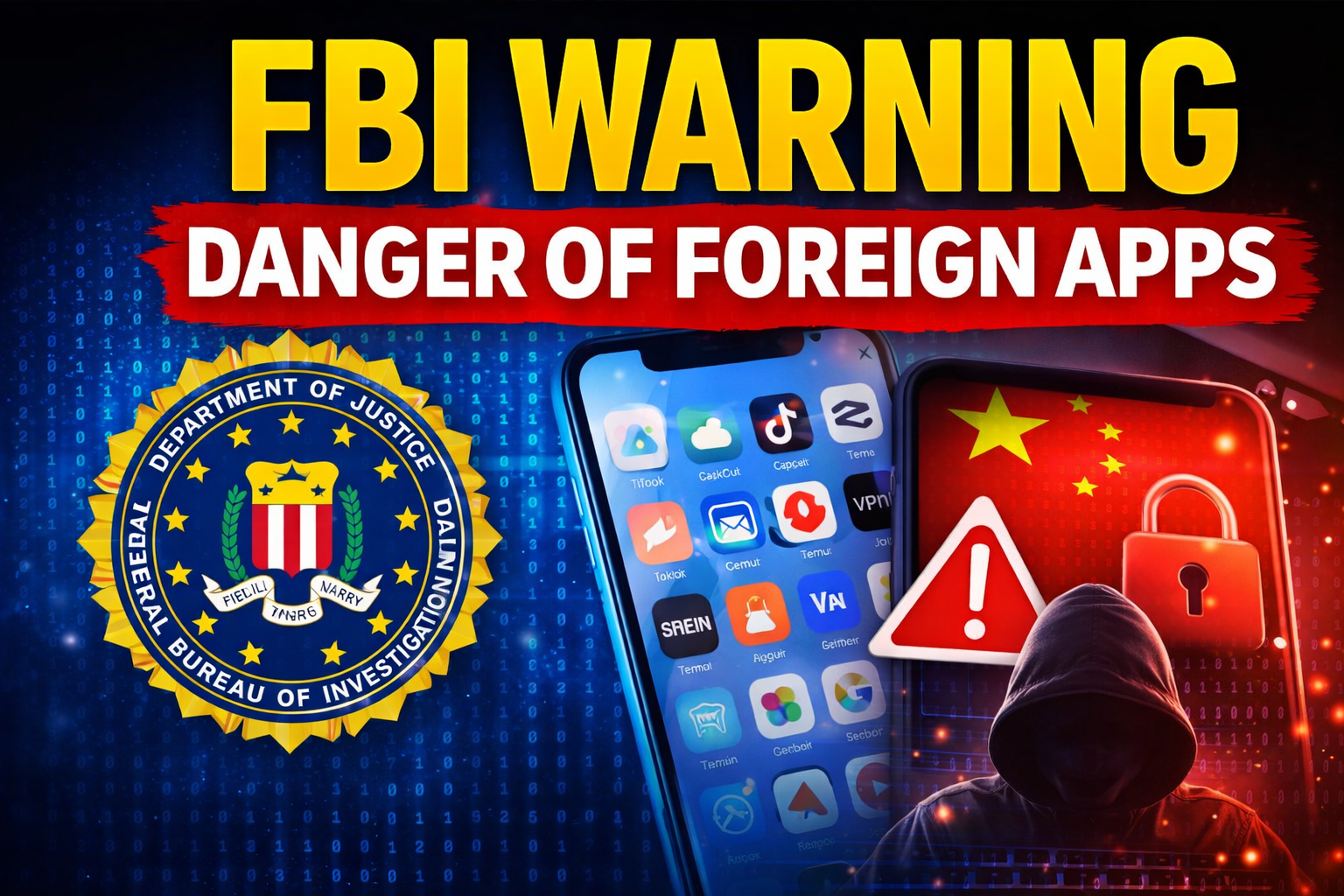
Data Risks Every User Should Know
Millions of Americans use foreign mobile apps, and the Federal Bureau of Investigation (FBI) has issued a severe warning about the increasing hazards associated with these programs.
The agency claims that a lot of well-known apps, particularly those created in China, could give foreign governments access to user data.
Significant questions concerningnational security, cybersecurity, and data privacy are brought up by this warning.
We’ll discuss the dangers, the kinds of apps that are involved, and how to safeguard your personal information in this post.
Table of Contents
- What Is the FBI Warning About?
- Why Foreign Apps Pose a Risk
- Popular Apps Under Concern
- Hidden Dangers: Data Collection & Malware
- AI and VPN Risks Explained
- Government Actions Against Risky Apps
- How to Protect Your Data (7 Easy Steps)
- FAQs (Featured Snippet Section)
H2: What Is the FBI Warning About?
The FBI recently warned that many apps used in the United States are developed by foreign companies.
These apps may:
- Collect sensitive user data
- Store information on overseas servers
- Share data under foreign laws
The biggest concern is that some countries have strict national security laws. These laws can force companies to hand over user data to governments.
H2: Why Foreign Apps Pose a Risk
H3: Data Access Under Foreign Laws
Apps developed in countries like China operate under strict regulations.
This means:
- Governments can request user data
- Companies must comply by law
- Your private information may not stay private
H3: Continuous Data Collection
Once installed, apps can:
- Access your contacts
- Track your location
- Read device data
- Monitor activity—even when not in use
This creates a serious privacy risk.
H2: Popular Apps Under Concern
Several widely used apps have been highlighted in discussions around data risks:
- TikTok
- CapCut
- PixVerse
- Telegram X
- Temu
- Shein
Many of these apps are owned or influenced by companies based outside the U.S., including ByteDance.
External Link Example:
Visit Google Play Store: https://play.google.com
External Link Example:
Visit Apple App Store: https://www.apple.com/app-store/
H2: Hidden Dangers – Data Collection & Malware
H3: What Data Can Apps Collect?
Apps may collect:
- Name and email address
- Phone numbers
- Contacts list
- Location data
- Device information
Some apps require permissions before use, forcing users to agree.
H3: Malware Risks
The FBI also warned about hidden malware.
Risks include:
- Unauthorized data access
- Backdoor entry into your device
- Exploiting system vulnerabilities
Downloading apps from third-party websites increases this risk significantly.
H2: AI and VPN Risks Explained
H3: AI Tools and Data Privacy
Some AI apps may collect user input and system data.
For example:
- AI prompts may be stored
- Sensitive information could be logged
- Data may be transferred internationally
H3: VPN Apps – A Hidden Threat
VPNs are supposed to protect privacy—but not all are safe.
Concerns include:
- Access to all browsing activity
- Data tracking and storage
- Possible sharing with foreign governments
Experts warn that VPNs owned by foreign companies may pose serious risks.
H2: Government Actions Against Risky Apps
U.S. authorities have started taking action.
H3: Legal Actions
- Ken Paxton filed lawsuits against apps like Temu and Shein
- Claims include data exposure risks and security concerns
H3: App Restrictions
Several states have banned certain apps on government devices:
- Texas
- New York
- Florida
For example, AI app DeepSeek was restricted due to security risks.
H3: Federal Measures
Lawmakers introduced new legislation to block apps linked to foreign governments.
In addition:
- Donald Trump signed an order to restructure TikTok ownership in the U.S.
H2: How to Protect Your Data (7 Easy Steps)
Here are simple steps to stay safe:
1. Download Apps Only from Official Stores
Use trusted platforms like:
- Google Play
- Apple App Store
2. Check App Permissions
Avoid apps that request unnecessary access.
3. Read Privacy Policies
Understand where your data is stored.
4. Disable Unused Permissions
Turn off access to:
- Camera
- Microphone
- Location
5. Update Your Device Regularly
Updates fix security vulnerabilities.
6. Avoid Unknown VPNs
Use trusted VPN services only.
7. Change Passwords Frequently
Keep your accounts secure.
H2: Key Takeaways
- FBI warns about risks from foreign mobile apps
- Data may be accessed under foreign laws
- Popular apps could collect sensitive information
- Malware and VPN risks are increasing
- Governments are taking action to protect users
- Users must take steps to secure their data
H2: FAQs (Featured Snippet Optimization)
Q1: Why did the FBI warn about foreign apps?
The FBI warned that foreign apps may collect and share user data with governments under certain national security laws.
Q2: Are apps like TikTok safe to use?
While widely used, such apps may pose data privacy risks depending on how user data is handled.
Q3: What data can mobile apps collect?
Apps can collect personal details, contacts, location, and device information.
Q4: How can I protect my privacy?
Download apps from official stores, limit permissions, and regularly update your device.