A Major Step Toward Quantum Supremacy
Google is spearheading a major shift in the computing industry. The corporation is getting closer to reaching a historic milestone known as quantum supremacy with its most recent advancement in quantum chip technology.
This innovation has the potential to completely change the way we approach difficult problems, creating opportunities that are just not possible with conventional computers.
What Is Quantum Supremacy?
When a quantum computer can complete a calculation that is nearly impossible for even the most potent classical supercomputers, this is known as quantum supremacy.
Quantum computing employs qubits, which are units that can exist in several states concurrently due to the rules of quantum physics, in contrast to conventional systems that rely on binary bits (0s and 1s). This makes it possible for quantum machines to process enormous volumes of data simultaneously.
To put it simply, tackling some computing problems is like upgrading from a bicycle to a spacecraft.
Google’s Quantum Chip: A Strategic Breakthrough
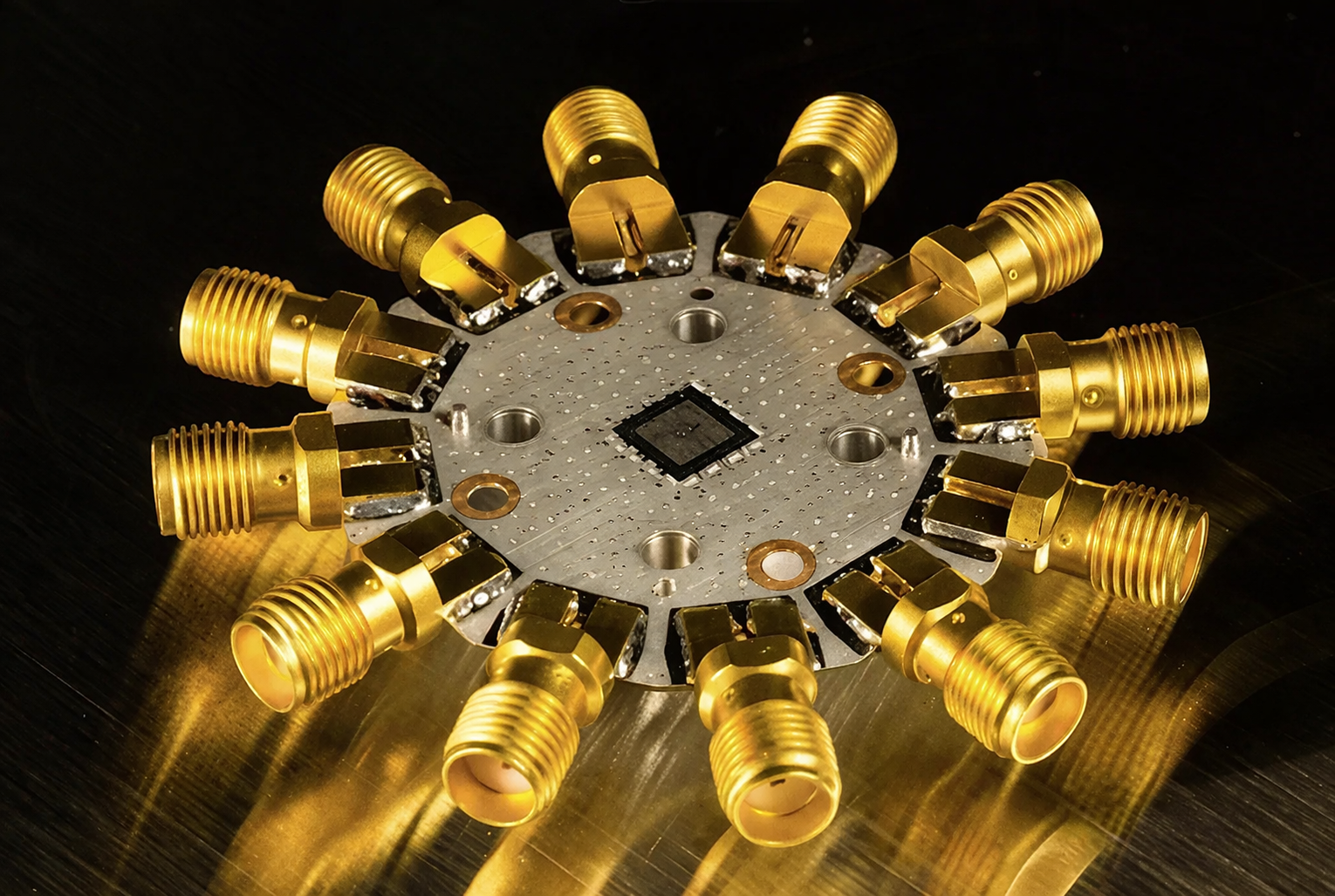
Google’s research team has developed a new quantum chip that represents a crucial step toward achieving quantum supremacy.
Key Highlights of the New Chip
- Built with six qubits arranged in a 2×3 grid
- Designed to test scalability for larger systems
- Demonstrates stability when qubits are placed close together
- Uses advanced manufacturing techniques to improve performance
Although six qubits may sound small, the architecture is what matters. This design proves that qubits can function effectively in configurations needed for larger quantum processors.
Why 49 Qubits Matter
To achieve quantum supremacy, Google aims to build a processor with around 49 qubits. At this level, the computational power grows exponentially, making it extremely difficult for classical computers to compete.
The ultimate test? A “computational drag race” between Google’s quantum chip and one of the world’s most powerful supercomputers. If the quantum chip wins, it will mark a historic turning point in computing.
Innovative Engineering: The “Bump Bonding” Technique
One of the most exciting aspects of Google’s new chip is its manufacturing approach.
Instead of placing everything on a single chip, engineers:
- Separate qubits and control wiring
- Later combine them using a process called bump bonding
Why This Matters
- Reduces interference between components
- Improves qubit performance
- Makes scaling to larger systems more feasible
This innovation addresses one of the biggest challenges in quantum computing—maintaining stability as systems grow.
The Race for Quantum Leadership
Google is not alone in this high-stakes race. Major players like:
- IBM
- Intel
- Microsoft
are all investing heavily in quantum technologies. Startups and academic institutions are also pushing the boundaries.
Experts suggest that Google and IBM are currently neck-and-neck in the race, making the competition even more intense.
Is Quantum Supremacy the Finish Line?
Not quite.
While achieving quantum supremacy would be a major scientific milestone, it’s just the beginning. Practical quantum computers—capable of solving real-world problems—will require:
- Hundreds or even thousands of qubits
- Improved error correction
- Better programmability
Still, this milestone would serve as a benchmark, proving that quantum computing is no longer theoretical—it’s real.
Why This Breakthrough Matters
The impact of quantum computing could be enormous across industries:
Potential Applications
- Drug discovery and healthcare
- Climate modeling
- Financial risk analysis
- Cryptography and cybersecurity
Problems that currently take years—or are impossible—to solve could be handled in minutes.
Google’s Vision for the Future
Google’s leadership, including co-founder Sergey Brin, is increasingly invested in quantum computing. The progress made so far has sparked excitement across the company, attracting more engineers and resources to the project.
The goal is clear: move fast, scale up, and lead the next computing revolution.
Conclusion: A Historic Milestone Within Reach
Google’s new quantum chip is more than just a technological upgrade—it’s a stepping stone toward a new era of computing power.
While challenges remain, the path to quantum supremacy is becoming clearer. If successful, this achievement could redefine what computers are capable of and reshape industries worldwide.
The race is on—and the future of computing has never looked more exciting.