What It Means for the Future of Space Exploration
A Historic Spacecraft Faces a New Challenge
NASA has had to make the tough but necessary choice to shut down one of the important scientific equipment on board Voyager 1 after nearly fifty years of exploring the unknown.
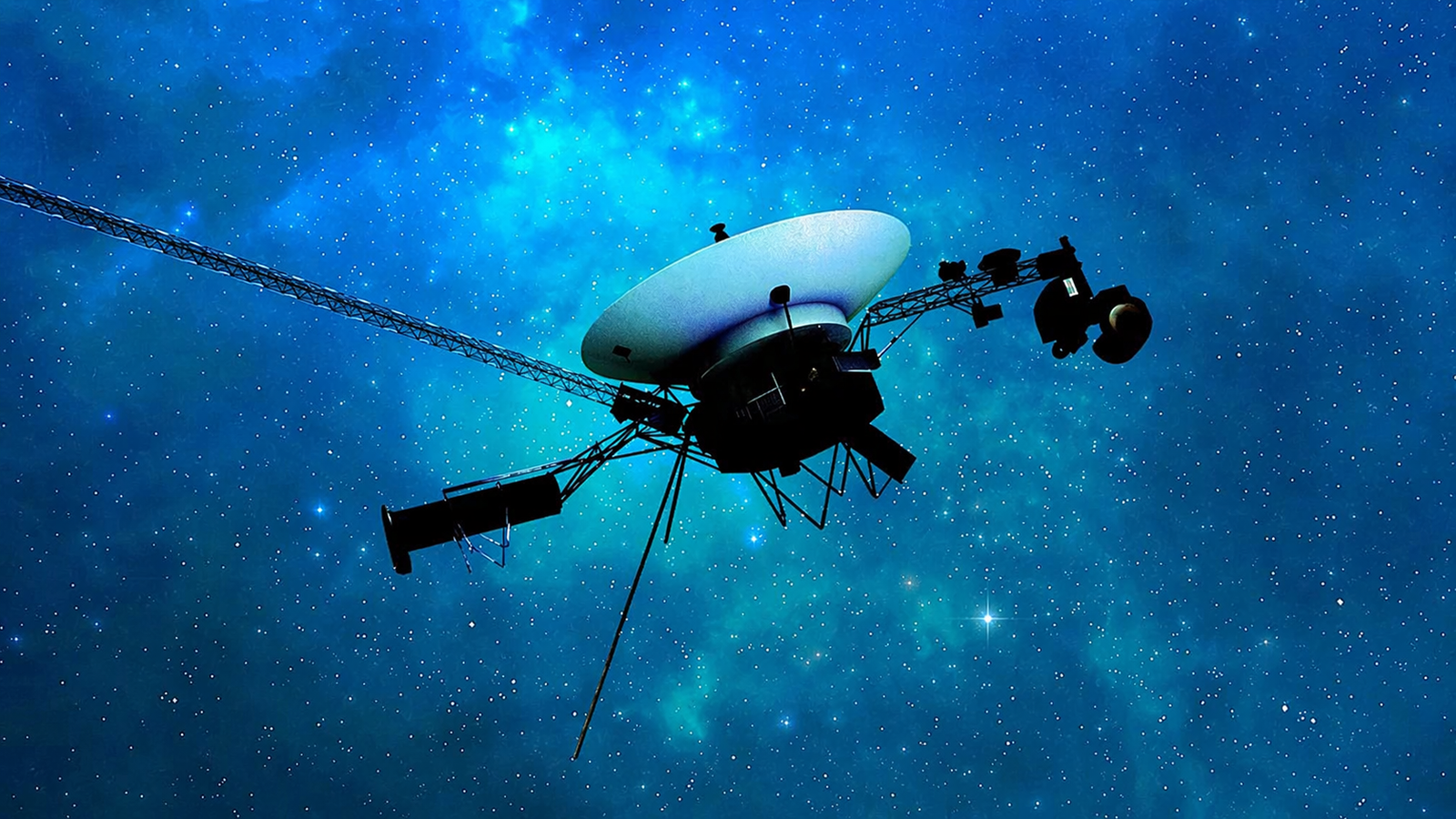
Voyager 1 is currently the furthest spacecraft in human history, having traveled more than 15 billion miles beyond Earth. Even though its trip has been amazing, time and physics are catching up.
Why NASA Turned Off Voyager 1’s Instrument
Engineers at Jet Propulsion Laboratory (JPL) recently shut down the spacecraft’s Low-Energy Charged Particles (LECP) instrument. This tool has been operating almost continuously since Voyager 1 launched in 1977, studying energetic particles in space.
So why turn it off now?
The answer is simple: power is running out.
Voyager 1 is powered by a radioisotope system that converts heat from decaying plutonium into electricity. Every year, it loses about 4 watts of power. That may not sound like much, but in deep space—where every watt matters—it’s critical.
By shutting down the LECP instrument, NASA hopes to extend the spacecraft’s life and keep its most valuable systems running longer.
What Still Works on Voyager 1
Even after this shutdown, Voyager 1 is far from silent.
Two important instruments remain active:
- A plasma wave system that listens to vibrations in space
- A magnetometer that measures magnetic fields
These tools continue to send back data from interstellar space, a region no other human-made object has explored.
A Delicate Balancing Act in Deep Space
Operating a nearly 50-year-old spacecraft is no easy task.
Over the years, engineers have had to carefully manage power by:
- Turning off heaters
- Shutting down non-essential instruments
- Protecting critical systems from freezing
One wrong move could trigger an automatic safety response, shutting down parts of the spacecraft to protect it. Recovering from such events can be risky and time-consuming—something NASA wants to avoid at all costs.
The “Big Bang” Plan: A Bold Energy-Saving Strategy
NASA isn’t just reacting—it’s planning ahead.
Engineers are developing an ambitious upgrade strategy nicknamed the “Big Bang.” Instead of shutting down systems one at a time, they plan to:
- Turn off multiple components simultaneously
- Replace them with lower-power alternatives
- Maintain enough heat and energy for continued operation
This approach could give both Voyager spacecraft even more years of life.
Voyager 1 and 2: Still Pioneering the Unknown
Voyager 1 and its twin, Voyager 2, remain the only spacecraft exploring beyond the heliosphere—the boundary of the Sun’s influence.
Their data helps scientists understand:
- Cosmic radiation
- Interstellar particle density
- Pressure waves in deep space
Out of the 10 original instruments onboard each spacecraft, only a few remain active today. Yet, even in their reduced state, the Voyagers continue to deliver groundbreaking discoveries.
A Journey That Redefined Space Exploration
Launched in 1977, Voyager 1 was originally designed for a much shorter mission. Today, it stands as one of humanity’s greatest engineering achievements.
Commands sent from Earth take about 23 hours to reach the spacecraft. Even simple operations, like shutting down an instrument, require patience and precision.
Despite its age, Voyager 1 continues to push the boundaries of exploration—quietly sending back data from a place no spacecraft has ever reached before.
Final Thoughts
Shutting down the LECP instrument marks the end of an era, but it also ensures that Voyager 1 can continue its mission just a little longer.
In the vast silence of interstellar space, every signal matters—and thanks to careful planning by NASA engineers, those signals are still reaching us.
Voyager 1 isn’t just surviving—it’s still exploring.