Could This Futuristic Galaxy Device Redefine Smartphones?
Samsung’s Rollable Foldable Smartphone Patent Reveals the Future of Mobile Technology
The smartphone industry may be heading toward another major design revolution as new reports reveal that Samsung is continuing to experiment with futuristic rollable and foldable smartphone concepts. According to recently surfaced patent documents and technology reports, Samsung is exploring a hybrid mobile device that can both fold and expand using advanced rollable OLED display technology.
For years, smartphone manufacturers have competed to create the next breakthrough form factor capable of replacing the now-familiar slab-style smartphone design. Foldable phones already pushed the industry into a new era of mobile innovation, but Samsung’s latest rollable display concept suggests the future could become even more dynamic.
The leaked patent diagrams show a smartphone capable of transforming from a traditional flagship-style device into a larger tablet-like display through an advanced rollable mechanism. If eventually commercialized, the concept could blur the lines between smartphones, tablets, and portable computing devices.
Although Samsung has not officially confirmed commercial plans for the design, the patent highlights the company’s ongoing investment in next-generation OLED display technologies and futuristic mobile hardware engineering.
Samsung’s Vision for the Future of Smartphones
Samsung has long been one of the world’s most aggressive smartphone innovators.
Over the past decade, the company has pioneered multiple technologies including:
- Curved OLED displays
- Foldable smartphones
- Under-display cameras
- Flexible display panels
- Ultra-thin glass technology
- High refresh-rate AMOLED screens
Its Galaxy Fold and Galaxy Flip product lines helped establish foldable devices as a legitimate premium smartphone category.
Now, Samsung appears to be exploring the next stage beyond folding displays: hybrid rollable smartphones.
The newly discussed patent suggests Samsung wants to create devices that are:
- More flexible
- More portable
- More immersive
- More adaptable to different tasks
This reflects a broader industry trend toward devices that dynamically change form depending on user needs.
How Samsung’s Rollable Foldable Smartphone Could Work
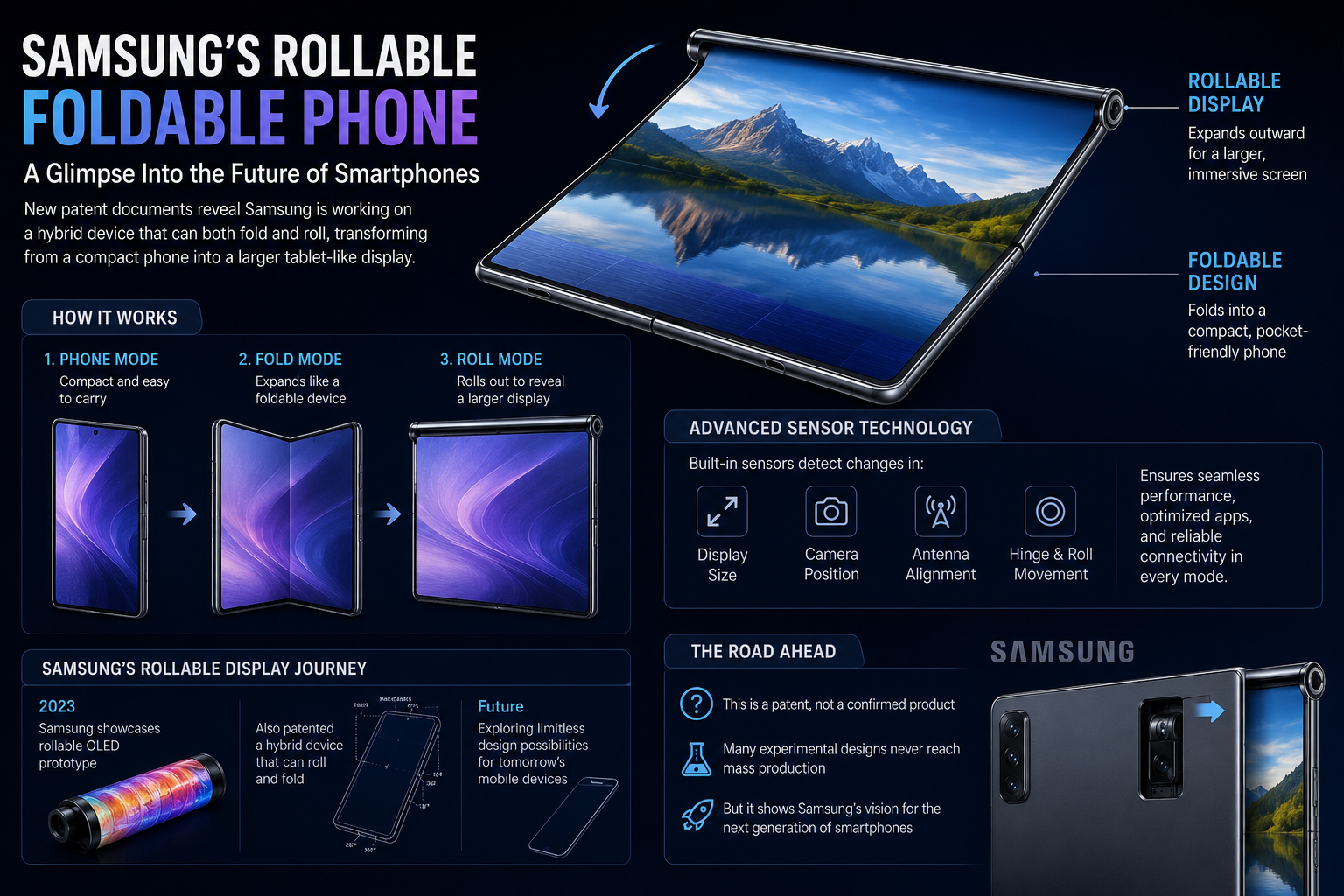
According to the patent illustrations, the experimental device includes a display capable of both folding and rolling outward to increase screen size.
Smartphone Mode
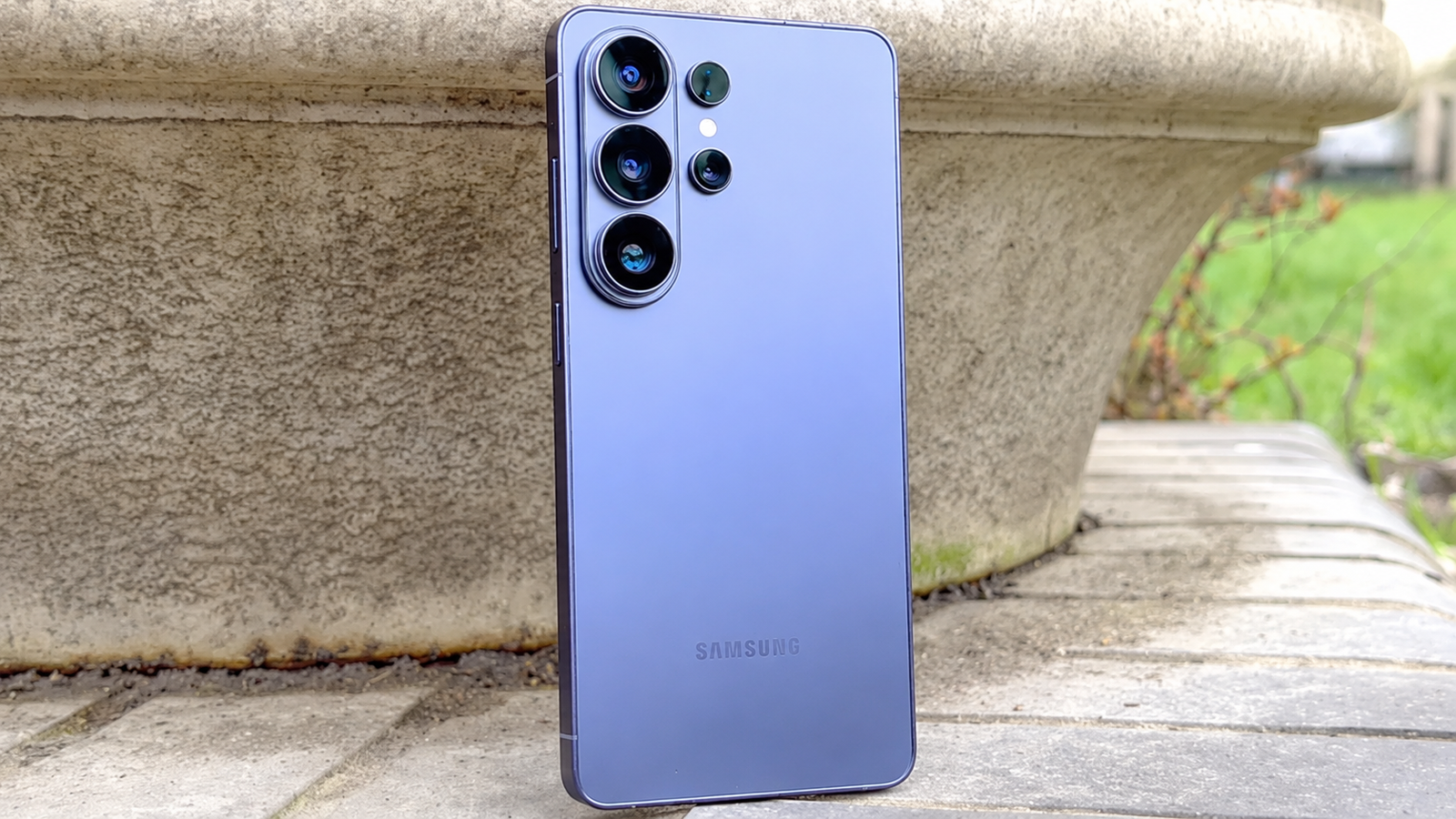
When folded or compacted, the device resembles a traditional premium smartphone similar in size and usability to flagship models like the Galaxy S26 Ultra.
This mode prioritizes:
- Portability
- One-handed usage
- Everyday communication
- Mobile photography
- Social media interaction
Expanded Display Mode
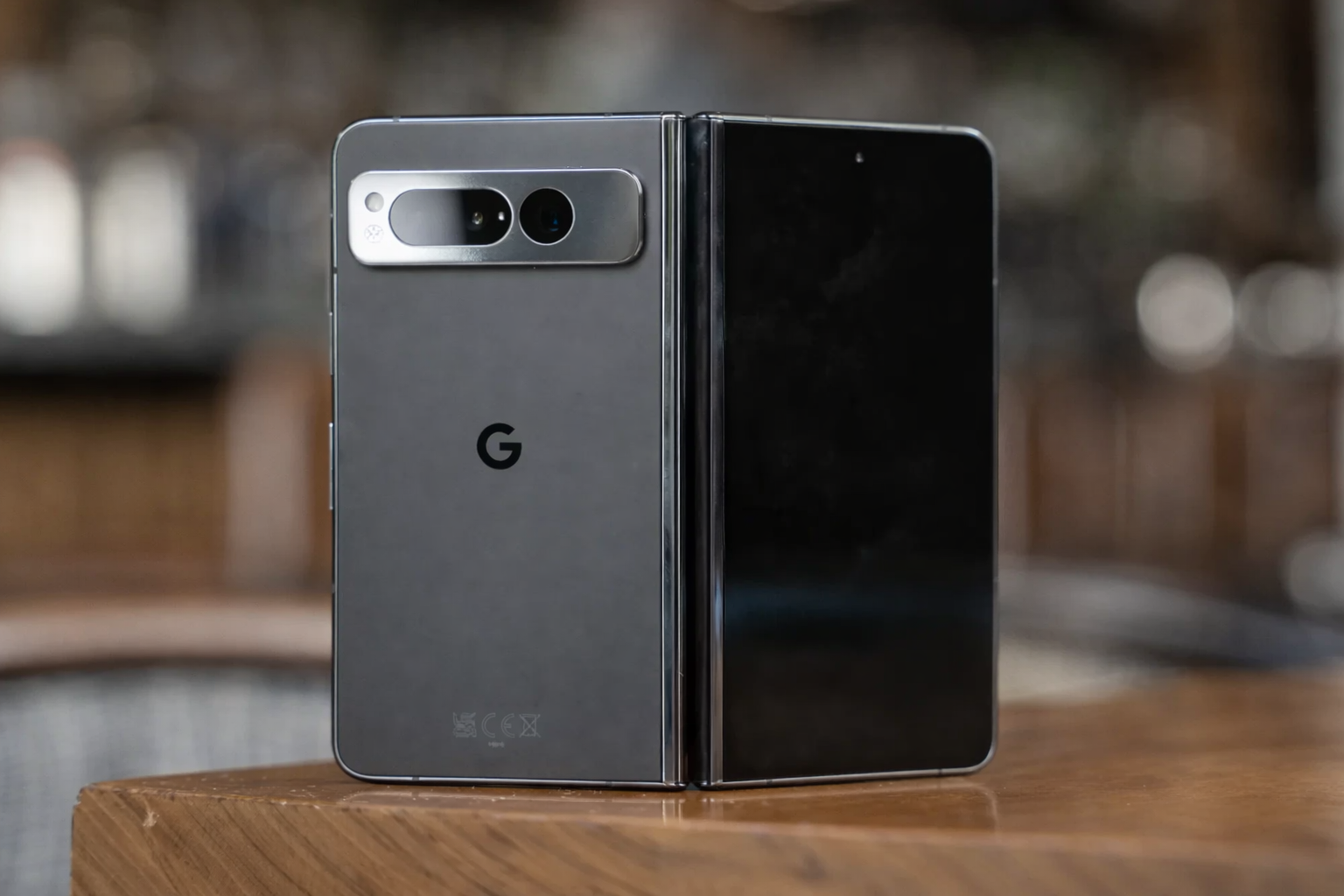
When unfolded and expanded, the device transforms into a much larger display format closer to Samsung’s Galaxy Fold lineup.
The rollable display mechanism could potentially provide:
- Larger multitasking workspace
- Improved gaming experiences
- Enhanced video viewing
- Better productivity capabilities
- More immersive app interaction
Unlike standard foldable phones, however, the rollable mechanism may allow smoother screen expansion without a large visible folding crease.
This could significantly improve durability and display aesthetics.
Advanced Sensors Could Power Dynamic Device Adjustments
One of the most interesting details in the patent documentation involves Samsung’s use of adaptive sensors.
The reports suggest the device may include intelligent systems capable of detecting:
- Display size changes
- Folding positions
- Antenna positioning
- Camera module alignment
- User interaction states
These sensors would allow the smartphone to automatically optimize software behavior and hardware performance depending on how the device is being used.
For example:
- Apps could dynamically resize during expansion
- Camera software could adapt to different orientations
- Connectivity systems could optimize signal strength
- Battery management could adjust power consumption
This level of adaptive functionality aligns closely with the future of AI-powered smart devices.
Samsung Has Been Developing Rollable OLED Technology for Years
Samsung’s latest patent did not emerge suddenly.
The company has spent years researching and demonstrating advanced rollable OLED technologies.
In 2023, Samsung showcased prototype rollable OLED displays capable of expanding and retracting dynamically. The company has also filed multiple patents involving:
- Stretchable displays
- Slidable smartphones
- Hybrid foldable-rollable devices
- Flexible gaming displays
- Expandable tablet concepts
Samsung Display, the company’s display manufacturing division, remains one of the global leaders in OLED innovation.
Its advancements continue influencing the broader smartphone industry, including competitors like Apple, Xiaomi, Huawei, and Oppo.
Why Smartphone Companies Are Exploring New Form Factors
The global smartphone market has matured significantly over the past few years.
Modern flagship devices already offer:
- Powerful processors
- Excellent cameras
- Long battery life
- Fast charging
- AI-powered features
- High-quality displays
As hardware improvements become increasingly incremental, manufacturers are turning toward industrial design innovation to reignite consumer excitement.
Foldable and rollable devices offer companies new ways to differentiate products while creating entirely new user experiences.
Consumers increasingly want devices capable of serving multiple functions without carrying separate gadgets.
Rollable smartphones could eventually function as:
- Smartphones
- Tablets
- Portable gaming systems
- Productivity workstations
- Media consumption devices
all within a single adaptable form factor.
Apple, Huawei, and Other Brands Are Also Exploring Similar Technologies
Samsung is not the only company pursuing futuristic display concepts.
Apple is reportedly researching all-screen iPhones with under-display technologies, while Chinese manufacturers such as:
- Huawei
- Oppo
- Xiaomi
- Vivo
have also demonstrated foldable and concept rollable devices in recent years.
The race toward more immersive and flexible displays is becoming one of the biggest battlegrounds in the consumer electronics industry.
Many analysts believe the next major smartphone revolution will center around:
- Flexible hardware
- AI integration
- Spatial computing
- Adaptive interfaces
- Wearable ecosystems
Rollable displays could become a critical part of that future.
The Biggest Challenges Facing Rollable Smartphones
Despite the excitement surrounding Samsung’s concept, major engineering challenges remain before rollable smartphones can become mainstream products.
Durability Concerns
Flexible and moving display components experience mechanical stress over time.
Manufacturers must ensure:
- Long-term structural reliability
- Scratch resistance
- Hinge durability
- Dust protection
- Water resistance
Battery Limitations
Expandable displays require additional internal space and power management solutions.
Balancing battery capacity with slim designs remains difficult.
Software Optimization
Android apps and user interfaces must adapt seamlessly to changing screen sizes and orientations.
Software fluidity is critical for user experience.
Manufacturing Costs
Rollable OLED technology remains extremely expensive to manufacture at scale.
This could initially position such devices within ultra-premium price categories.
Could Rollable Phones Replace Foldables?
Some technology analysts believe rollable devices could eventually outperform traditional foldables.
Potential advantages include:
- Less visible screen creasing
- Smoother display expansion
- Better portability
- More futuristic aesthetics
- Improved multitasking flexibility
However, foldable phones currently benefit from more mature manufacturing processes and growing consumer familiarity.
In the near future, foldable and rollable devices may coexist as separate premium smartphone categories targeting different user preferences.
Why Patents Do Not Guarantee Commercial Products
It is important to remember that many technology patents never become actual consumer products.
Major companies frequently patent:
- Experimental concepts
- Research prototypes
- Future engineering ideas
- Defensive intellectual property
Some innovations remain technically impractical, too expensive, or commercially unviable.
Samsung’s rollable foldable patent therefore represents possibility rather than confirmation.
Still, the company’s continued investment strongly suggests that flexible display technologies remain central to its long-term strategy.
What the Future of Smartphones Could Look Like
The smartphone industry appears to be entering a new experimental phase.
Future mobile devices may feature:
- Rollable displays
- Invisible cameras
- AI-driven adaptive interfaces
- Holographic interactions
- Flexible materials
- Seamless multi-device ecosystems
Instead of static rectangular phones, future devices could dynamically reshape themselves depending on context and user needs.
The line between smartphones, tablets, laptops, and wearable technology may gradually disappear.
Samsung’s latest patent offers a glimpse into that future.
Final Thoughts
Samsung’s rollable foldable smartphone patent highlights how aggressively the technology industry continues pushing the boundaries of mobile design. Although the concept may never reach commercial production exactly as shown, it reflects the growing ambition among smartphone manufacturers to create more immersive, adaptable, and futuristic devices.
As foldable phones become more mainstream and OLED technology continues advancing, rollable smartphones could eventually become the next major innovation wave in consumer electronics.
Whether Samsung ultimately launches this hybrid device or not, one thing is clear: the future of smartphones is moving toward greater flexibility, larger immersive displays, and smarter adaptive technology.
What do you think about Samsung’s rollable foldable smartphone concept? Would you buy a smartphone that expands into a tablet-sized display? Share your thoughts and predictions in the comments below.