Scientists Reveal 153-Day Round Trip Using Asteroid Path
Introduction
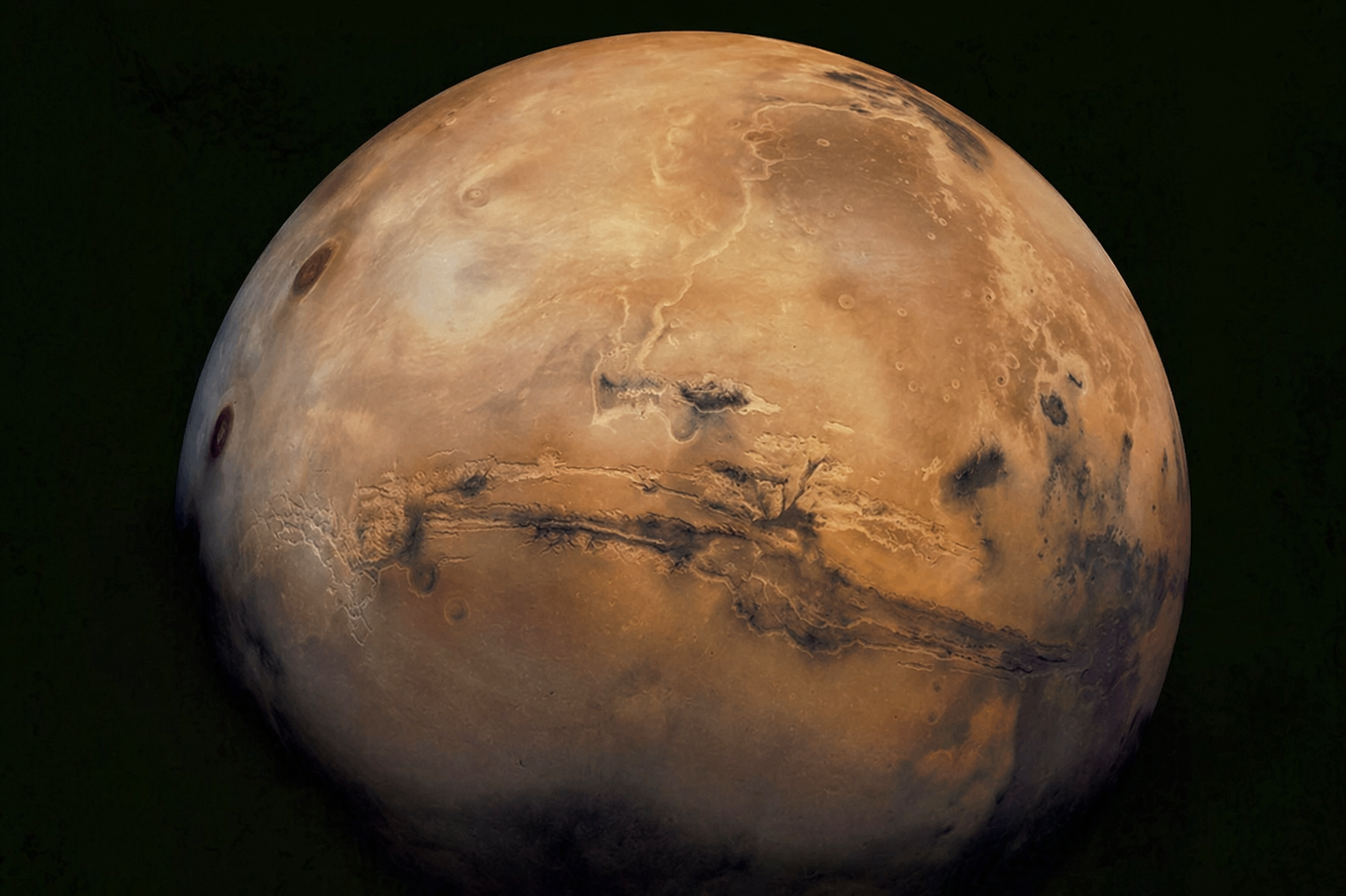
Reaching Mars has always been a long and complex journey, often taking seven to ten months one way. But what if that travel time could be drastically reduced? A groundbreaking study now suggests that a much faster route to the Red Planet may exist—one inspired by the natural path of an asteroid.
This exciting discovery could reshape the future of space travel, making missions to Mars quicker and more efficient than ever before.
A Revolutionary Idea: Following an Asteroid’s Path
A researcher from the State University of Northern Rio de Janeiro, Marcelo de Oliveira Souza, has proposed a new way to travel to Mars. Instead of using traditional mission paths, he studied the orbital behavior of Asteroid 2001 CA21 to identify a potential shortcut through space.
By analyzing the asteroid’s early orbital data, Souza discovered a trajectory that could allow spacecraft to travel to Mars and return to Earth in just 153 days—a dramatic reduction compared to current mission timelines.
Why Current Mars Missions Take So Long
Traveling between Earth and Mars isn’t as simple as heading straight toward the planet. Both Earth and Mars orbit the Sun, meaning their distance constantly changes.
The best time to launch missions occurs during a phenomenon called Mars Opposition, which happens roughly every 26 months. During this alignment, Earth sits directly between the Sun and Mars, making the journey shorter and more energy-efficient.
Even then, missions still take months—until now.
How the Asteroid Shortcut Works
Asteroids can act like natural guides through the solar system. When scientists discover a new asteroid, they track its movement and calculate its orbit. Early orbital predictions, even if later refined, can reveal unique pathways.
In this case, asteroid 2001 CA21 has a highly elliptical orbit that crosses both Earth’s and Mars’ paths. Souza focused on keeping a spacecraft’s trajectory within five degrees of the asteroid’s orbital plane. This alignment creates a more direct and efficient route to Mars.
The Key Year: 2031
After analyzing multiple launch opportunities—2027, 2029, and 2031—the study found that 2031 offers the most favorable conditions for this shortcut.
During that year’s Mars opposition, the alignment between Earth, Mars, and the asteroid’s orbital path creates ideal conditions for faster travel. The study outlines two possible mission durations:
- 153 days (fastest round trip)
- 226 days (alternative route)
Both options are significantly shorter than current mission timelines.
What This Means for Future Space Missions
If proven practical, this asteroid-based route could revolutionize interplanetary travel:
- Faster missions to Mars
- Reduced fuel consumption
- Lower mission costs
- Improved safety for astronauts
This approach also opens the door to using other asteroids as navigation tools, turning space rocks into valuable assets rather than just potential hazards.
Beyond Threats: Asteroids as Navigation Tools
Traditionally, scientists monitor asteroids to protect Earth from potential impacts. But this research highlights a new perspective—asteroids could actually help us explore the solar system more efficiently.
By studying their natural trajectories, researchers may uncover more hidden “space highways” that connect planets.
Conclusion
The idea of reaching Mars and returning in just over five months once seemed impossible. But thanks to innovative thinking and detailed orbital analysis, that future may be closer than we think.
Using asteroid paths like that of 2001 CA21 could transform space exploration, making journeys faster, smarter, and more sustainable. As research continues, humanity may soon unlock entirely new ways to travel across the solar system.