
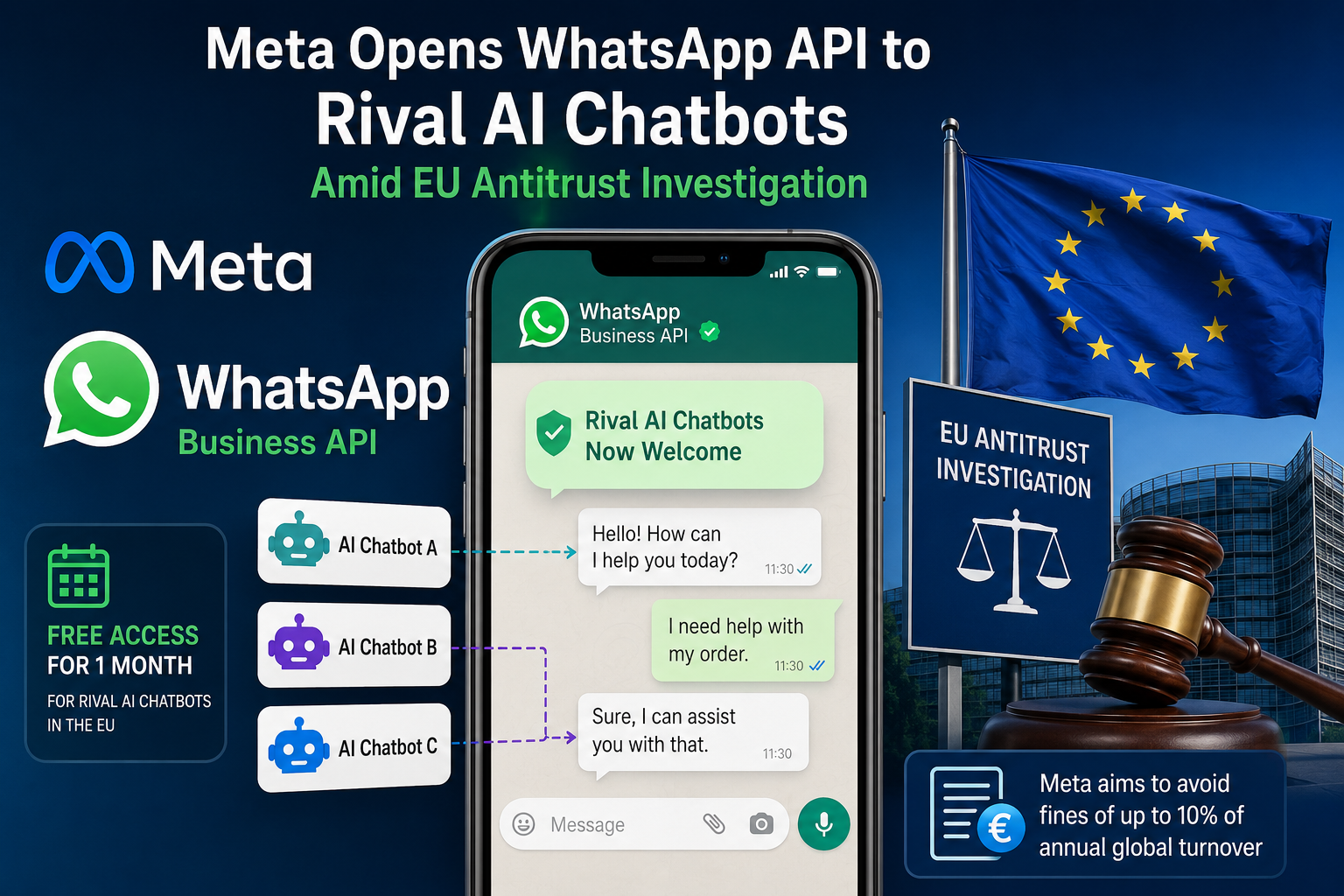
Meta Opens WhatsApp API to Rival AI Chatbots for Free
Meta Opens WhatsApp Business API to Rival AI Chatbots Amid EU Antitrust Investigation



The global artificial intelligence industry is witnessing another major development as Meta Platforms announced an important policy shift regarding access to the WhatsApp Business API in the European Union. The company revealed that rival AI chatbot developers will now receive free access to the WhatsApp Business API for one month. This strategic move comes as Meta attempts to ease growing pressure from European regulators and avoid a potentially massive antitrust fine.
The decision highlights the increasing tension between major tech companies and regulators over competition in the rapidly expanding AI chatbot market. With artificial intelligence becoming central to messaging apps, customer support systems, and online communication platforms, the European Union is carefully monitoring how dominant companies manage access to their ecosystems.
Why Meta Changed Its WhatsApp AI Policy
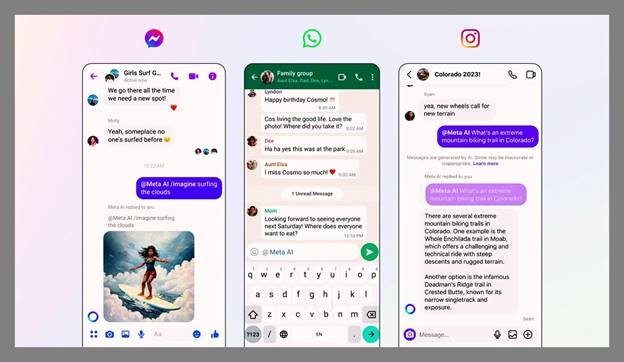
Earlier this year, Meta introduced a controversial policy that allowed only its own Meta AI assistant to operate directly within WhatsApp. The policy, launched on January 15, immediately sparked criticism from smaller AI companies and competitors who argued that Meta was unfairly limiting competition inside one of the world’s largest messaging platforms.
In March, Meta revised the policy and stated that third-party AI chatbots could also access WhatsApp, but only through paid usage of the WhatsApp Business API. While the change appeared to open the platform, many developers argued that the pricing model created an unfair financial burden that smaller AI startups could not afford.
The latest announcement now offers a temporary solution. General-purpose AI chatbot providers operating within the European Economic Area will receive free API access for one month. According to Meta, the offer is part of ongoing discussions with European regulators regarding competition concerns in the AI market.
This move is widely seen as an attempt to reduce regulatory pressure while Meta negotiates with European authorities over the future of AI chatbot access on WhatsApp.
European Union Investigates Meta’s AI Dominance
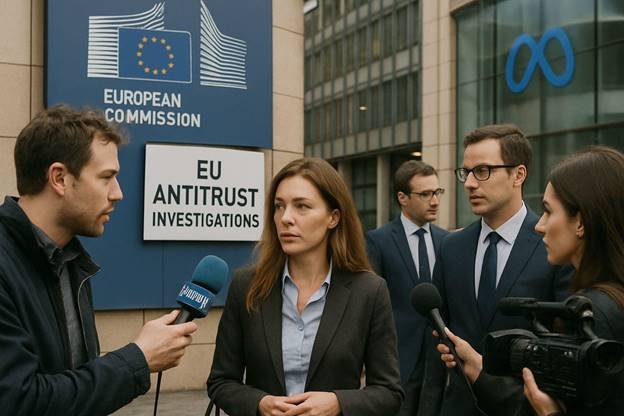
The European Commission has been actively examining whether Meta’s actions violated European competition laws. Regulators became increasingly concerned that limiting WhatsApp access to Meta AI could strengthen Meta’s dominance in the artificial intelligence market while pushing smaller competitors out of the industry.
Last month, the European Commission reportedly indicated it was leaning toward ordering Meta to provide rival AI chatbots equal access to WhatsApp. The investigation intensified after complaints from AI companies claimed the pricing system created unfair market conditions.
The European Union has become one of the most aggressive regulators of major technology firms in recent years. Officials believe open competition is essential for innovation, especially in the fast-growing AI industry where a few dominant companies could potentially control access to billions of users.
If regulators determine that Meta violated EU antitrust rules, the company could face penalties reaching up to 10% of its global annual revenue. Such fines could amount to billions of dollars, making the investigation extremely significant for Meta’s future AI strategy.
Poke.com and Smaller AI Companies Push Back
One of the strongest critics of Meta’s policy has been Poke.com, a California-based AI assistant developer. The company, along with a Spanish competitor, filed complaints that helped trigger the European Union investigation.
Poke.com co-founder Marvin von Hagen publicly criticized the WhatsApp API pricing structure. According to him, the average cost per user jumped dramatically from just $0.13 to over $11 for WhatsApp API access. He questioned how smaller AI developers could realistically compete under such pricing conditions.
For startups and independent AI chatbot developers, access to popular messaging platforms like WhatsApp is critical. These platforms provide direct communication channels with millions of users, businesses, and customers worldwide. Without affordable access, smaller companies fear they could lose the opportunity to compete with tech giants like Meta, Google, and Microsoft.
The case has become a major example of the broader debate surrounding fair competition in artificial intelligence and digital communication services.
Italy and EU Regulators Raise Concerns
The regulatory pressure against Meta did not come only from Brussels. Italy’s competition authority also intervened in late 2025 when Meta initially planned to block third-party AI chatbots from WhatsApp entirely.
Italian officials warned that restricting access could seriously damage competition in the AI market and limit innovation across Europe. Soon afterward, the European Commission formally objected to Meta’s restrictions, arguing that such actions could marginalize smaller AI rivals and reduce consumer choice.
European regulators increasingly believe that large technology companies should not use their dominant platforms to prioritize their own AI services while restricting competitors. Similar concerns have also been raised globally regarding app stores, search engines, social media platforms, and cloud services.
The WhatsApp AI chatbot dispute is now being closely watched by both technology companies and policymakers around the world because it may influence future AI competition rules.
Meta Says AI Bots Increased WhatsApp Infrastructure Costs
Meta has defended its pricing strategy by arguing that third-party AI chatbots significantly increased message traffic on WhatsApp. According to the company, the platform’s infrastructure was originally designed mainly for customer support services, business notifications, and traditional messaging.
The rapid growth of AI-powered chatbots reportedly created additional technical strain on WhatsApp’s systems. Meta stated that it initially lacked a proper pricing model for AI chatbot providers because the technology evolved faster than expected.
By introducing fees, Meta claimed it was attempting to manage infrastructure costs while maintaining platform reliability and user experience. However, critics argue that the pricing system unfairly benefited Meta AI while making it difficult for independent developers to compete.
The one-month free access offer may temporarily ease tensions, but industry experts believe regulators could still demand permanent policy changes to guarantee equal access for all AI providers.
What This Means for the Future of AI Chatbots
The battle between Meta and European regulators reflects a much larger issue in the technology industry. As artificial intelligence becomes integrated into messaging apps, search engines, and online platforms, access to digital ecosystems is becoming increasingly valuable.
Companies that control major communication platforms hold enormous power over which AI tools succeed or fail. Regulators worldwide are now focusing on ensuring that AI innovation remains open and competitive instead of being dominated by a few tech giants.
For consumers, increased competition could lead to better AI chatbot features, lower costs, stronger privacy protections, and more innovation. Businesses may also benefit from having multiple AI assistant options available on platforms like WhatsApp instead of relying solely on Meta AI.
Meanwhile, Meta continues investing heavily in artificial intelligence as competition intensifies against companies like OpenAI, Google, and Microsoft.
Final Thoughts
Meta’s decision to provide temporary free access to the WhatsApp Business API for rival AI chatbots marks a significant moment in the global AI competition debate. The move demonstrates how increasing regulatory pressure from the European Union is shaping the future of artificial intelligence and digital communication platforms.
Although the temporary offer may help Meta avoid immediate penalties, the company could still face demands for long-term reforms to ensure fair competition in the AI industry. As regulators continue examining the relationship between big tech companies and artificial intelligence, the outcome of this case may influence how AI services operate across major digital platforms in the future.
The growing conflict between innovation, platform control, and competition law is likely to remain one of the most important technology stories of the coming years.