NASA Mars Rovers Capture Stunning Panoramas Revealing Ancient Water and Signs of Life
NASA’s Curiosity and Perseverance Reveal Mars Like Never Before
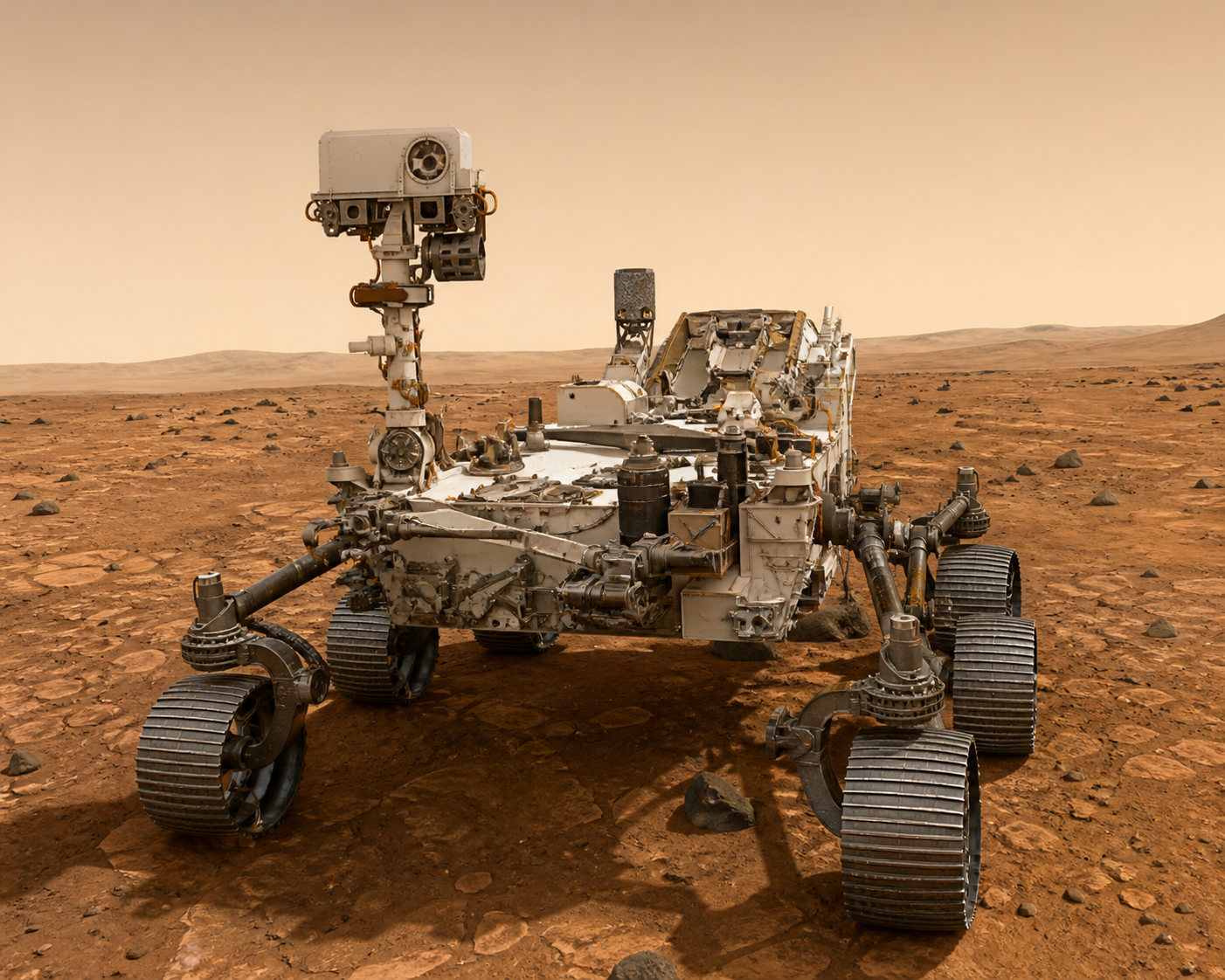
In an exciting update for space enthusiasts, NASA has released breathtaking new panoramic views of Mars captured by its two active rovers—Curiosity rover and Perseverance rover.
These high-resolution 360-degree images offer more than just stunning visuals. They provide scientists with valuable clues about Mars’ ancient past, revealing how water, geology, and time shaped the planet billions of years ago.
Two Rovers, Two Very Different Martian Worlds
Although both rovers are exploring the same planet, they are located thousands of miles apart—each uncovering a completely different chapter of Martian history.
The newly released panoramas were created by stitching together hundreds of images, giving a sweeping view of landscapes that once experienced water activity, geological transformation, and possibly conditions suitable for life.
Perseverance Explores an Ancient Lakebed
The panorama from Perseverance rover focuses on a region known as “Lac de Charmes,” located near the rim of Jezero Crater.
This area is especially important because:
- It once contained a lake and river delta
- It shows clear signs of ancient water flow
- It may hold evidence of past microbial life
The mosaic, built from nearly 1,000 images, reveals rugged terrain filled with layered rocks and scattered boulders. These features act like a time capsule, preserving conditions from when Mars was still forming its crust and atmosphere—an era when asteroid impacts were common.
Curiosity Uncovers Mars’ Hidden Geological Secrets
Meanwhile, Curiosity rover continues its long journey through Gale Crater, where it has been climbing the base of Mount Sharp for years.
Its latest panorama highlights unique formations known as **“boxwork” ridges.” These patterns formed when:
- Groundwater flowed through cracks in the rock
- Minerals were deposited in those fractures
- The surrounding rock eroded over time, leaving a web-like structure
This landscape provides direct evidence of underground water activity—another key ingredient in understanding Mars’ past habitability.
Signs of a More Complex Martian Past
Over nearly 15 years on Mars, Curiosity has made several important discoveries, including:
- Carbonate minerals that may have trapped carbon dioxide from a thicker ancient atmosphere
- Organic molecules, some of the most complex ever found on Mars
These findings suggest that Mars once had a richer chemical environment than previously believed—raising important questions about whether life could have existed there.
A Planetary Comparison Like Never Before
Even though the two rovers are separated by about 2,345 miles (3,775 km), NASA’s new panoramas allow scientists to compare these regions side by side.
This comparison reveals two distinct stories:
- One landscape shaped by lakes and flowing rivers
- Another influenced by groundwater deep beneath the surface
Together, they offer a more complete picture of how Mars transitioned from a potentially habitable world to the cold, dry planet we see today.
The Bigger Mission: Searching for Life
Both rovers share a common goal—but with different approaches:
- Curiosity focuses on determining whether Mars ever had conditions suitable for life
- Perseverance goes a step further by searching for actual signs of ancient life and collecting samples for future return to Earth
These missions are not just about exploration—they are about answering one of humanity’s biggest questions: Was there ever life beyond Earth?
What Comes Next for Mars Exploration
The journey is far from over. As Perseverance rover continues exploring new terrain and Curiosity rover climbs higher on Mount Sharp, more detailed panoramas and discoveries are expected.
Each new image adds another piece to the puzzle, helping scientists better understand Mars’ evolution over billions of years.
Conclusion: Two Views, One Incredible Story
NASA’s latest panoramas reveal Mars in a way we’ve never seen before—showing not just its beauty, but its history.
From ancient lakebeds to underground water systems, these discoveries highlight a planet that was once far more dynamic and potentially habitable than it is today.
As exploration continues, Mars is slowly giving up its secrets—and each new discovery brings us closer to understanding our place in the universe. 🚀