How NASA, SpaceX, and Blue Origin Are Preparing Humans for the Moon Return
NASA Accelerates Artemis III Preparations Ahead of Historic Moon Missions
The next chapter of human space exploration is rapidly taking shape as NASA intensifies preparations for the highly anticipated Artemis III mission. The mission represents one of the most ambitious and technically advanced projects in modern spaceflight history, bringing together multiple spacecraft, international partnerships, and commercial lunar lander systems developed by leading aerospace companies including SpaceX and Blue Origin.
Unlike previous lunar missions, Artemis III is designed not only as a crewed Earth orbit flight but also as a critical testing phase for future Moon landings and long-term lunar exploration. The mission will focus heavily on validating rendezvous, docking, habitation, and operational systems that astronauts will eventually rely on during future missions to the Moon’s south polar region.
NASA officials believe Artemis III will play a major role in reducing operational risks before astronauts return to the lunar surface during Artemis IV and beyond.
The mission also highlights NASA’s broader Moon-to-Mars strategy, which aims to establish a sustained human presence on the Moon while preparing for future crewed missions to Mars.
Why Artemis III Is One of NASA’s Most Complex Missions Ever
According to NASA officials, Artemis III is shaping up to be one of the most technically demanding missions ever attempted by the space agency.
Unlike the Apollo-era missions, Artemis operations involve coordination between:
- Multiple commercial spacecraft
- International hardware partners
- Advanced lunar lander systems
- Deep-space habitation technologies
- New docking procedures
- Complex orbital operations
Jeremy Parsons, Moon to Mars acting assistant deputy administrator for NASA’s Exploration Systems Development Mission Directorate, described the mission as a crucial stepping stone for future lunar surface exploration.
NASA is intentionally designing Artemis III as a highly integrated operation involving multiple systems and commercial partners. This approach allows engineers, astronauts, and mission teams to evaluate how all mission components interact before committing astronauts to actual lunar surface operations.
The lessons learned during Artemis III could directly shape future Moon Base construction efforts and deep-space exploration strategies.
The Artemis Programme and NASA’s Long-Term Lunar Vision
The Artemis programme is NASA’s largest lunar exploration initiative since the Apollo missions.
Its long-term goals include:
- Returning astronauts to the Moon
- Establishing sustainable lunar infrastructure
- Building permanent Moon Base systems
- Testing technologies for Mars missions
- Expanding international collaboration
- Supporting commercial space partnerships
The Moon’s south polar region has become a primary focus because scientists believe it may contain valuable water ice deposits that could support future human settlements.
NASA sees the Moon not simply as a destination, but as a testing ground for long-duration human exploration deeper into the solar system.
How Artemis III Will Work
The Artemis III mission architecture is significantly different from traditional spaceflight missions.
Orion Spacecraft and Space Launch System
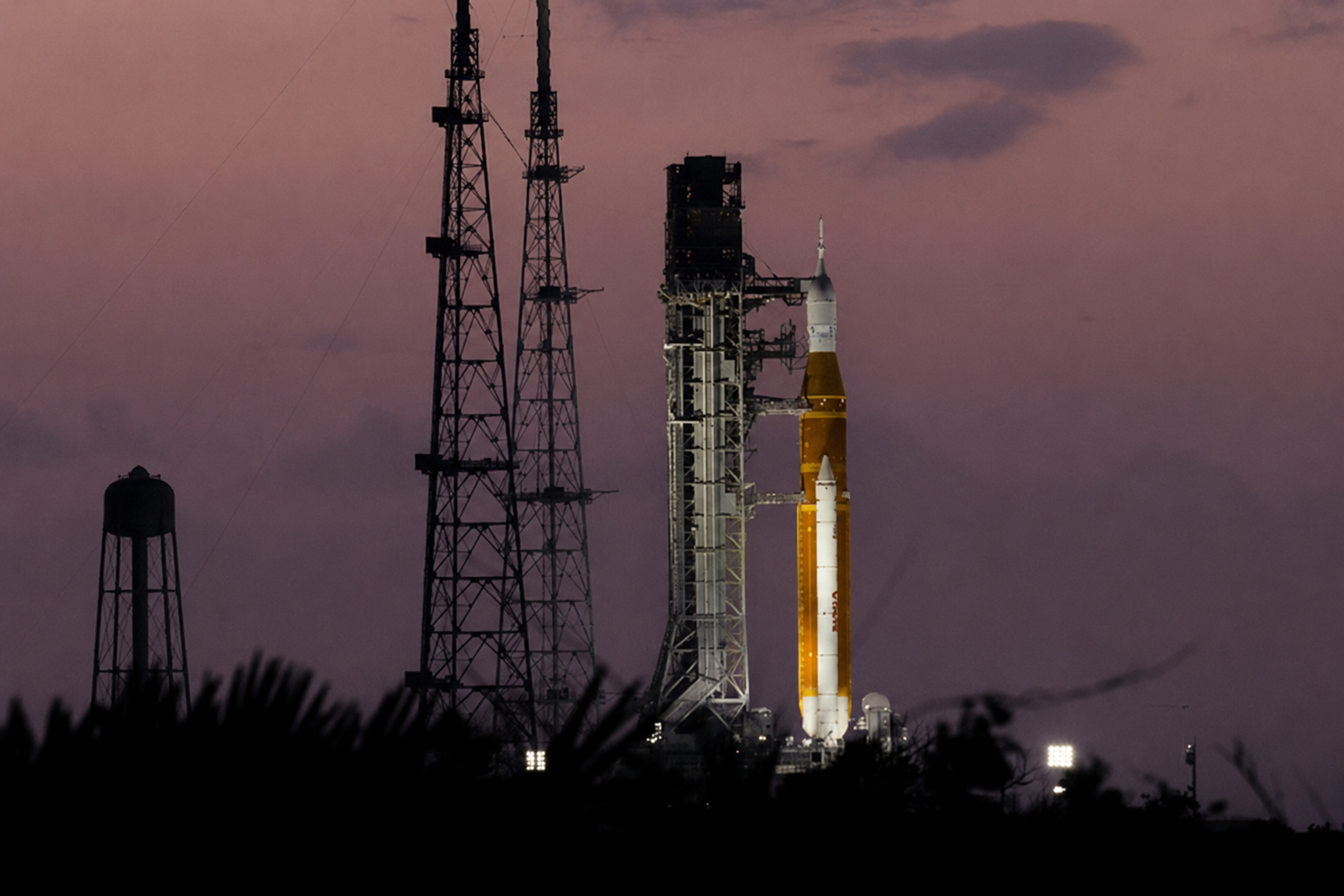
NASA’s massive Space Launch System rocket will launch the Orion spacecraft carrying four astronauts from Kennedy Space Center.
However, instead of using the interim cryogenic propulsion stage typically attached to the rocket, NASA plans to use a non-propulsive spacer that mimics the upper stage’s physical structure and connection points.
This unique configuration allows NASA to simulate future operational setups while reducing mission complexity during this Earth orbit testing phase.
Engineers at Marshall Space Flight Center are already manufacturing and assembling key components for the spacer system.
SpaceX and Blue Origin Play Critical Roles
One of the most fascinating aspects of Artemis III is the integration of commercial lunar landers from both SpaceX and Blue Origin.
NASA is working with:
- SpaceX’s Starship Human Landing System
- Blue Origin’s Blue Moon Mark 2 lander
These landers are expected to conduct pathfinder operations and docking evaluations in Earth orbit before future lunar missions.
The collaboration reflects NASA’s growing reliance on commercial aerospace innovation to accelerate deep-space exploration.
SpaceX Starship Human Landing System
SpaceX’s Starship system is expected to serve as one of the most advanced human landing vehicles ever developed.
The spacecraft is designed to:
- Transport astronauts to the lunar surface
- Support extended lunar stays
- Carry heavy cargo
- Enable long-duration exploration missions
NASA hopes Earth orbit testing during Artemis III will validate critical docking and crew transfer procedures.
Blue Origin Blue Moon Mark 2
Meanwhile, Blue Origin’s Blue Moon Mark 2 lander represents another major advancement in lunar transportation systems.
The company aims to provide:
- Sustainable lunar cargo delivery
- Human landing capabilities
- Scalable lunar infrastructure support
Testing multiple lander systems gives NASA greater flexibility and redundancy for future Moon missions.
Why Earth Orbit Testing Matters Before Returning to the Moon
NASA’s decision to conduct Artemis III in Earth orbit rather than immediately proceeding to the Moon is highly strategic.
Earth orbit testing offers several advantages:
- Increased launch flexibility
- Lower operational risk
- Better contingency management
- Easier system troubleshooting
- Improved astronaut safety
By validating docking procedures, habitation systems, and spacecraft coordination close to Earth, NASA can identify and resolve problems before astronauts travel into deep space.
This “test-before-commitment” approach reflects lessons learned from previous space exploration programs.
Orion Spacecraft Will Undergo Major In-Flight Testing
Astronauts aboard Orion are expected to spend more time in space compared to the Artemis II crew.
This extended mission duration allows NASA to evaluate several critical systems including:
- Life support technologies
- Crew habitation systems
- Docking mechanisms
- Mission coordination procedures
- Spacecraft endurance
One particularly important milestone will be the first in-flight demonstration of Orion’s docking system.
NASA engineers will carefully monitor how Orion interacts with commercial lunar landers and support hardware during orbital operations.
NASA Will Also Test Upgraded Heat Shield Technology
Another major focus of Artemis III involves testing an upgraded Orion heat shield during atmospheric reentry.
Heat shields are among the most critical technologies for deep-space missions because spacecraft returning from lunar or Martian trajectories experience extremely high temperatures during Earth reentry.
NASA hopes the upgraded design will:
- Improve mission flexibility
- Increase spacecraft durability
- Enhance astronaut safety
- Support future Mars missions
Successful testing could significantly influence future deep-space vehicle development.
Spacesuits, CubeSats, and Future Technologies
NASA is also evaluating future lunar operations technologies during Artemis III.
Axiom Space Lunar Spacesuits
The agency is exploring options to test interfaces for Axiom Space’s AxEMU lunar spacesuits.
These next-generation suits are designed specifically for Artemis Moon missions and feature improved mobility, durability, and life support systems.
CubeSat Opportunities
NASA is also considering opportunities for international and domestic partners to deploy CubeSats during the mission.
CubeSats are miniature satellites used for:
- Scientific experiments
- Earth observation
- Communications research
- Technology demonstrations
This could allow universities, research organizations, and international partners to participate directly in Artemis operations.
Communications and Deep Space Network Challenges
Interestingly, NASA stated that the Artemis III mission may not rely on the traditional Deep Space Network communication system.
Instead, the agency is requesting industry proposals for alternative communication solutions capable of supporting future lunar missions.
This highlights the growing need for scalable, next-generation communications infrastructure as deep-space exploration becomes more complex.
What Artemis III Means for the Future of Space Exploration
The Artemis III mission represents far more than a simple orbital test flight.
It symbolizes:
- The return of human lunar exploration
- The rise of commercial space partnerships
- The next generation of deep-space technology
- Preparation for Mars exploration
- Expansion of international space cooperation
NASA’s collaboration with commercial companies demonstrates how modern space exploration is evolving into a more interconnected and commercially driven ecosystem.
The success of Artemis III could shape the future of human exploration for decades.
Final Thoughts
NASA’s Artemis III mission is quickly becoming one of the most important spaceflight projects of the modern era. By combining advanced spacecraft systems, commercial lunar landers, new docking technologies, upgraded spacesuits, and international collaboration, NASA is laying the groundwork for humanity’s return to the Moon and eventual journey to Mars.
The mission’s Earth orbit testing strategy reflects a careful, safety-focused approach aimed at minimizing risks before astronauts begin long-duration lunar surface operations.
As NASA, SpaceX, Blue Origin, and other aerospace partners continue refining mission details, global excitement surrounding the Artemis programme continues to grow.
The coming years may ultimately define a completely new era of human space exploration — one where permanent lunar bases, commercial Moon missions, and crewed Mars expeditions become reality rather than science fiction.