The Surprising Science Behind Earth’s Slowing Rotation and Lunar Drift
Scientists Reveal How the Moon’s Slow Drift Is Changing Earth Over Billions of Years
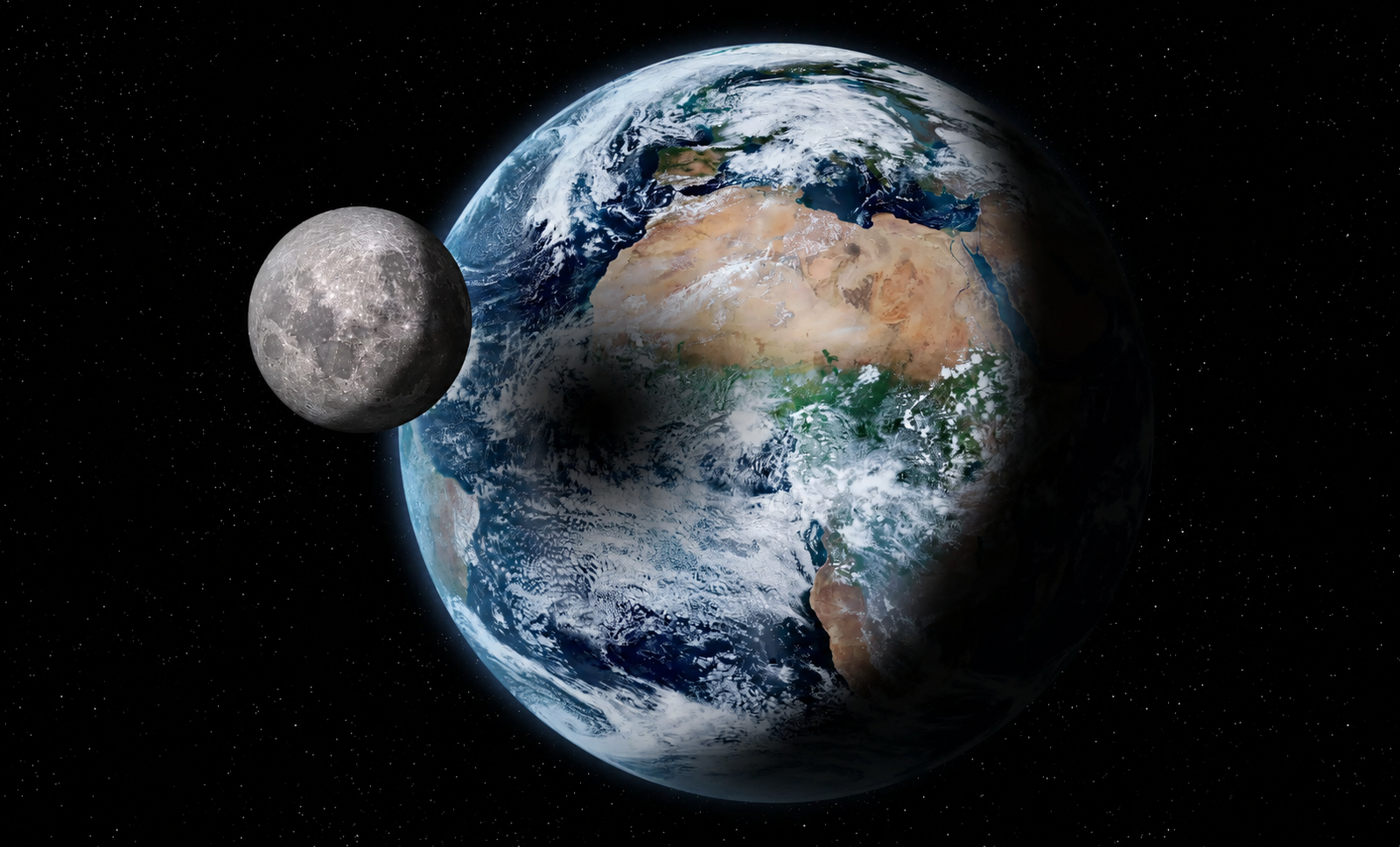
The Moon has always been one of humanity’s greatest cosmic companions, lighting up Earth’s night sky and influencing tides, calendars, myths, and scientific discovery. But what many people do not realize is that the Moon is slowly drifting away from Earth every single year.
Although the change is incredibly small and impossible to notice in everyday life, scientists can measure the Moon’s gradual retreat with astonishing precision using advanced laser technology and orbital calculations. This fascinating process is helping researchers uncover critical clues about the history of Earth, the formation of the Moon, the slowing rotation of our planet, and the long-term evolution of the Earth-Moon system.
According to space scientists and astronomers, the Moon is moving away from Earth at a rate of approximately 1.5 inches (3.8 centimeters) per year. While that may sound insignificant, over millions and billions of years, the effects become enormous.
This slow lunar drift is also directly connected to longer days on Earth, changing tides, and the powerful gravitational relationship between Earth and its only natural satellite.
The Moon Was Once Much Closer to Earth
Modern scientific research suggests that the Moon did not always orbit Earth at its current distance.
Scientists believe the Moon formed around 4.5 billion years ago after a catastrophic collision between the young Earth and a Mars-sized object often referred to as Theia. The violent impact blasted massive amounts of debris into space, which eventually merged together to create the Moon.
At that time, the Moon orbited much closer to Earth than it does today.
Because of this shorter distance:
- The Moon appeared much larger in the sky
- Earth rotated much faster
- Days were significantly shorter
- Tidal forces were far more powerful
Researchers studying the early Earth believe a full day may have lasted only a few hours shortly after the Moon formed.
Over billions of years, however, the relationship between Earth and the Moon slowly changed due to the transfer of energy between the two celestial bodies.
Why the Moon Is Drifting Away From Earth
The Moon’s gradual retreat is caused by a complex interaction known as tidal acceleration.
The Moon’s gravity pulls on Earth’s oceans, creating tides. As Earth rotates, these tidal bulges do not line up perfectly with the Moon because Earth spins faster than the Moon orbits the planet.
This creates a slight gravitational imbalance.
The tidal bulges actually pull slightly ahead of the Moon’s orbit, and their gravitational force transfers rotational energy from Earth to the Moon.
As a result:
- Earth’s rotation slows down
- Days become longer
- The Moon gains orbital energy
- The Moon slowly moves farther away
This continuous exchange of momentum has been happening for billions of years.
Scientists describe it as a cosmic “energy trade” between a planet and its satellite.
Earth’s Days Are Getting Longer
One of the most fascinating effects of the Moon’s retreat is the gradual slowing of Earth’s rotation.
Because Earth loses a tiny amount of rotational energy over time, the length of a day slowly increases.
Although modern humans cannot notice the change, geological and fossil evidence proves that Earth once rotated much faster.
Fossilized Clam Shells Reveal Ancient Earth’s Rotation
Scientists have discovered evidence inside fossilized clam shells and ancient coral growth patterns showing that days were shorter millions of years ago.
Research indicates that around 70 million years ago — near the end of the dinosaur era — a day on Earth lasted approximately 23.5 hours instead of today’s 24 hours.
These ancient growth rings act almost like natural time records, preserving information about Earth’s rotational history.
The findings closely match astronomical models used by researchers studying the Earth-Moon system.
This remarkable connection between paleontology, astronomy, and planetary science helps confirm that Earth’s rotation has gradually slowed as the Moon drifted farther away.
How Scientists Measure the Moon’s Distance
Modern space technology allows scientists to measure the Moon’s distance with incredible precision.
During the Apollo missions, astronauts placed special reflectors on the lunar surface. Scientists on Earth can now fire laser beams at these reflectors and calculate exactly how long the light takes to return.
This method, known as Lunar Laser Ranging, allows researchers to measure the Moon’s distance down to a few millimeters.
The data has confirmed that the Moon continues moving away from Earth every year.
NASA scientists say these measurements provide valuable insights into:
- Planetary motion
- Orbital mechanics
- Gravitational physics
- Earth’s rotational behavior
- Lunar evolution
The Moon’s movement effectively serves as a natural laboratory for studying long-term cosmic dynamics.
The Moon’s Retreat Affects Earth’s Tides
The Moon plays a critical role in generating Earth’s tides.
Its gravitational pull creates tidal bulges in Earth’s oceans, causing water levels to rise and fall along coastlines worldwide.
In some major coastal regions, tides can change water levels by several feet each day.
Cities such as:
- New York
- Los Angeles
- Miami
- London
- Tokyo
experience significant tidal fluctuations influenced primarily by the Moon’s gravity.
These tides are not only important for marine ecosystems and coastal environments but are also directly responsible for the Moon’s gradual outward movement.
Without tides, the Earth-Moon energy transfer process would not occur in the same way.
Will the Moon Ever Leave Earth Completely?
Despite the Moon’s slow retreat, scientists say it will never truly escape Earth’s gravitational pull.
The Earth-Moon system is gravitationally stable, meaning the Moon will continue orbiting Earth for billions of years.
However, the orbital distance will continue increasing gradually over extremely long timescales.
Eventually, Earth’s rotation and the Moon’s orbit could reach a state called tidal locking, where:
- Earth rotates at the same speed the Moon orbits
- One side of Earth would permanently face the Moon
- The energy transfer process would stop
But scientists note that this scenario is incredibly far in the future and may never fully occur before other cosmic events reshape the solar system.
Why Studying the Moon Matters for Space Exploration
Understanding the Moon’s behavior is becoming increasingly important as space agencies prepare for new lunar missions.
NASA’s Artemis programme aims to return astronauts to the Moon and eventually establish long-term lunar bases near the Moon’s south polar region.
Studying lunar motion helps scientists improve:
- Navigation systems
- Lunar mapping
- Orbital calculations
- Future Moon mission planning
- Spacecraft landing accuracy
The Moon is also viewed as a critical stepping stone for future missions to Mars and deeper space exploration.
As humanity prepares to enter a new era of lunar exploration, understanding the Earth-Moon relationship becomes more valuable than ever.
The Moon and Earth Share a Deep Cosmic Connection
The relationship between Earth and the Moon is far more important than many people realize.
The Moon helps stabilize Earth’s axial tilt, which contributes to relatively stable seasons and climate patterns. Some scientists believe complex life on Earth may have evolved differently without the Moon’s stabilizing influence.
The Earth-Moon system is a perfect example of how gravity shapes the evolution of planets, satellites, and entire solar systems over billions of years.
Even though the Moon continues drifting away inch by inch every year, its connection to Earth remains one of the most important relationships in our cosmic neighborhood.
Final Thoughts
The Moon’s slow movement away from Earth may seem like a tiny astronomical detail, but it reveals an extraordinary story about the evolution of our planet, the mechanics of gravity, and the dynamic forces shaping the solar system.
From fossilized clam shells and ancient tidal patterns to laser measurements and modern space exploration, scientists are uncovering how deeply connected Earth and the Moon truly are.
The ongoing drift of the Moon continues to lengthen Earth’s days, influence ocean tides, and provide researchers with valuable insights into planetary motion and gravitational physics.
As future Moon missions and space exploration programs expand, humanity’s understanding of the Earth-Moon system will likely become even more important in unlocking the mysteries of the universe.