Stunning Video Amazes the World
NASA Releases Incredible Artemis II Video Showing Water Turning Into a Perfect Floating Sphere in Space
NASA has once again captured the imagination of space enthusiasts around the world after releasing a mesmerizing video from the historic Artemis II mission. The stunning footage shows astronauts aboard the Orion spacecraft performing a fascinating microgravity experiment where a floating water droplet transforms into a crystal-clear sphere in space.
The breathtaking experiment highlights one of the most visually beautiful examples of physics in space and demonstrates how liquids behave differently in a near-weightless environment. The video quickly gained attention online, with millions of viewers describing the floating water sphere as “pure magic.”
As NASA continues preparing humanity for future Moon missions and eventual missions to Mars, moments like these not only entertain the public but also help explain important scientific concepts related to space travel, microgravity, and fluid dynamics.
NASA Astronauts Turn Water Into a Floating Crystal Ball in Space
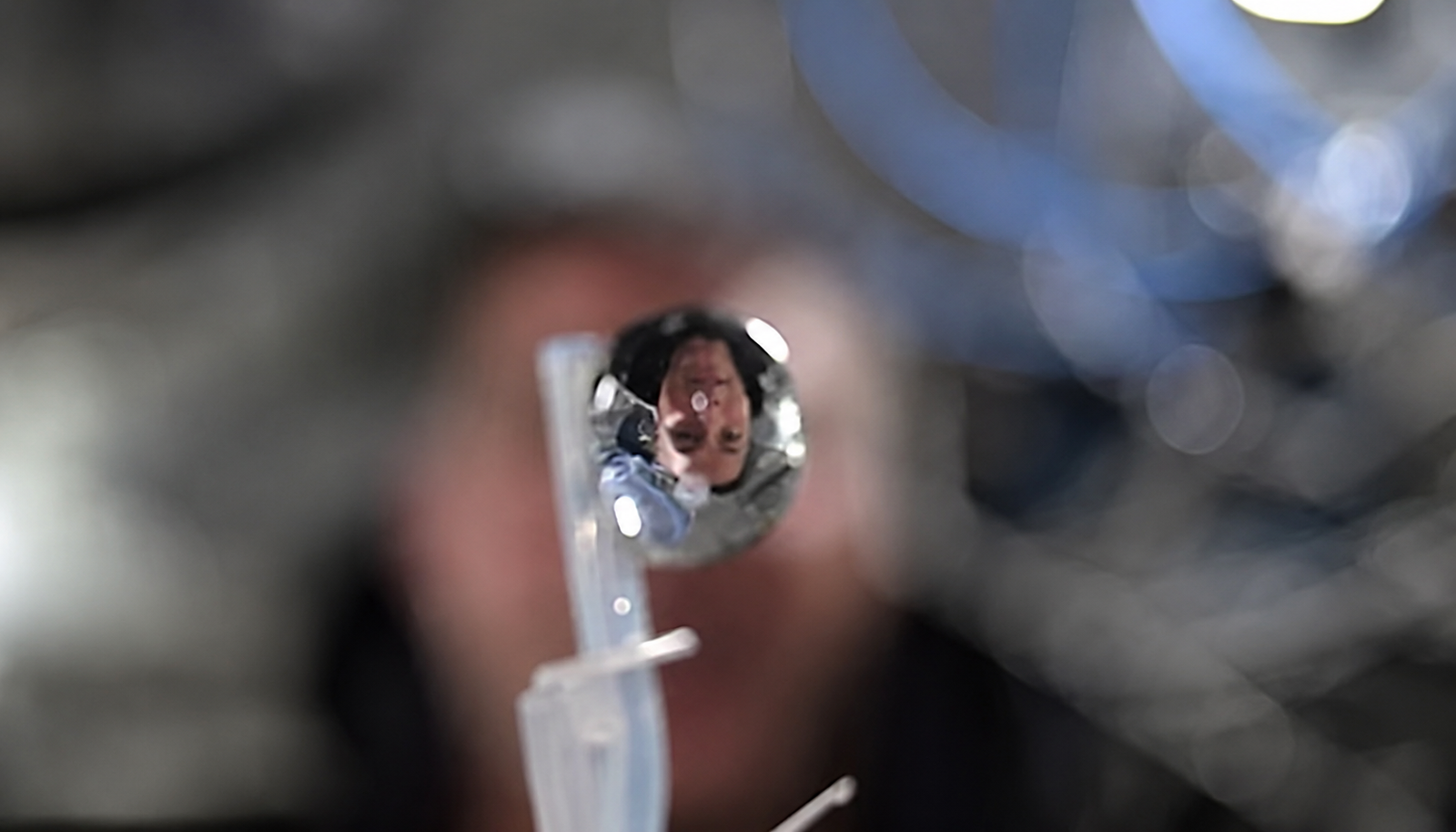
The now-viral video was recorded aboard the Orion capsule during the Artemis II mission. In the footage, astronauts release a droplet of water into the air inside the spacecraft to observe how it behaves in microgravity.
Instead of falling or flattening like water does on Earth, the droplet floats freely through the cabin and naturally forms a nearly perfect sphere. The water appears like a transparent crystal ball suspended in space.
The astronauts later playfully guide the floating water droplet through the cabin using a straw while continuing the scientific demonstration.
According to NASA, the activity was also a fun learning experience for Jeremy Hansen, who participated in his very first spaceflight during the Artemis II mission.
NASA explained:
“During the Artemis II mission, astronauts had a fun time playing around in the weightlessness of space.”
The agency added that Hansen’s crewmates helped teach him about the fascinating physics of water behavior in space.
Why Water Forms a Perfect Sphere in Space
One of the biggest reasons this NASA space experiment captured worldwide attention is because it visually explains an important scientific phenomenon.
Here on Earth, gravity constantly pulls water downward. When a droplet lands on a surface, gravitational force causes it to flatten and spread out.
In space, however, gravity has much less influence inside the spacecraft due to the microgravity environment. Instead of being pulled downward, the water molecules attract each other equally from all directions.
This scientific principle is known as surface tension.
Because the molecules pull inward evenly, the droplet naturally forms the shape with the smallest possible surface area — a sphere.
The result is a floating ball of water that looks almost unreal to viewers watching from Earth.
This simple yet beautiful experiment helps scientists and the public better understand how liquids behave in outer space, which is extremely important for long-duration space missions.
Artemis II Mission Marks a Major Step for NASA
The Artemis II mission is one of NASA’s most important modern space missions and represents a major milestone in humanity’s return to deep space exploration.
The mission is part of NASA’s ambitious Artemis program, which aims to return astronauts to the Moon and eventually establish a sustainable human presence there.
Artemis II is expected to become the first crewed mission of the Orion spacecraft to travel around the Moon. The mission will test critical systems needed for future lunar landings and long-duration human spaceflight.
The crew includes astronauts from both NASA and the Canadian Space Agency, making it an important example of international cooperation in space exploration.
For Jeremy Hansen, the mission carries special significance because it marks his first journey into space.
The Importance of Microgravity Experiments in Space
While the floating water sphere may appear playful and entertaining, experiments involving liquids in microgravity are actually extremely valuable for space science and engineering.
Understanding how fluids behave in space is critical for many areas of astronaut life and spacecraft design, including:
- Drinking water systems
- Fuel storage in rockets
- Cooling systems
- Medical research
- Food preparation in space
- Air circulation systems
NASA scientists regularly study fluid dynamics in space because even simple actions become far more complicated in microgravity environments.
For example, without gravity, liquids do not naturally settle at the bottom of containers. This creates unique engineering challenges that must be solved before humans can safely travel deeper into space for extended periods.
The Artemis program will rely heavily on these scientific discoveries as NASA prepares for future Moon bases and potential Mars missions.
Social Media Reacts to NASA’s Stunning Space Video
The incredible footage quickly spread across social media platforms, where viewers expressed amazement at the beauty of the experiment.
Many users described the floating water droplet as looking like something from a science fiction movie.
One viewer commented:
“It can’t be all seriousness in space — you gotta have a little fun too.”
Another social media user wrote:
“It felt like pure magic.”
The emotional response highlights how NASA continues inspiring public interest in science, astronomy, and human space exploration through visually captivating moments from real missions.
Videos like this help make complex scientific concepts more understandable and exciting for people of all ages.
NASA Continues Inspiring a New Generation of Space Enthusiasts
For decades, NASA has inspired millions of people worldwide through groundbreaking discoveries, Moon missions, Mars exploration, and stunning space imagery.
The Artemis program is already becoming one of NASA’s most exciting projects in recent years. Beyond scientific goals, the mission also serves to inspire future scientists, engineers, astronauts, and students interested in STEM education.
The floating water experiment perfectly demonstrates how even small moments aboard a spacecraft can teach valuable lessons about physics, gravity, and life in space.
As humanity prepares for a new era of lunar exploration, videos like this remind people that space exploration is not only about technology and research — it is also about curiosity, wonder, and discovery.
Final Thoughts on NASA’s Floating Water Sphere Experiment
The floating water crystal experiment aboard the Artemis II mission has become one of the most fascinating and visually stunning moments shared by NASA in recent months.
The simple act of releasing a droplet of water inside the Orion spacecraft beautifully demonstrates the power of microgravity and the unique physics of space environments.
More importantly, the experiment highlights the scientific importance of understanding fluid behavior during future Moon and Mars missions.
As NASA continues advancing toward humanity’s next giant leap in space exploration, moments like these help connect ordinary people with the extraordinary world of space science. For millions watching from Earth, the floating crystal-clear sphere served as both a scientific lesson and a reminder of the incredible bea